
Some corner offices come with a trapdoor.
You can spot them by the turnover. The pay is enormous, the mandate is obvious, and the person holding the job keeps disappearing between annual reports. Investors eventually learn to price in the exit before it arrives.
At Europe’s largest carmaker, the trapdoor has a name, and it is not China. It is not the electric vehicle transition, either, though both have done real damage to the balance sheet.
It is a 20-seat supervisory board where workers hold half the votes, alongside a German state that owns a fifth of the company and almost always sides with them.
Three chief executives have fallen through that trapdoor since 2006. Each one arrived promising to cut costs in Germany, and each one left before he could finish.
The diagnosis was never the problem. The votes were.
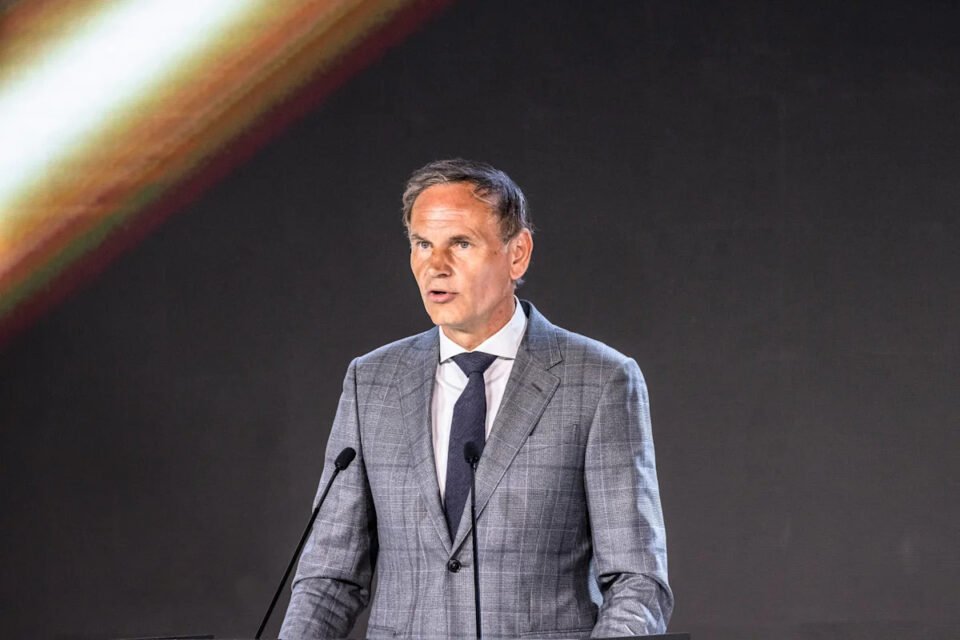
On Thursday, Sept. 3, the fourth one, CEO Oliver Blume, walked into the same room at Volkswagen (VLKAF), asked for the deepest restructuring in the company’s 89-year history, and walked out with a vote of 20 to nothing.
Why Volkswagen keeps losing chief executives to its own board
German co-determination law gives workers real votes in the boardroom, and nowhere is that power more concentrated than in Wolfsburg.
Half of Volkswagen’s supervisory board seats belong to employee representatives. The state of Lower Saxony holds roughly 20% of the company and two more seats, and its representatives typically vote with labor.
That arithmetic means any chief executive who wants to shrink the German footprint needs the consent of the people whose jobs he plans to shrink. It is a constraint BMW has managed to sidestep even while running its own redundancy program.
The record of what happens when a VW boss tries anyway is unusually consistent.
-
Bernd Pischetsrieder was pushed out in 2006 after losing the support of key stakeholders, including employee representatives, reported Bloomberg.
-
Matthias Müller, who steered the company through the aftermath of the 2015 diesel scandal, was ousted in 2018, according to Bloomberg.
-
Herbert Diess was replaced by Blume in 2022 after repeated clashes with the Works Council, a conflict that followed his private estimate that Volkswagen carried 30,000 excess staff in Germany, reported the Irish Times.
I covered the earlier phase of this fight when the plan was still a leak, and what struck me then was how little the numbers had changed across two decades of failed attempts.
Every VW chief since Pischetsrieder has arrived at roughly the same diagnosis. None of them got to write the prescription.
