
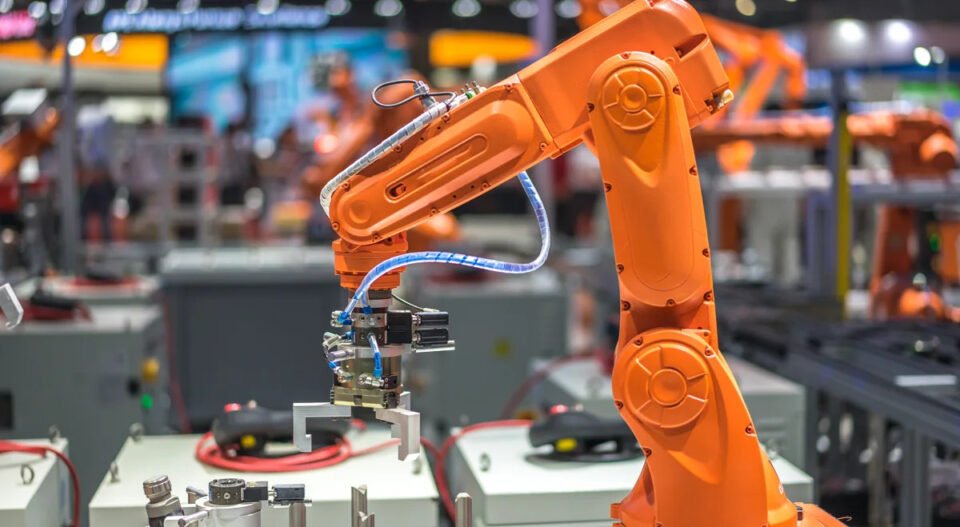

The rapid growth of artificial intelligence is beginning to reshape industries beyond software as companies accelerate investment in robotics and automation. Physical AI is emerging as one of the next major technology themes, with applications expanding across manufacturing, logistics, transportation, defence and infrastructure.
Growth Depends on More Than Better AI Models
Unlike digital AI, success in physical automation requires reliable hardware, advanced sensors, battery technology, industrial networking and continuous data collection from real operating environments.
This makes commercial deployment more demanding, but also creates higher barriers to entry for competitors.
Industrial Ecosystems Stand to Benefit
The companies likely to benefit extend far beyond robot manufacturers.
Demand for automation is expected to support suppliers of industrial software, machine vision, embedded computing, semiconductors, networking equipment and safety systems as businesses modernise operations.
Robotics-as-a-Service could further accelerate adoption by reducing upfront investment costs and making automation accessible to a broader range of customers.
A Long-Term Structural Trend
Physical AI is unlikely to scale as quickly as generative AI, but its adoption is expected to build steadily as companies gain operational experience and improve deployment efficiency.
For investors, the opportunity may lie not only in the robots themselves but across the broader industrial ecosystem that enables intelligent automation.