
Private Equity Investment in Na Hong-jin’s “Hope”;
Independent Film Funds Emerge in Japan and Thailand
New Capital Fills the Void Left by Banks and Hedge Funds After COVID-19
The financial landscape of the film industry is undergoing significant changes. Private equity funds, independent investment firms, and government capital are emerging as new pillars in the film investment market, which was once dominated by investment arms of large conglomerates and production committees. As investment approaches shift away from a reliance on box office returns to a structure targeting global online video service (OTT) rights and expanded intellectual property (IP) revenues—including webtoons and games—the financing model for the Asian film industry is rapidly evolving.

According to the film industry as of June 10, these changes are most pronounced in Korea. Private equity fund ATU Partners has invested 15 billion won in director Na Hong-jin’s new film “Hope.” The investment was sourced through a special purpose company (SPC) called “ATU Culture Tech No. 6 Private Equity Fund,” which was established in January with capital of 16 billion won. This marks the first case of investing in a film via a project fund in Korea, with Korea Growth Investment Management and MG Capital participating as limited partners.
ATU Partners has continued to expand its presence as a content-focused private equity fund, being selected as a delegated fund manager for both the Korea Fund of Funds and Korea Growth Investment Management. The firm aims to build an “IP expansion investment model” that goes beyond simple box office revenue to secure income from global OTT rights, webtoons, games, and merchandise (MD) businesses.
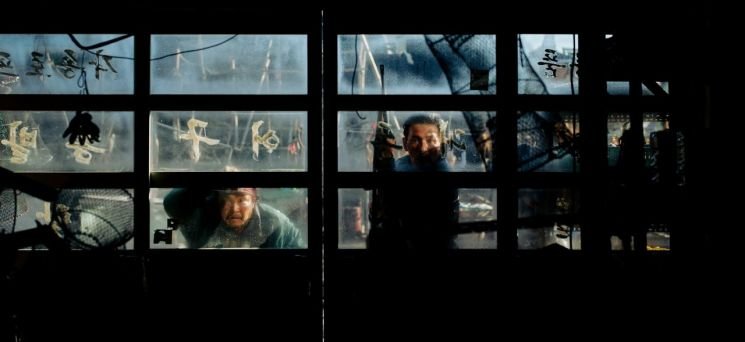
“Hope” tells the story of a fictional port village near the Demilitarized Zone (DMZ), Hopohang, which faces destruction while tracking an unknown entity. Na Hong-jin directed, wrote, and produced the film, with Hwang Jung-min, Zo In-sung, and Jung Ho-yeon among the cast. The production budget is reported to exceed 50 billion won.
The move by private equity funds to invest in large-scale projects is rooted in the withdrawal of traditional institutional investors. For example, in 2019, the film “Parasite” attracted a wide range of institutional investors and hedge funds, including Korea Post Finance, KDB Capital, IBK Capital, and Hana Financial Investment. However, after the onset of COVID-19, as the theater market shrank rapidly and blockbuster films like “Alienoid” failed at the box office, major investors such as Shinhan Bank and Daesung Private Equity withdrew from the market.

According to the Korean Film Council, there are currently about ten private film investment funds. The government has also injected 81 billion won in emergency funds to help the industry recover. An investment industry official said, “As the investment scale of conglomerate-affiliated investment firms shrinks, new funding methods are emerging one after another,” adding, “Since the IP expansion investment model is still in its early stages, it will take time to become established in the market.”
These changes are not limited to Korea. In Japan, Muneyuki Kii, who handled distribution and production at Toei for over a decade, founded K2 Pictures last year and launched the K2P Film Fund. Departing from the long-standing production committee system, this new structure brings in outside capital while retaining IP rights in-house. K2 Pictures has raised about 40 billion won from around ten institutional investors, including MUFG Bank and Mori Trust, and plans to pursue up to an additional 90 billion won in loans in the future.
In Thailand, Chayamporn Theratanachai, who accumulated wealth through electrical equipment imports, established Cinema22 as a family business and has consistently invested in Asian art films. “The Useful Ghost,” which won the Critics’ Week Grand Prize at last year’s Cannes Film Festival, and the Bhutanese film “The Monk and the Gun” are representative investments.
![Examining the Election Commission Structure Untouchable by President or National Assembly: "No One Takes Responsibility" [Election Commission Overhaul ②]](https://cwcontent.asiae.co.kr/asiaresize/93/2026060917590593483_1780995545.jpg)
Government-level support is also intensifying. Singapore’s Infocomm Media Development Authority (IMDA) has achieved results through Southeast Asian co-production support programs, such as the Malaysian film “Horangi Sonyeo” and the Vietnamese film “Don’t Cry Butterfly.” Following Thailand and Malaysia, Japan has also introduced a production cost rebate system to attract overseas filming. Recently, MUFG Bank and Tokio Marine & Nichido Fire Insurance have been asked to establish common standards for evaluating film production value, and MUFG Bank plans to fully enter the film project lending business starting next year.
This content was produced with the assistance of AI translation services.
© The Asia Business Daily(www.asiae.co.kr). All rights reserved.