
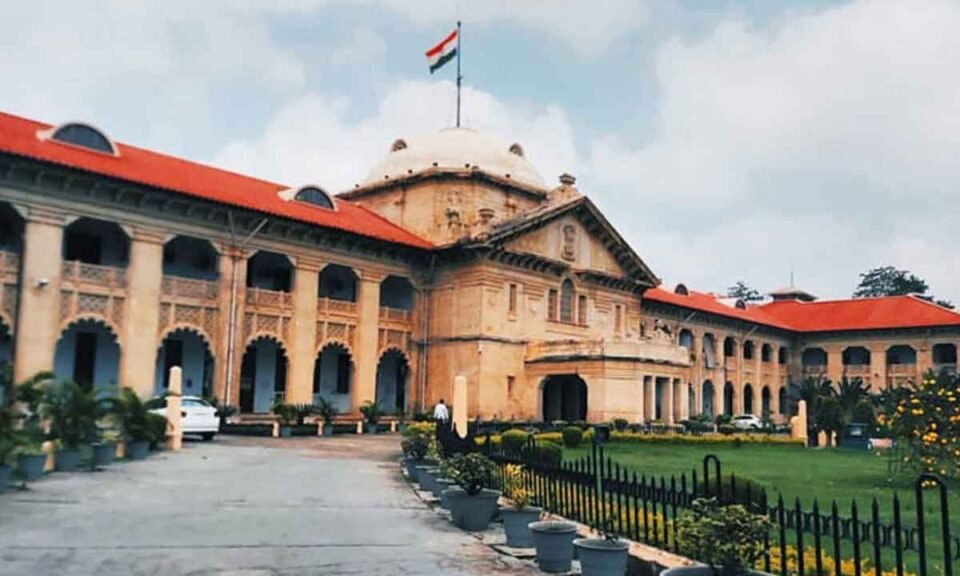
New Delhi: The Allahabad High Court has dismissed a plea seeking permission and police protection for offering regular Namaz at an alleged private property in Sambhal district, holding that the right to practise religion does not extend to converting private premises into an “unregulated congregational space”.
A Division Bench of Justices Saral Srivastava and Garima Prashad passed the order while rejecting a writ petition filed by one Aseen, who claimed that the authorities were restraining prayers on a parcel of land in the village Ikona. The petitioner asserted ownership over the land on the basis of a registered gift deed dated June 16, 2023, and contended that he and other worshippers were being illegally restrained from offering Namaz on the premises.
He further alleged that the obstruction was arbitrary and carried out in collusion with certain social elements, in violation of the fundamental rights guaranteed under Articles 19, 25, 26, 27, and 28 of the Constitution.
However, the Uttar Pradesh government opposed the plea and submitted that the land in question, Khata No. 613, Gata No. 629, is recorded as Abadi land under Category Shreni-6(2), meant for public use, and that the petitioner had failed to establish ownership. It was further submitted that Namaz had traditionally been offered at the site only on specific occasions, such as Eid, and that the petitioner was now attempting to introduce regular congregational prayers involving outsiders, which could disturb communal harmony in the village.
After considering the rival submissions, the Allahabad High Court framed the issue as to whether and to what extent rights under Articles 25 and 26 extend to congregational religious activities on public land or private premises.
“Private property may be used for personal and limited religious activity so long as it remains genuinely private, occasional and non-disruptive; however, once such use extends to regular or organised congregational activity involving persons beyond a limited private sphere, it falls outside the protected domain and may attract regulatory control,” the Justice Srivastava-led Bench observed. It added that the right to practise religion is not absolute and remains subject to public order, morality and health.