
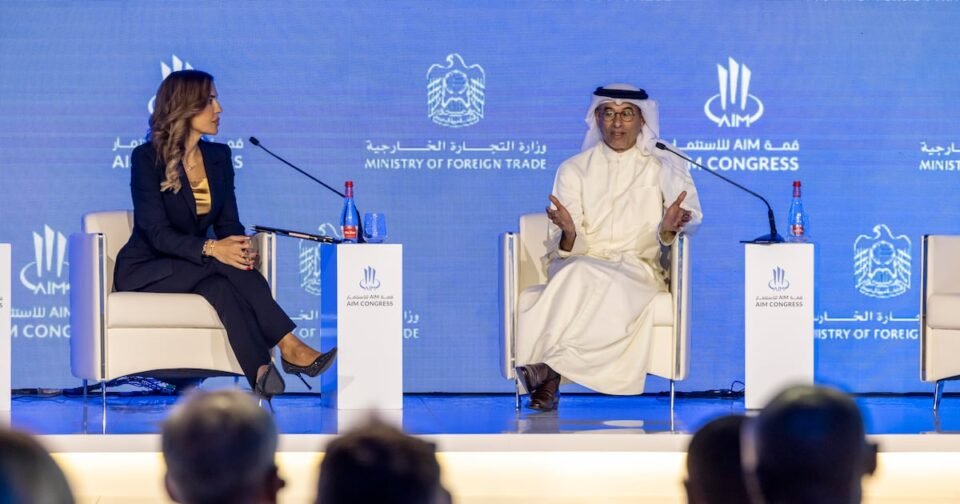
The property market in Dubai is set for a “nice balance” next year despite softening due to the Iran war, as the sector goes through a period of adjustment, Emaar Properties founder Mohamed Alabbar has said.
“I’m getting ready for 2027,” Mr Alabbar told delegates at AIM Congress in Dubai on Monday. “A lot of supply is coming in, so I think there’ll be a nice balance in the city.”
When asked to predict the impact of the continuing Iran war on Dubai’s broader real estate sector, Mr Alabbar said: “I would say that an adjustment of 5 per cent to 10 per cent because it’s an extraordinary situation.
“But then again, you know if the situation settles, God knows what could happen in this market. It could become pretty fast [paced],” he added.
No discounting
Emaar, the biggest listed developer in the emirate, however, is weathering the wave of uncertainty on the fundamental strength of its business.
“It depends on which real estate company you talk about,” he said. “Right now, we have developers who are giving 50 per cent discount, 20 per cent discount.”
Emaar, however, has not resorted to discounting to offset the impact of the conflict, which is in its seventh month.
“Our policy: we sell good product. We don’t give discounts,” he said. “We have good cash flow. We have a lot of cash.”
The war between Iran and the US and Israel, which began on February 28, has tipped the region into one of its worst geopolitical crises in decades. Iran’s repeated attacks on the industrial, energy and civilian infrastructure of its Arab neighbours has dented the growth of sectors such as hospitality, aviation, real estate and tourism.
Mr Alabbar, however, said that the conflict in the Middle East is not different from others, including what is being witnessed in Ukraine. He said that since the 1920s there have been 50 major crises around the world, and so businesses built with long-term horizons learn to weather them.
Emaar has 90,000 units under production globally in 18 markets. It has not stopped or slowed down, as crises usually have a shorter lifespan.
“I don’t look at it as a crisis. I think it’s adjustment time. With the cash position that we have, with the low debt we have, it’s time to expand,” he said.
In June, Emaar said it will unveil an “extraordinary” Dh200 billion ($55 billion) megaproject in Dubai, set to house nearly 150,000 people.
The master plan, spread across more than 4.5 million square metres, is to feature residential towers, villas and mansions, Grade-A commercial offices, shops, luxury hospitality and other amenities, the developer said at the time.
“We all know going back [to history] that crises have two years, three years, [and] we need to be preparing for the day after,” he said of the rationale behind launching a megaproject while the Iran war continues.
“This country, this city, the policies, when you compare them with global policies, this is probably one of the most exciting countries in the world. We’ve been living in this region all our lives, so we know how to deal with local, regional issues.”