
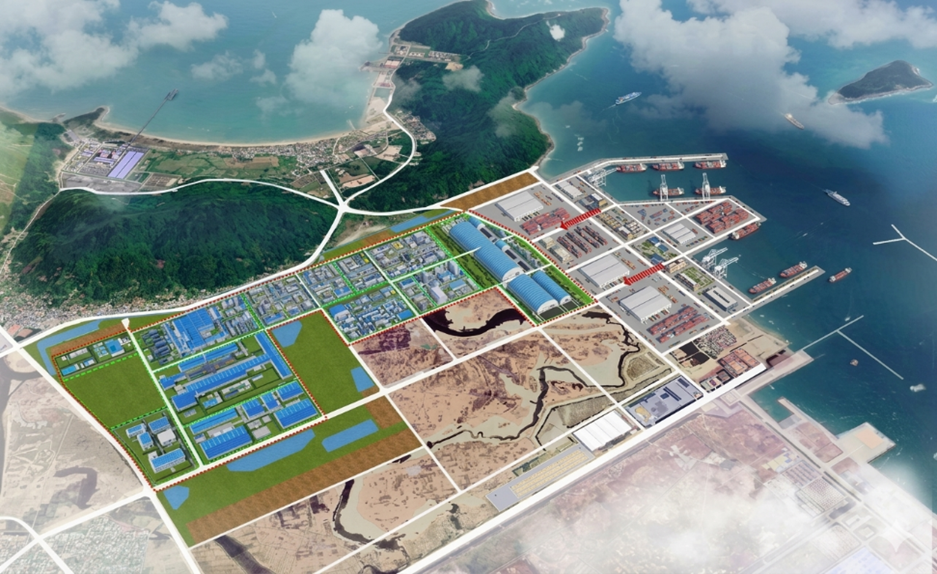
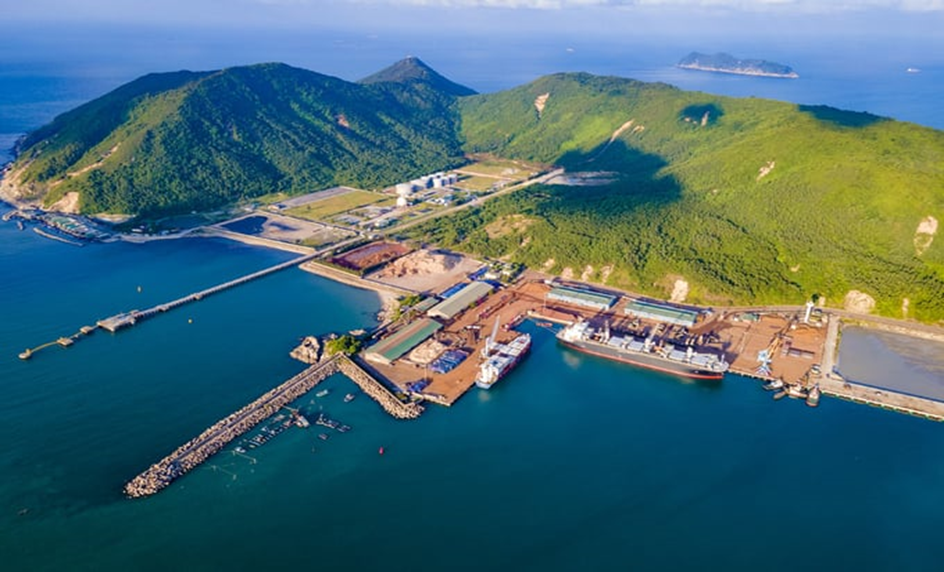
In accordance with Decision No. 2229/QD-TTg dated October 9, 2025, of the Prime Minister approving the Strategy for the Development of Logistics Services in Vietnam for the period 2025-2035, with a vision to 2050, the People’s Committee of Ha Tinh province has issued an action plan for implementation with many synchronized and strategic goals, tasks, and solutions, demonstrating high political determination in making logistics a fundamental service sector and an important driving force for the socio-economic development of the province.
Geostrategic advantages – Natural advantages that need to be exploited effectively.
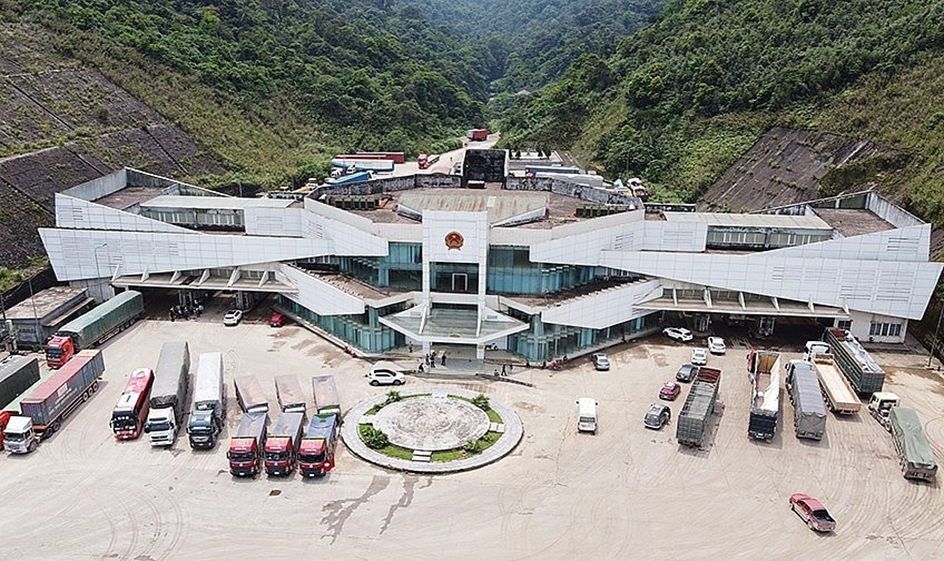
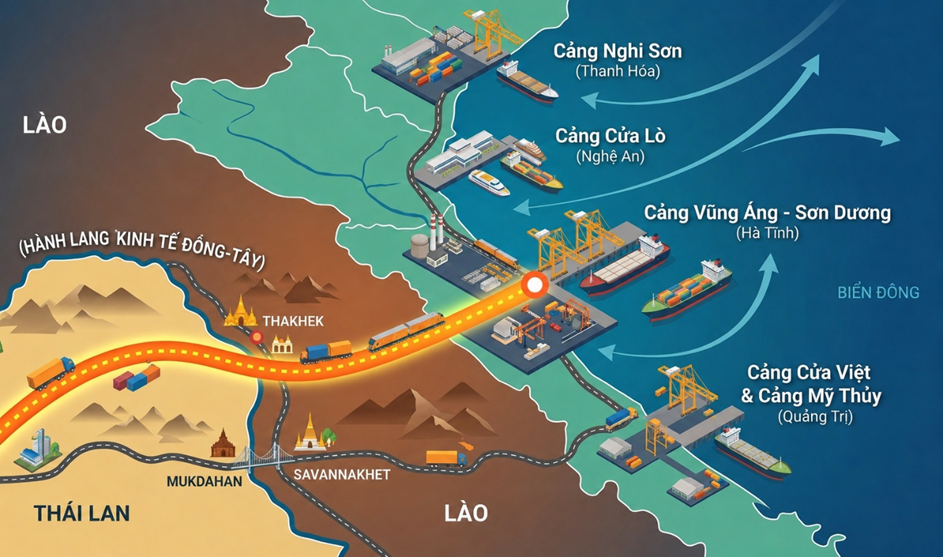
Ha Tinh is situated in a unique location on the map of Southeast Asia: to the east, it borders the East Sea with the Vung Ang – Son Duong deep-water port system; to the west, it borders Laos via the Cau Treo international border gate on National Highway 8 – one of the shortest routes connecting Vietnam with Northeast Thailand and the Trans-Asian railway and road network. This is precisely the starting point of the East-West Economic Corridor (EWEC) that ASEAN economic planners have been targeting for decades.
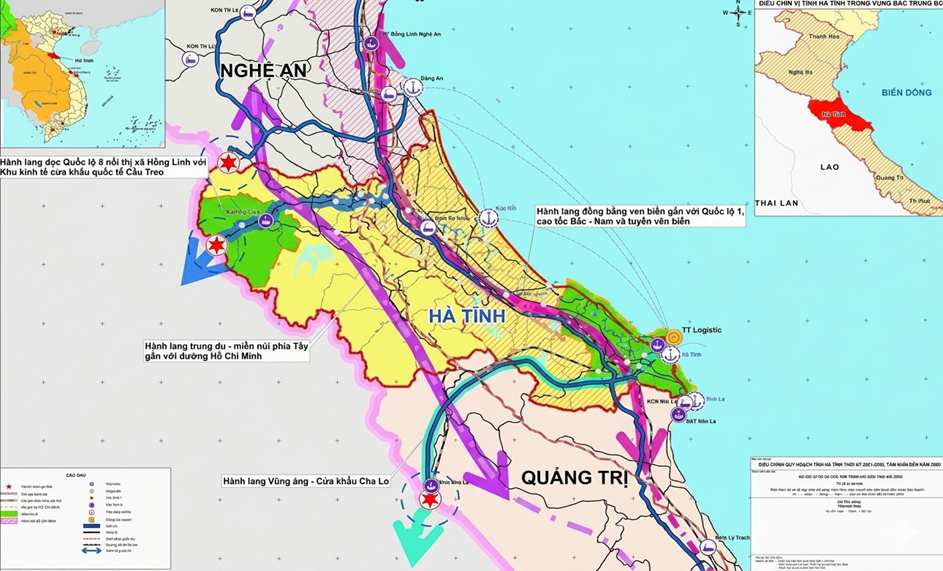
Therefore, the action plan clearly defines its core objective as “effectively exploiting the advantages of its natural location and seaport to develop logistics services in the province,” while also “contributing to enhancing competitiveness, promoting the flow of goods, supporting the development of import and export and other economic sectors.” Ha Tinh is gradually shaping its role as an international trade gateway for the North Central region and a transshipment center for goods in the Vietnam-Laos- Thailand economic corridor.
Logistics – The “lifeblood” of the industrial economy .
A key highlight of the Plan is the strategic integration of logistics development with industrial development, infrastructure, and regional linkages. Ha Tinh province has determined that logistics development is inseparable from key growth pillars such as the steel industry, energy, seaports, import-export, and the marine economy. This direction aligns with modern development trends, where logistics plays the role of a “lifeline” connecting production with the market, and linking the locality with national and international supply chains.
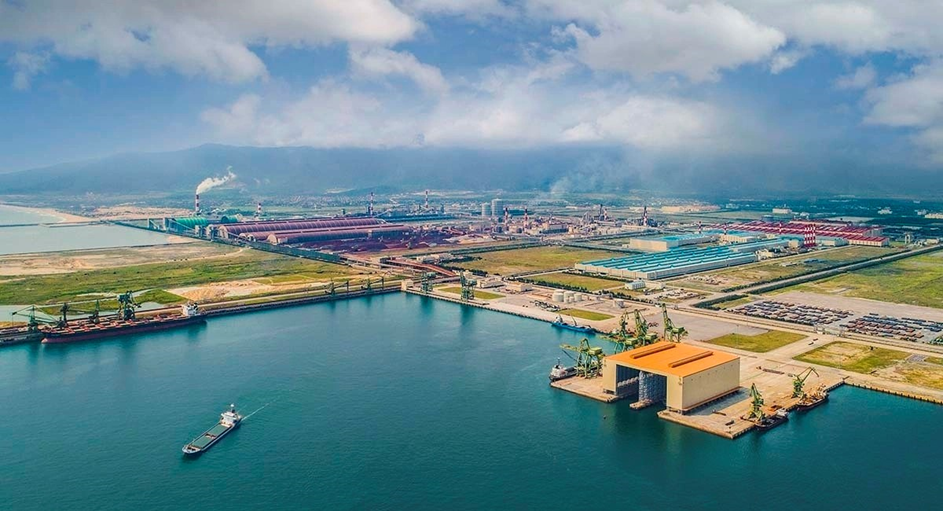
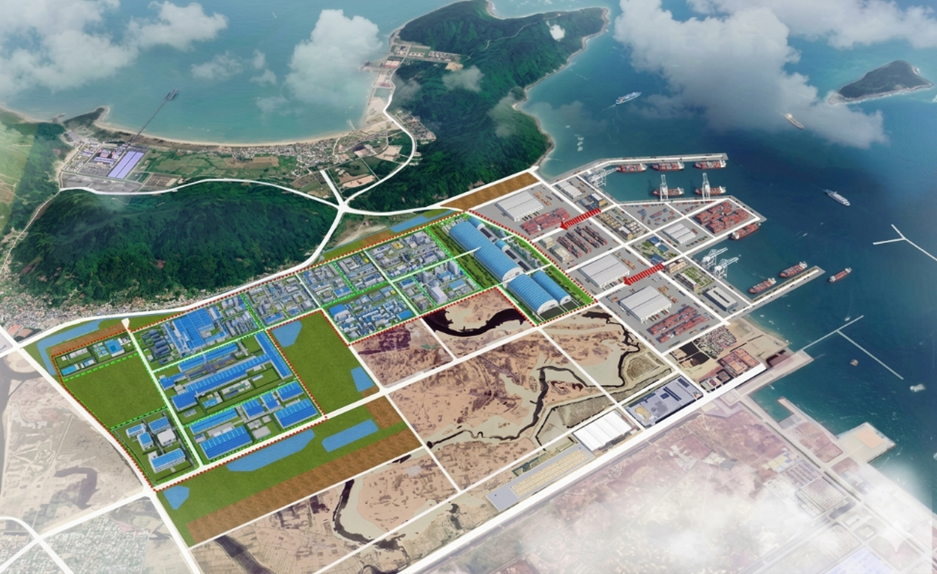
Over the past decade, Ha Tinh has become one of the largest heavy industrial centers in Central Vietnam. The new wave of investment, including Vingroup ‘s steel plant, stainless steel plant, Vung Ang III power plant, Vung Ang LNG terminal, electric motorcycle factory, and a series of green energy projects, along with the filling of industrial parks such as Bac Thach Ha Industrial Park Phase 1, Vinhomes Vung Ang Industrial Park, and Gia Lach Expanded Industrial Park, will create a huge demand for logistics, contributing to the formation of a complete industrial supply chain in the area. In this context, developing a synchronized logistics system is no longer just a supporting sector but a prerequisite for the sustainable development of the local industry and enhancing the competitiveness of Ha Tinh’s investment environment.

The action plan of the People’s Committee of Ha Tinh province is built on four groups of solutions that are systematic and closely linked, ranging from improving institutions, developing infrastructure, building markets, to enhancing competitiveness. Each group of solutions does not stand alone but forms a logical chain, in which institutions pave the way for infrastructure, infrastructure creates the foundation for the market, and the market is the ultimate measure of the entire strategy.
Improving institutions – the legal foundation for sustainable logistics development.
Firstly, the Plan identifies the improvement of institutions and the strengthening of state management as fundamental and prerequisite tasks. Practical experience shows that many localities invest in well-structured logistics infrastructure but still fail to attract businesses. The core reason often lies in an unfavorable legal environment, cumbersome administrative procedures, and inconsistent state management.
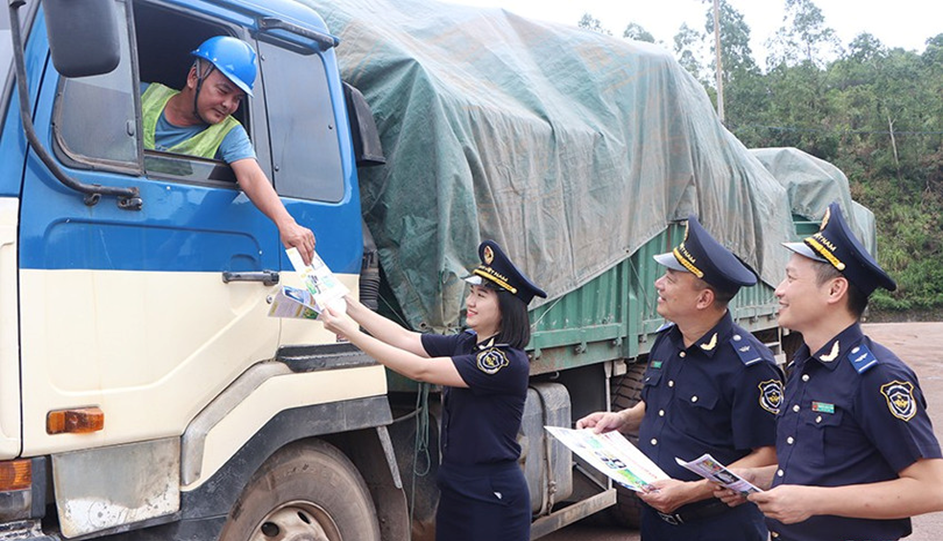
Accordingly, Ha Tinh focuses on three main directions: reviewing and adjusting the provincial planning for the period 2021-2030 with a vision to 2050 to align with the logistics development orientation; developing a revised master plan for the Vung Ang Economic Zone until 2050 and implementing the expansion plan for the Vung Ang Economic Zone – creating a sufficiently broad legal framework for large-scale logistics projects; and simultaneously promoting administrative reform, focusing on reducing and simplifying administrative procedures in import and export activities at border gates and seaports, in order to increase the flow of goods and expand the scale of the logistics market.
These tasks, while less “tangible” than infrastructure projects, have the most profound and sustainable ripple effect on the entire province’s logistics ecosystem in the long term.
Vung Ang Free Trade Zone – a special mechanism to attract investment.
One of the key highlights of the Plan is the initiative to study the establishment of a Vung Ang Free Trade Zone (FTZ). This is not only a groundbreaking step to attract strategic investment in logistics, high-tech industries, and international trade, but also opens up opportunities to form a modern logistics ecosystem with regional competitiveness. The Plan identifies this as a priority task in 2026, assigning the Provincial Economic Zone Management Board to lead it, with the goal of “attracting strategic investors in the logistics and industrial production sectors to increase the domestic supply of goods in the province.” If effectively implemented, the Vung Ang FTZ will become a new driving force promoting the flow of goods, services, investment capital, and technology into Ha Tinh.
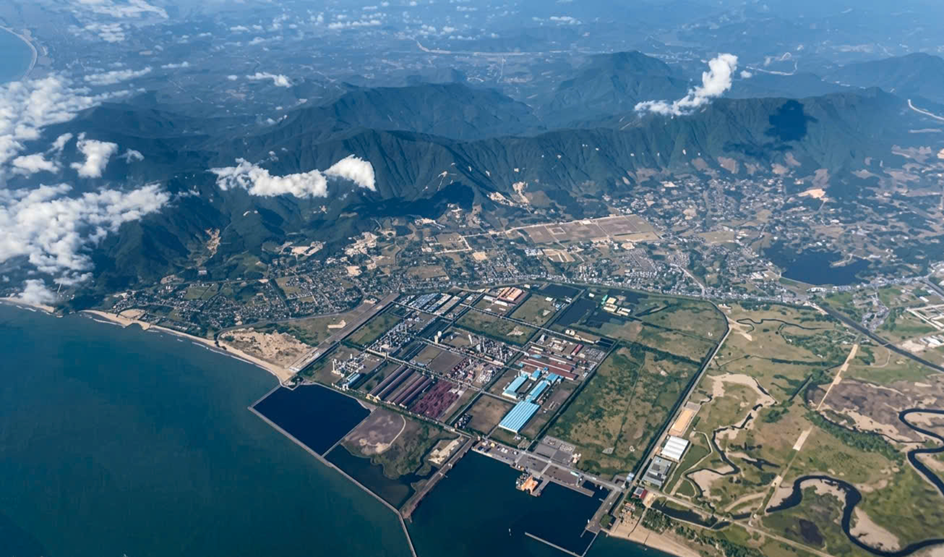
If approved, the Vung Ang Free Trade Zone (FTZ) will allow goods to enter and exit the area with streamlined customs procedures, preferential tax rates, and flexible management mechanisms – ideal conditions to attract international logistics corporations, regional distribution centers, and export-oriented manufacturing businesses. This is a step that could completely change the stature of Vung Ang on the Southeast Asian logistics map.
Connectivity infrastructure – A key pillar for logistics development.
The province is focusing on building and perfecting a synchronous and modern logistics infrastructure system; prioritizing key projects such as the Vung Ang Logistics Center, the Son Duong seaport and logistics center, the Duc Tho logistics center, and the logistics center and ICD at the Cau Treo International Border Gate Economic Zone.
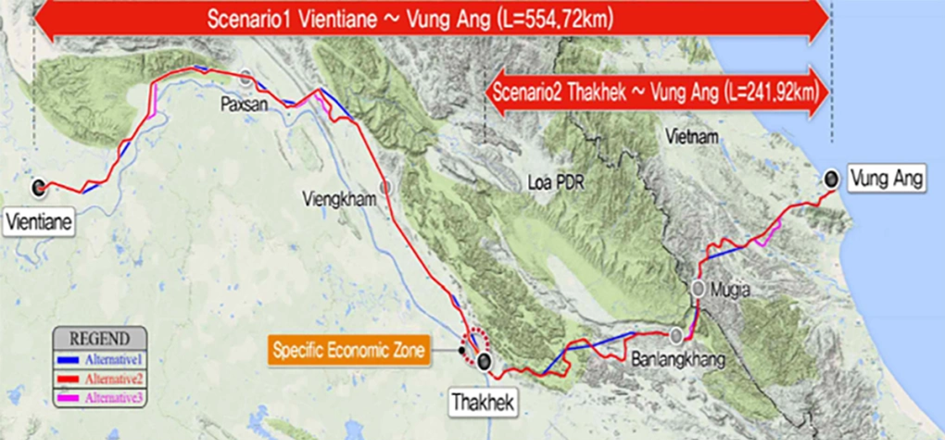
Simultaneously, the province is focusing on completing the infrastructure of the Vung Ang – Son Duong port system, ensuring seamless connectivity with expressways, high-speed railways, border gates, and the East-West economic corridor. Strategic transportation routes prioritized include: the Vientiane – Vung Ang railway, the Vung Ang – Cha Lo expressway, the expansion of the North-South expressway section through Ha Tinh, the upgrading of National Highway 12C, and the completion of the breakwater north of Vung Ang port. Upon completion, these projects will create a significant leap forward in the province’s overall cargo handling capacity.
In particular, the Vientiane-Vung Ang railway line, mentioned within the framework of the Agreements and Protocols between the Governments of Vietnam and the Lao People’s Democratic Republic, has profound geoeconomic significance. If completed, it will directly connect the Lao capital with Vietnamese seaports, opening up the possibility of Vung Ang becoming the main export gateway for Lao goods instead of having to transship through Thai ports as is currently the case.
Promoting regional connectivity in logistics service development.
Ha Tinh is gradually establishing itself as a gateway for international trade in the region. Strengthening regional economic development linkages and cooperation, promoting the formation of a cluster of marine economic sectors encompassing Thanh Hoa – Nghe An – Ha Tinh – Quang Tri, and the Ha Tinh – Laos – Northeast Thailand economic corridor (with the proposed addition of Route 8 and Route 12 to Protocol No. 1 of the GMS-CBTA Agreement, and the opening of a fixed international intermodal passenger transport route from Ha Tinh – Thakhek – Nakhon Phanom – Bangkok) will create significant potential for the development of cross-border logistics services, port logistics, and industrial logistics on a scale sufficient to attract international strategic investors.
Digital transformation and green logistics – positioning for the future.
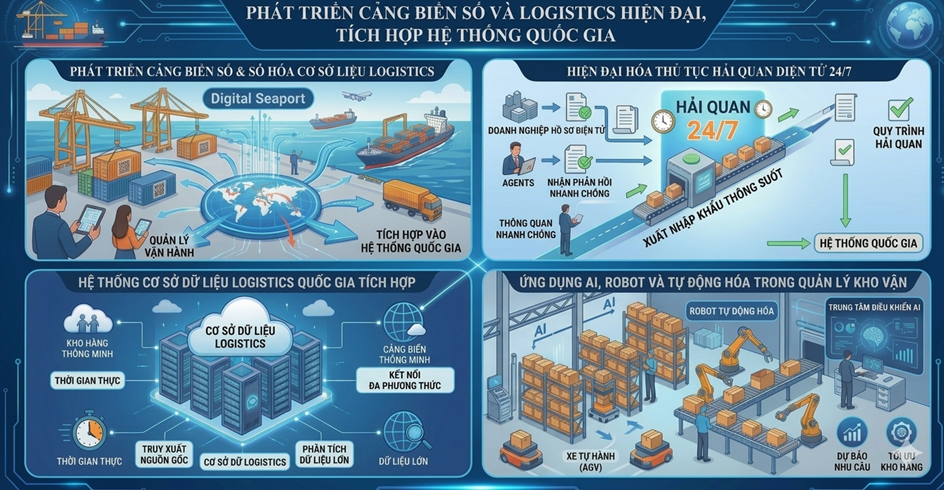
Ha Tinh province aims not only to develop logistics extensively but also to focus on improving service quality, competitiveness, and sustainability of the industry. The plan outlines many specific solutions for digital transformation: developing digital seaports, digitizing logistics databases and integrating them into the national system, modernizing 24/7 electronic customs procedures, and applying AI, robotics, and automation in warehouse management.
Regarding green logistics, the province aims to encourage businesses to use clean transportation methods, the “green warehouse – green port” model, reduce carbon emissions, and apply international sustainable growth standards. In the context of major export markets increasingly imposing stringent requirements on emissions and environmental standards, green logistics will not only be an essential requirement but also a crucial competitive advantage for the locality in attracting investment and developing international trade.
In addition, the province is also focusing on improving the quality of its logistics workforce through training programs in logistics management, supply chain management, 4PL-5PL operations, and fostering research and market forecasting capabilities. This shows that Ha Tinh is aiming to build a modern logistics ecosystem based on knowledge, technology, and innovation.
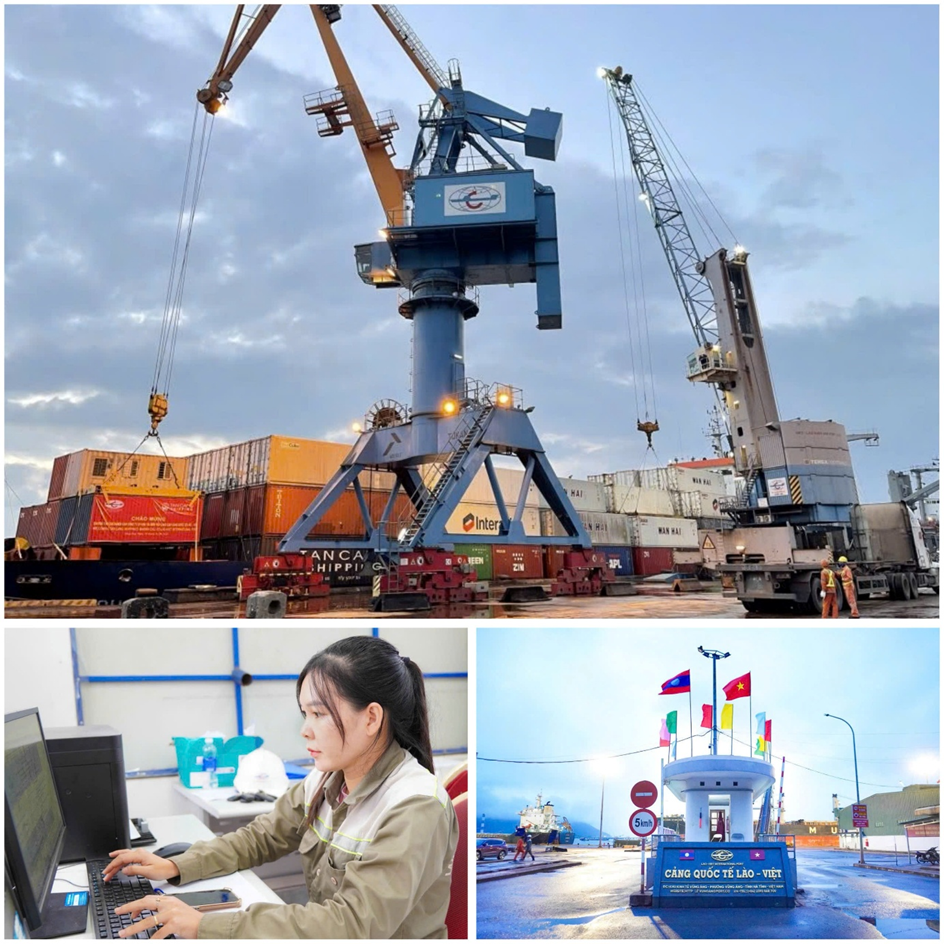
2026 is a pivotal year with a series of foundational tasks to be implemented: adjusting the planning, developing the Vung Ang FTZ project, issuing a Resolution on industrial zones and clusters, and launching investment promotion for key logistics centers. This is the time to translate policy commitments into concrete actions.
It can be affirmed that Ha Tinh’s Action Plan for implementing the Vietnam Logistics Service Development Strategy for the period 2025-2035, with a vision to 2050, is not only a concrete action program that implements the Government’s policy, but also clearly demonstrates the province’s development aspirations and strategic thinking in the new phase. With its advantageous geoeconomic location, increasingly完善 infrastructure, and determination to reform administration, attract investment, and develop fundamental economic sectors in a coordinated manner, Ha Tinh is facing a great opportunity to break through and become an important logistics center in the North Central region and the East-West economic corridor.
Throughout this journey, the collaboration of the business community, strategic investors, and domestic and international logistics organizations will be crucial in realizing the goal of building a modern, smart, green, and internationally competitive logistics system; contributing to the rapid and sustainable development of Ha Tinh in the new era.
Source: https://hatinh.gov.vn/vi/bai-viet/ha-tinh-va-dinh-huong-tro-thanh-trung-tam-logistics-quan-trong-cua-khu-vuc