
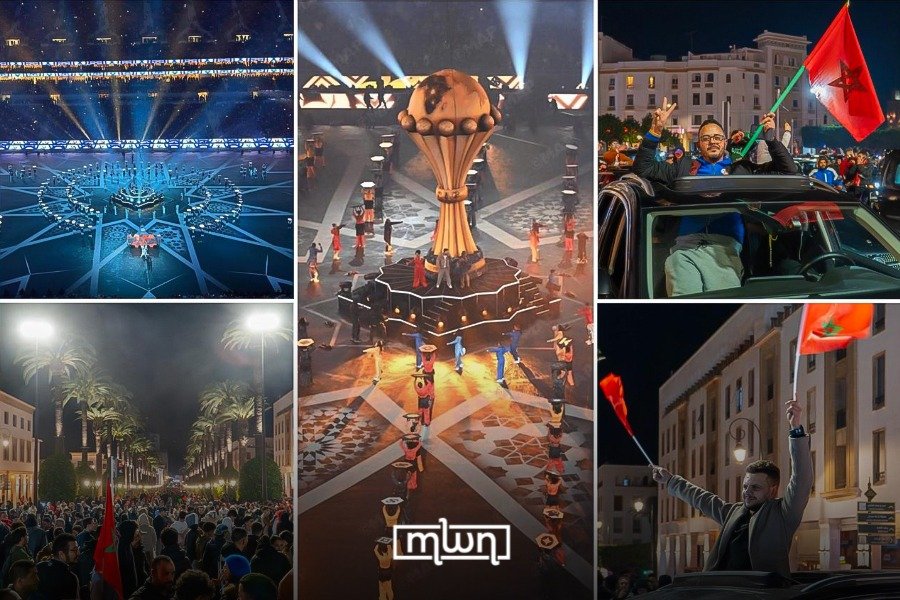
The 2025 Africa Cup of Nations (AFCON) is far more than just another football tournament in Morocco. It’s the culmination of decades of hard work, a long-term strategy that’s paid off as the country becomes one of the top destinations for major international sport and cultural events.
By linking up sports, diplomacy, building infrastructure, and running the country with an eye to the big picture, Morocco is leveraging football as a tool of soft power, a way of gaining influence and increasing geopolitical credibility.
Morocco’s preparations for the 2025 AFCON show a level of organizational maturity rarely seen before in African football. From stadium to transport systems, digital infrastructure, security, and even broadcasting, the kingdom is bringing its A-game.
It’s safe to say that Morocco is today genuinely in the same league as major European countries when it comes to staging big international events. What sets it apart isn’t only the ambition, but it’s actually the execution of that ambition.
Years of steady investment have created a whole system that can bring off big events smoothly and on time. Not just a one-off effort for the sake of one tournament but a lasting change in the way the country works, with the added goal of helping Morocco and Africa punch above its current commercial weight on the global stage.
AFCON is vision-driven, not event-driven
“The Kingdom has been investing in modern stadiums and urban infrastructure for many years, not because of the AFCON, but as part of a broader national development strategy,” says Omar Khyari, an advisor to the Royal Moroccan Federation of Football president Fouzi Lekjaa. “The country did not wait for AFCON or the World Cup to transform itself.”
In Khyari’s words, Morocco’s existing national assets are real evidence of a forward-thinking approach to long-term development. Supporting and guiding this forward-looking approach is the “long-term vision of His Majesty King Mohammed VI,” Khyari explained, stressing that Morocco now has a lot to show. Al Boraq, Africa’s only high-speed train, makes it really easy to hop between major Moroccan cities. It also poured significant investments into airports, highways, and tourism infrastructure.
In addition, there’s the massive ongoing project building the Grand Stade Hassan II near Casablanca, which, when finished, is going to be the world’s biggest football stadium with an incredible capacity of 115,000 seats.
“These achievements demonstrate that Morocco’s readiness is not event-driven but vision-driven,” Khyari explains, so AFCON “is therefore part of a broader continuum, not a starting point.”
AFCON 2025’s unprecedented scale in numbers
AFCON 2025 is breaking records across finance, attendance, logistics, and media, which is totally redefining what’s considered “normal” for the tournament.
Revenue & Sponsorship
- Total projected revenue: $192.6 million
- Sponsorship: $126.16 million (66% of total revenue), more than double the $54.25 million sponsorship in AFCON 2021
- Ticketing: $19 million
- Broadcast: $46.47 million, including a record-breaking 20 deals across 30 European territories
Team Logistics
- All 24 teams have dedicated 5-star hotel-based camps with advanced training and medical facilities provided
Prize Money
- Total prize fund: $32 million USD: a 43% increase over previous editions
- AFCON 2025 winner: $10 million USD (Cameroon 2021 received 5 million USD, marking a staggering 100% increase over four years).
Broadcast & Media Reach
- First AFCON to broadcast all 52 matches free-to-air in the UK
- Advanced broadcast technology used for every match: 4K HDR, drones, spidercams
- 17 apparel brands supplying 24 teams, with Puma kitting out five teams
- Widest global broadcast reach ever, with the opening match shown in over 180 territories.
These numbers are the ultimate proof that Morocco is delivering the tournament at a scale and standard unmatched in the continent’s history. In fact, CAF’s Secretary General has hailed the tournament as the “best ever.”
Learning from global models
Other countries have long recognized now that sports have strategic value beyond just spectacle or short-term profits. These massive events are national investments in diplomacy, commerce, and soft power. More importantly, perhaps, they are platforms to project influence, foster collaboration, and generate long-term economic and social benefits. As such, they help build the kind of global influence and social impact that lasts long after the trophy is lifted.
At a recent sports diplomacy conference in Ottawa, Canadian officials explained just how the federal programs are helping out cities and national sports bodies to land the rights to host some of the world’s biggest sporting events.
Some fairly rigorous requirements have to be met as part of this support, including detailed assessments of how an event will impact the host country’s economy and long-term plans for the legacy of the event long after it has ended. All of these requirements are designed to ensure that hosting an event is more than just a nice symbolic trophy on the shelf and actually brings some real, tangible benefits to the country.
Morocco is on the same path. AFCON 2025 is similarly a strategic investment in the kingdom’s international profile, economic positioning, and institutional credibility.
The country’s strategy is not about competing against the rest of the continent but about elevating it. By hosting AFCON at this level, Morocco is changing the way that African sporting events are viewed on the world stage. This will help establish confidence in Africa’s organizational capabilities and prove that long-term planning, institutional strength, and political commitment can result in world-class events.
The ripple effect will extend further than Morocco. Other African countries now have a clear benchmark for what Morocco’s operational excellence looks like and be inspired by it. In this sense, AFCON 2025 is as much about reputation and power as it is about football.
Plus, Morocco is already looking ahead to some even bigger opportunities like co-hosting the FIFA World Cup in 2030. Looking even further ahead into the future, the infrastructure, experience, and organizational systems could suggest that Morocco could one day host the first-ever Olympic Games on the African continent.
Soft power through capability and continuity
Around the world, countries like Qatar, Saudi Arabia, and China have recently shown exactly how sports can be used to completely transform a nation’s position on the world map. Morocco’s approach is similar but it also has to be a bit different.
The kingdom is indeed the first African country to ever build a state-level strategy around sports. Gradually—and strategically—it is turning sports into a continuous engine for growth and diplomacy. And it is making sure the world keeps its eyes on Morocco for years to come.
Morocco’s whole soft power strategy is less about grand gestures and more concrete and about getting things done. It focuses on being reliable and building serious credibility. The kingdom is essentially boosting its lasting influence by consistently pushing for high standards.
Beyond sporting prestige, this targeted influence also speaks volumes about Morocco’s larger geopolitical ambitions. Hosting “the best AFCON ever” now and the jointly organized FIFA World Cup in 2030, the kingdom is positioning itself as a bridge between Africa, Europe, and the rest of the world.
AFCON 2025 isn’t some trial run to see how everything plays out; it’s a pretty straightforward statement. What Morocco is really saying is that African countries no longer have to just dream of competing on the world stage. Many of them are already flying high on the global scene in a wide range of areas, and others lagging behind can take inspiration from their high-achieving fellow African countries to make sure the continent keeps projecting itself and living as one of the main characters of the emerging global story, rather than a supporting cast or an aspirant.