
The offensive targets the regime’s energy core.
Israel carried out a new attack against Iran’s main petrochemical and gas infrastructure, in what represents one of the most significant blows to the country’s economy in the context of the current regional escalation.
Defense Minister Israel Katz confirmed that the operation targeted the South Pars complex, considered the world’s largest natural gas field, shared by Iran and Qatar. According to his statements, the attack severely hampered Iran’s production capacity for export.
“This is a major economic blow to the regime,” said Katz, who argued that the offensive aims to directly weaken the sources of funding for the Iranian military apparatus.
South Pars: Iran’s energy hub
The South Pars complex is key to the Iranian economy. It accounts for a substantial portion of the country’s gas production and is essential for both domestic consumption and energy exports.
Energy analysts point out that a significant disruption in this area could result in losses of tens of billions of dollars, in addition to affecting Iran’s internal energy stability.
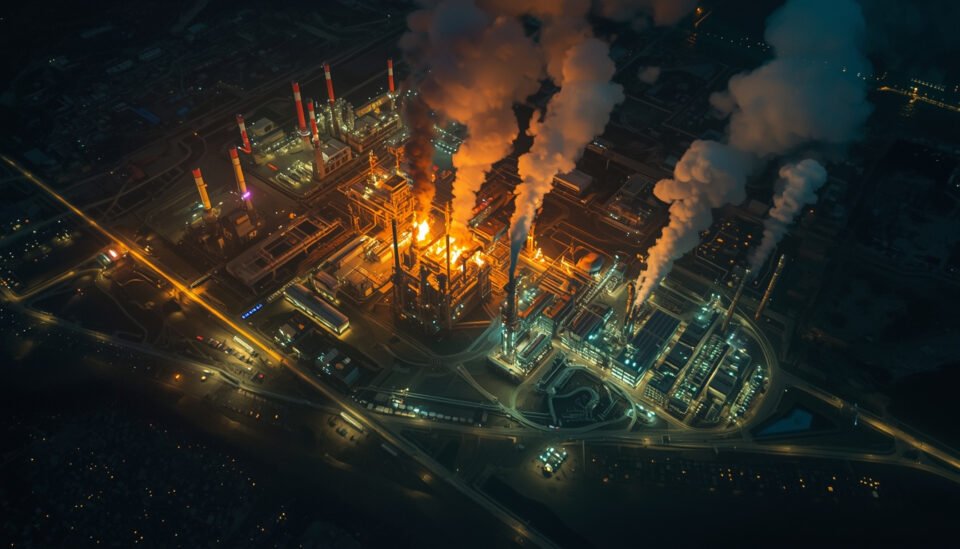
According to Israeli defense sources, the attacks impacted critical processing and storage facilities, causing fires and visible structural damage in multiple sectors of the complex.
Strategy: attack the economy to weaken the war effort
The operation is part of a broader Israeli strategy aimed at degrading not only the Iranian regime’s military capabilities, but also its economic infrastructure.
Israeli officials maintain that revenues from the gas and petrochemical sector are essential to funding the Revolutionary Guard and its allied networks in the region.
In this context, the attack on South Pars has not only economic but also strategic implications: it seeks to limit Iran’s ability to sustain prolonged operations in the conflict.
Escalation and message to Tehran
The new bombing reinforces the signal that Israel is willing to expand the scope of its operations to targets of high economic value, beyond strictly military installations.
Official sources in Jerusalem indicated that actions against critical infrastructure will continue if the Iranian regime maintains its current stance in the conflict.
For its part, Tehran has not yet issued a full official damage assessment, although state media acknowledged incidents at energy facilities in the south of the country.
Regional impact and global uncertainty
The attack is generating concern in international markets, given that any prolonged disruption in South Pars could influence global gas prices and the region’s energy stability.
Furthermore, the attack increases the risk of a further escalation, at a time when control of strategic routes such as the Strait of Hormuz is already under strain.
The offensive, therefore, not only redefines the battlefield, but also the economic front of the war.
