
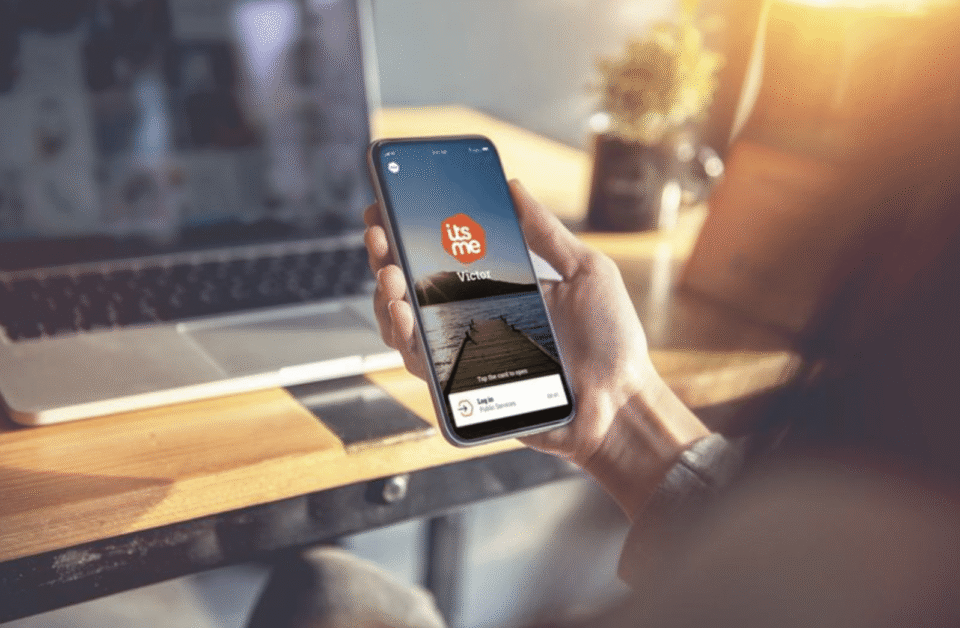
The local can be universal and vice versa. In recent conference presentations from Itsme, the Belgian digital identity platform shared learnings as it expands into the Netherlands in preparation for the EUDI Wallet era.
Itsme has cautioned Dutch organizations that fragmented identity processes can drive costs up, increase fraud risk and frustrate customers. In this new age, digital identity takes on a central role in managing user relationships.
Launching Itsme in the Netherlands, country manager Roderick Arts said identity sits “at the heart of customer relationships.” Banks, insurers, telecoms and energy providers rely on verification at login, onboarding and transaction.
Many organizations still run identity “piece by piece,” he claimed, with separate flows for signing, authentication and login. This fragmentation creates complexity for businesses, friction for users.
A new survey by Itsme and NielsenIQ, of more than 4,000 consumers in the Netherlands and Belgium, showed that Dutch banks and insurers scored 64 out of 100 for identity‑solution maturity.
Consumers meanwhile rated the importance of smooth digital identification at 75. Onboarding was the weakest point, scoring just 34. Intriguingly, Belgium showed similar gaps despite Itsme’s widespread adoption there.
Consumers overwhelmingly prefer a standalone reusable identity app, the research found. Methods like uploading ID photos, live video calls or manual document checks ranked poorly. Fragmented identity flows can result in abandoned onboarding and duplicated verification work. Knock-on effects can include overloaded support teams and higher fraud risk because of lost signals, and repeated integration work whenever products or channels change.
The solution lies in shared identity infrastructure, Arts said. A reusable identity layer would allow organizations to “build once, inherit everywhere,” reducing compliance overhead, improving fraud detection and lowering onboarding costs.
Belgium’s example shows the unified way
Itsme drew focus to its near-decade of experience operating Belgium’s national digital identity wallet, and what a unified ecosystem can deliver. After launch, nationwide fraud fell 25 percent, banks saw a 20 percent rise in successful credit card payment confirmations. Paper‑based onboarding processes dropped from days to minutes.
Adoption succeeded because banks, government and the private sector aligned around a shared trust framework, argued Karlien Vekemans, head of corporate development at Itsme.
Digital identity systems need continuous monitoring and real‑time response, not just compliance frameworks, as fraud evolves rapidly. Itsme has diversified its stack to tackle fraud’s fast pace. Itsme for high‑stakes identity moments such as onboarding, KYC and high value transactions, and NextAuth for frequent, low friction authentication in client applications.
Europe is entering a multi‑wallet reality with banks, telecoms, healthcare providers, governments and global tech firms all developing wallet‑like identity capabilities. The challenge is in how they interoperate to deliver the right data to the right service at the right time, according to Vekemans.
For its part, Itsme does not plan to become an accredited European Digital Identity (EUDI) Wallet. Instead, it’s aiming to operate above the public compliance layer, offering high assurance identity, qualified electronic signatures, fraud prevention and orchestration between multiple wallets.
The company warns that public wallets alone will evolve too slowly to keep pace with fraud and cannot meet every sector’s compliance needs. With Itsme now officially launched in the Netherlands, the company says it hopes to replicate Belgium’s public‑private model across Europe as demand for digital identity keeps growing.
And one country’s experience could track across borders.
Article Topics
digital ID infrastructure | digital wallets | Itsme | Netherlands | reusable digital ID