
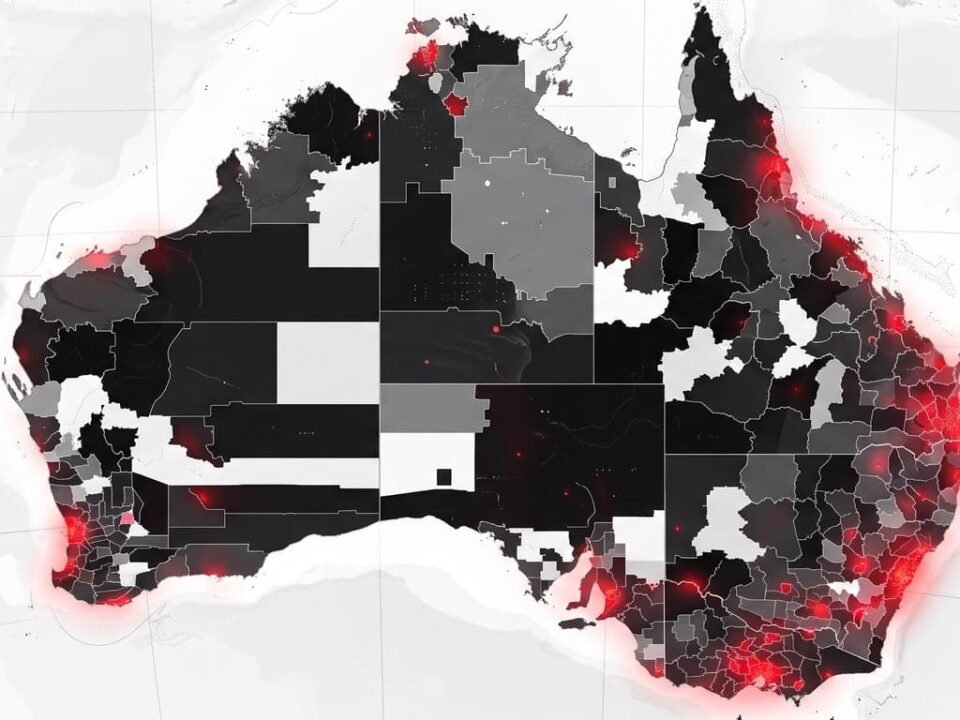

Treasurer Jim Chalmers and RBA governor Michele Bullock have presided over a period of higher mortgage stress that has made parts of Australia more vulnerable to AI job loss.
Homeowners in some of Australia’s most aspirational suburbs could see their communities up-ended as AI-led workplace changes collide with high levels of mortgage stress and weakening property prices.
Exclusive research by analytics group FoundIt has revealed hundreds of suburbs have emerged as “high risk” locations where AI-driven redundancies and stifled wages would have a much higher impact.
Most of the areas were in Melbourne, Sydney, Brisbane and Perth and had two features, according to the analysis of government jobs impact modelling, census data and mortgage figures.
MORE: Melbourne’s top AI warning zones revealed
Sydney suburbs most under threat from AI job cuts
Brisbane suburbs most exposed to AI mortgage crisis
The one feature was a concentration of white collar workers in exposed industries and the other was homeowners with large mortgages on newly bought properties, often funded by already stretched salaries.
This meant any white-collar job losses posed a higher risk of resulting in a mass of forced sales that could slash home values in the area.
Even homeowners not directly impacted by AI job losses would be affected because mass home sales would drive down property values. Picture: Sarah Wilson
FoundIt head of research Kent Lardner said other regions could see just as many white collar job losses but with a difference: it was common for homeowners in those areas to have fully paid off homes.
“Not every suburb housing market will be impacted the same way. Just because the job is affected doesn’t mean the impact will flow through evenly,” he said.
“The most vulnerable areas have a high number of homeowners relying on white collar wages to pay down a relatively new mortgage with a high loan to value ratio.”
Mr Lardner noted that it was not just the threat of job losses that made these areas vulnerable – AI adoption could also stifle wages.
FoundIt head of research Kent Lardner headshot – for herald sun real estate
This would make it harder for already stretched households to pull themselves out of mortgage stress.
“Suppressed wages is probably the biggest pain point,” he said.
“Companies that invest heavily in AI systems will likely keep the bulk of that profit. For employees, there will be a long wait between that implementation and when they get some of those crumbs.
“The danger is that we already have so many people on the brink after five interest rate hikes this year … soft wage growth has a significant impact when your mortgage costs keep rising.”
FoundIt revealed the most at risk suburbs in major states:
QUEENSLAND
Brisbane’s mortgage belt has emerged as a potential hotspot for housing stress caused by artificial intelligence, with the report identifying 15 suburbs at high risk over the next two years.
Murarrie was ranked Queensland’s most vulnerable suburb – many of the other vulnerable locations were in similar areas.
Brisbane is somewhat less exposed than Sydney and Melbourne.
Mr Lardner clarified that a feature of the Brisbane market could make it better insulated than Melbourne or Sydney because many recent buyers had relocated from southern states with substantial equity, while investors had rental income to help over repayments.
“A lot of the activity in Brisbane, especially was a mix of people exiting Victoria and (Sydney), but they moved up with cash in hand,” he said. “They didn’t go up there with massive mortgages.”
VICTORIA
Melbourne’s inner northern suburbs are projected to face the worst of Victoria’s AI-led home price impacts, and the city’s workers face the nation’s greatest risks from the technology.
The Victorian capital’s weaker economy is expected to leave homeowners more vulnerable than those in Sydney, even though mortgages there are much higher.
There are growing concerns displaced workers will find it harder to land another job.
FoundIt revealed that across Melbourne there were 101 regions facing risks from AI.
Mr Lardner said jobs in banking and insurance were particularly vulnerable as these industries faced headwinds from the housing market downturn.
“If you look at where the highest numbers of bank employees are living in recently bought properties, it’s Melbourne,” Mr Lardner said.
“It’s possible that there is more (AI) risk in Melbourne. The mortgages are not as large as in Sydney, but what other jobs are available for those affected by AI? The Victorian economy is not as good.”
SOUTH AUSTRALIA
The likelihood of widespread white collar job losses that would push down home values was lower in South Australia, with the state deemed one of the nation’s more immune markets.
Aerial view of Adelaide CBD skyline. Picture: NAI Harcourts
According to the report – which set out to answer the question: “Where in Australia is the shift most likely to be felt first, and which local housing markets are least able to absorb it?”, 32 areas across the state were found to be at risk of AI-driven price loss – 11 deemed to be medium risk and the other 21 low. No SA area was deemed high risk.
The medium risk areas were concentrated in only few regions of the city.
NEW SOUTH WALES
A total 45 Sydney areas were deemed to have a “high risk” of AI leading to redundancies and stifled salaries that would put downward pressure on property values, with much of the Hills District and Blacktown flagged as especially vulnerable.
One such area was Kellyville-West, FoundIt research showed.
Kellyville–West was found to have one of NSW’s most AI-exposed workforces, with 56.1 per cent of working residents employed as managers or professionals and 15.6 per cent in clerical roles.
Kellyville housing buffers were thin: just 17 per cent of homes were owned outright and nearly half carried a mortgage.
Mr Ladner said Kellyville risks were apparent when measuring it against an area like Double Bay.
“Double Bay and Kellyville have similarly AI-exposed workforces,” The difference is that one largely owns the capital and the other owes the bank. Over the next two years, that is the divide that matters most in Sydney.”