
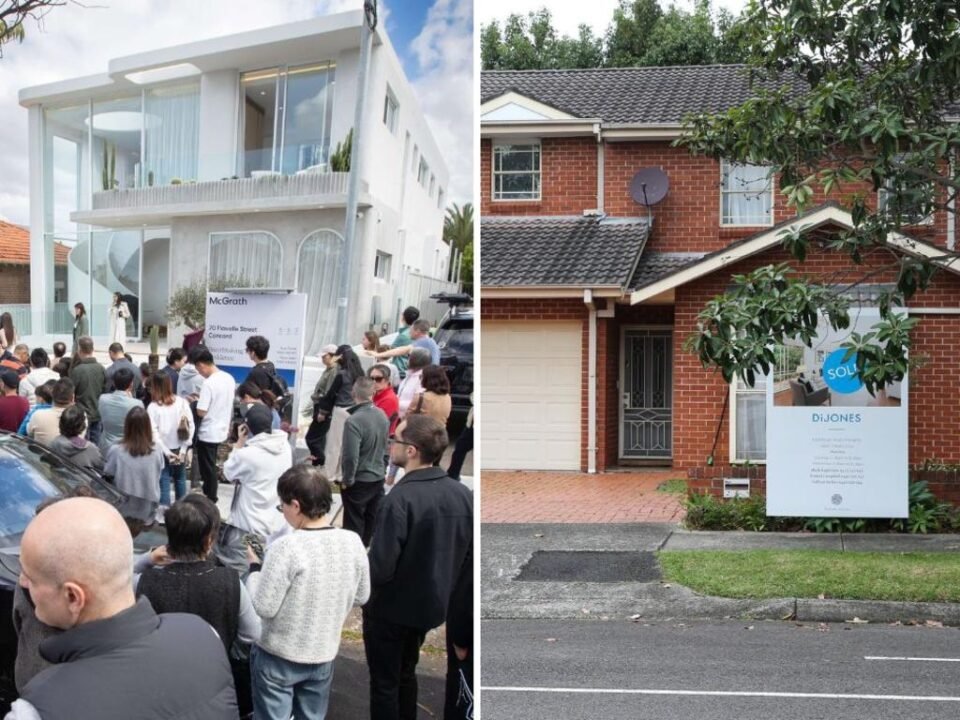

Negative gearing reforms were introduced to incentivise the supply of private rental accommodation. Picture: Gaye Gerard
ANALYSIS
Treasurer Jim Chalmers may be walking Australia into a housing policy trap governments once spent decades trying to avoid.
Included in this year’s federal Budget was an announcement that negative gearing would be scrapped for purchasers of established homes from July next year, while capital gains tax discounts will be replaced by an indexation system tied to inflation.
Negative gearing benefits will remain available for purchasers of newly-built homes.
These reforms are being sold as a moral correction, a way to level the playing field between aspiring young first-home buyers and older generations accused of hoarding wealth through property thanks to the tax system.
But buried beneath the class warfare rhetoric is an omission: there is scant new social housing projects to fill the void in rental supply that will arise when the negative gearing reforms take effect.
MORE: Tax blow-up fuels record Aus landlord exodus
Treasurer Jim Chalmers said negative gearing would be restricted to new homes from July next year. Picture: Hilary Wardhaugh/Getty Images
It’s likely the reforms will slow new investment in the housing market given how expensive property is to own. Not all investors will be willing to buy new builds.
In taking steps that could reduce growth in the supply of new rentals, it appears the government has forgotten why negative gearing tax benefits existed in the first place.
The policy was not invented as a gift to wealthy landlords, but as a way to reduce the cost of supplying public housing.
MORE: New country beats China in Aus home buy up
The hope of government is that restricting negative gearing to new homes will help stimulate the home building sector. Picture: Jonathan Ng
MORE: ‘Everyone’s scared’: Aus home prices sad fall
Public housing had been getting expensive and difficult to maintain. Government responded by outsourcing the task.
Instead of the state owning and supplying rental homes, policymakers created incentives for ordinary Australians to provide rental accommodation through private investment.
Negative gearing was at the centre of this philosophy and for all its flaws, it worked.
Australia developed a large privately funded rental market. Roughly a third of home purchases came from investors over much of the past two decades.
Critics portray that statistic as evidence investors pushed first-home buyers out of the market, but that ignores that a renter was housed each time an investor bought a property.
MORE: ALP ‘promise’ in ‘tatters’ amid migration bombshell
Now the government is stripping back a major investment incentive while failing to rebuild the public housing system that negative gearing was originally instated to reduce.
The flaw with the new reforms is that there is no corresponding rise in public housing construction to fill the gap.
The government insists its social and affordable housing programs will make up for this imbalance. But many of those programs are targeted toward victims of domestic violence and the chronically homeless, who no doubt urgently need help, but they are not the only ones.
The uncomfortable reality in modern Australia is that ordinary households are struggling too. They are not destitute enough for priority housing lists, but they are not coping either. How will reducing investor tax benefits help them?