
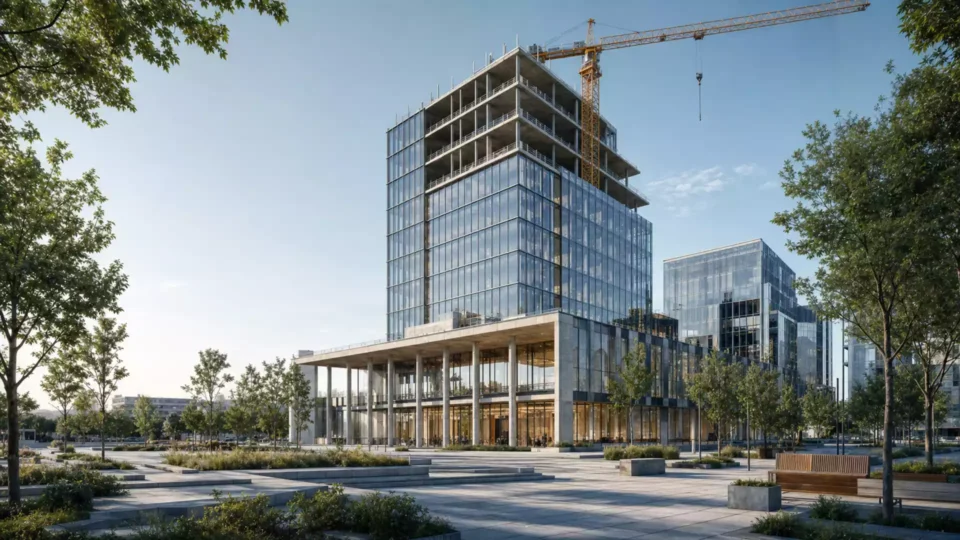
Fabege (SE0011166974) is a Swedish commercial property company whose stock gives investors direct exposure to office and mixed-use real estate in the Stockholm region, and the shares are currently trading steadily as of August 22, 2026 in a market that is closely watching interest rate trends and rental demand.
With no single dominant news event shaping trading on August 22, 2026, the key story for Fabege stock is how its portfolio of modern office properties and development projects in Stockholm continues to translate into rental income, asset values, and balance sheet resilience in a higher-rate environment.
For investors, the company’s combination of recurring rental cash flows and ongoing development activity means that both market data and reported fundamentals matter when assessing the risk-reward profile of Fabege stock in late August 2026.
Swedish real estate backdrop supports Fabege
Fabege is one of the established players in Sweden’s commercial real estate sector, with a focus on office properties in attractive submarkets of Stockholm such as Solna, Hammarby Sjöstad, and the central business district, and its stock tends to track both the domestic property index and broader Nordic equity benchmarks.
Historically, Swedish property companies like Fabege have benefited from relatively strong tenant demand in the capital region, where vacancy rates for modern office space have often stayed low compared with many continental European markets, helping support rental levels and asset valuations over multi-year cycles.
However, the higher interest rate environment seen through 2025 and into 2026 has increased financing costs for leveraged real estate owners and put more focus on loan-to-value ratios, interest coverage, and the pace of asset revaluations, making reported net asset value per share and like-for-like rental growth key data points for investors in Fabege stock.
Reported fundamentals frame the investment case
In its most recent annual reporting, Fabege has typically broken down its performance by segments such as property management, development, and transactions, allowing investors to see how much earnings power comes from recurring rental operations versus gains and losses from property sales and revaluations.
The company’s historical figures have illustrated how shifts in yield requirements for office properties, driven by interest rates and risk appetite, can produce sizeable fair-value changes on the balance sheet even when rental income and occupancy remain stable.
Within the current regulatory and tax framework in Sweden, Fabege’s rental income and operating profit are closely tied to index-linked leases and the company’s ability to keep its portfolio in attractive locations with strong access to public transport and services, a strategy that has underpinned its business model across multiple reporting years.
Interest rates and valuation sensitivity
For Fabege stock, one of the central investor questions in August 2026 is how sensitive the company’s net asset value and earnings are to future interest rate decisions by the Swedish central bank and to changes in long-term bond yields in the eurozone and globally.
Real estate valuation models typically discount future rental cash flows at a rate that includes a risk-free component and a property-specific risk premium, so moves in benchmark yields can influence required yields on office properties and therefore book values, especially for companies like Fabege that hold a large, concentrated portfolio.
The interaction between financing costs on floating-rate debt, hedging through interest rate derivatives, and the potential for refinancing at new terms makes the interest rate path a direct driver of profit and loss for Fabege, beyond the indirect effects on tenant demand and macroeconomic activity.
Rental market dynamics in Stockholm
On the operational side, rental market trends in Stockholm’s office sector remain central to the medium-term outlook for Fabege, as the company’s portfolio is heavily weighted toward that region and asset class.
Factors such as the balance between hybrid work patterns and office attendance, the willingness of tenants to commit to long leases, and the level of competition from newly built or refurbished properties all influence achievable rents and leasing momentum for Fabege’s buildings.
Historically, premium locations with modern, energy-efficient buildings and good transport links have maintained stronger rent levels and occupancy than older or less well-situated properties, which has been reflected in Fabege’s strategy of focusing on quality assets and urban development projects rather than spread-out holdings.
Balance sheet, funding, and risk considerations
From a balance sheet perspective, investors considering Fabege stock pay close attention to metrics such as loan-to-value ratios, average interest cost on debt, and the maturity profile of borrowing, since these indicate how well the company can manage refinancing and interest expense under different market conditions.
Real estate firms typically use secured bank loans and bond market funding, and the pricing of these instruments can be influenced by credit spreads, rating assessments, and investor risk appetite, meaning that shifts in the broader Nordic and European credit environment can feed through to Fabege’s P&L via interest costs.
Capital structure decisions, including whether to use hybrid instruments or rights issues to support growth and maintain leverage at targeted levels, have implications for existing shareholders, so reported equity ratios and net debt figures are closely watched whenever Fabege publishes interim or annual financial statements.
Peer context among Nordic property companies
Fabege operates in a competitive landscape that includes other Swedish and Nordic office and commercial property owners, and investors often compare valuation multiples such as price-to-net-asset-value, price-to-earnings, and dividend yield across this peer group when deciding how to allocate capital.
Companies with larger residential exposure may show different earnings stability and valuation dynamics compared with office-focused firms like Fabege, especially when tenant demand and regulatory regimes differ between residential and commercial segments.
For Fabege, the concentration in Stockholm offices can be a strength in periods of strong local economic growth and limited new supply, but it also creates exposure to city-specific risks, making diversification across submarkets and asset types within the region an important part of its risk management.
Dividend policy and shareholder returns
Dividend policy is a central part of the investment thesis for many property stocks, and Fabege has historically aimed to distribute a portion of its earnings to shareholders, subject to maintaining a solid financial position and funding for ongoing investments.
In evaluating dividend sustainability, investors look at cash flow from operations, maintenance and development capital expenditure, and the flexibility to adjust payouts if market conditions turn less favorable, including scenarios with higher interest costs or downward revaluations of properties.
Shareholder returns for Fabege stock over multi-year periods therefore reflect a combination of dividends received and changes in share price driven by earnings, asset values, and broader equity market trends, rather than relying on a single driver.
Strategy, sustainability, and tenant relationships
Fabege’s long-term strategy has emphasized urban development, sustainability, and close cooperation with tenants and local stakeholders in districts where it has significant property holdings, which can support both occupancy and reputational value.
Investments in energy efficiency, green building certifications, and modernizations can reduce operating costs and make properties more attractive to tenants with their own sustainability targets, potentially improving rental prospects and lowering environmental risks.
Strong tenant relationships, including the ability to adapt spaces to evolving needs and to manage relocations within the portfolio, help Fabege maintain occupancy and limit downtime when leases expire, which feeds through into smoother rental income over time.
Representative project: Arenastaden district
One representative example of Fabege’s development and property management activities is its work in the Arenastaden district in Solna, where the company has been involved in creating modern office environments around major transport links and event venues, illustrating its focus on building entire areas rather than isolated properties.
Projects in areas like Arenastaden typically combine office buildings, retail space, and services, creating a mixed-use environment that can support tenant attraction and retention by offering amenities and accessibility alongside workplace quality.
These types of developments highlight how Fabege seeks to generate value through both rental operations and long-term urban development, positioning its stock as a way to participate in the evolution of key districts in the Stockholm region.
Current trading context for Fabege stock
As of August 22, 2026, Fabege stock is trading on its home Swedish exchange in the context of a broader European equity market that is influenced by macroeconomic data, central bank expectations, and sector-specific sentiment in real estate and financials.
While the exact intraday price, daily percentage move, and market capitalization figures are not detailed here, investors typically monitor standard quote metrics such as the latest share price, 52-week trading range, and daily volume when assessing short-term trading conditions for Fabege.
For medium-term investors, performance since the start of 2026 and relative moves compared with Nordic property peers and broader indices provide a sense of how the market has digested Fabege’s recent financial reports, portfolio developments, and management guidance.
Read more
Further information on Fabege’s financials, strategy, and property portfolio is available on the company’s official investor information pages and in its published interim and annual reports, which provide detailed breakdowns of rental income, net asset value, leverage, and development projects.
Fabege’s commercial property offering
Fabege’s core business is owning, managing, and developing commercial properties in Stockholm, particularly office buildings designed to meet modern tenant requirements for flexibility, sustainability, and location.
The company’s portfolio includes both fully let properties in established districts and projects under development or refurbishment, offering tenants options ranging from traditional office layouts to more adaptable, collaborative spaces.
By focusing on selected urban areas where it has significant presence, Fabege can create synergies between individual properties, contributing to coherent districts with shared infrastructure and services that appeal to companies seeking attractive workplace environments for their employees.
Stock perspective heading into late 2026
From a stock market perspective, Fabege shares represent a way to gain exposure to Swedish commercial real estate as of August 22, 2026, with performance shaped by factors such as rental demand in Stockholm, interest rate developments, and the company’s own execution on development and leasing strategies.
Investors weighing Fabege stock in diversified portfolios typically consider how its risk profile, sector exposure, and potential for income and capital gains fit alongside other asset classes and geographies, including global equities, fixed income, and alternative investments.
Disclaimer…