
For a long time, I believed clarity was a prerequisite for action—that the market would eventually tell you, plainly, when it was time to move. The past few years have made clear that’s not how decisions get made.
Early in what became a prolonged stretch of disruption, it became evident that waiting for certainty wasn’t a strategy. Volatility was high, visibility was limited, and standing still felt safer than acting. But standing still is a decision.
Sometime early in what has become a long continuum of so-called “black swan” events, it became clear that waiting for certainty wasn’t a strategy. Volatility was high, visibility was limited, and standing still felt safer than acting. But standing still is a decision, too.

I remember how uncertain that stretch felt. Signals were mixed, the temptation to wait was real and there were no obvious answers. But it was also the moment when I realized that waiting for clarity wasn’t a strategy at all. We chose to stay engaged, continuing to invest in the business and completing a dozen corporate acquisitions during that period. Not because the risks had disappeared, but because we had learned that progress rarely comes after certainty; it comes from acting responsibly without it. Ultimately, those acquisitions proved transformative to our company.
That experience shaped how I think about markets today. Not in terms of timing the bottom or predicting the turn, but in recognizing when uncertainty begins to behave differently. There’s a meaningful distinction between volatility that paralyzes decision-making and volatility that can be underwritten. Right now, we’re seeing signs of the latter.
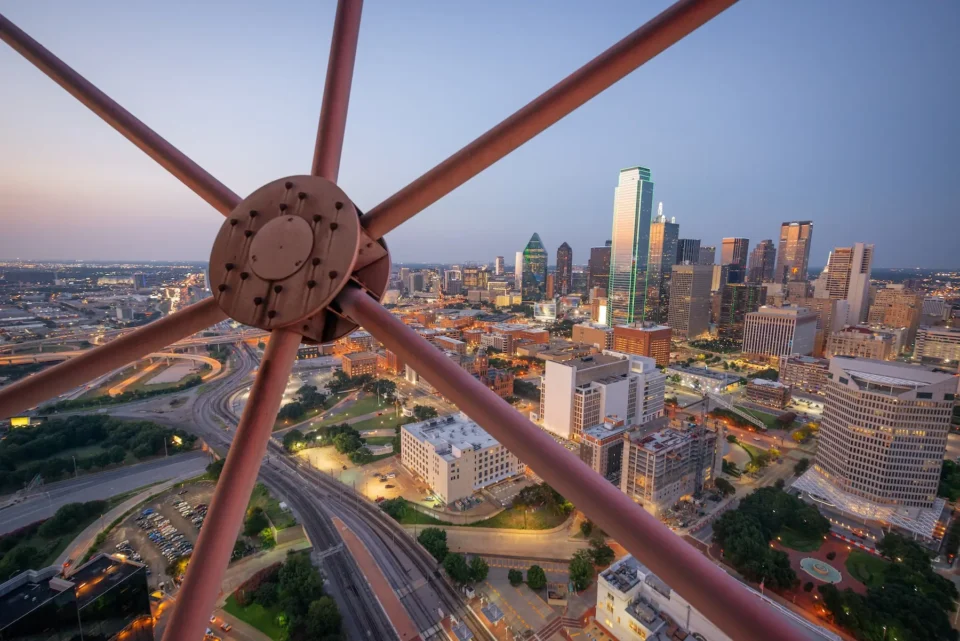
We’re seeing that shift nationally, but not everywhere at the same pace. Dallas tends to be out in front. It’s not the only market where institutional investors are beginning to reengage, but it’s often among the first where that behavior becomes visible. The combination of scale, liquidity, and economic diversity forces decisions sooner. When conditions begin to feel workable again, Dallas is one of the places where disciplined capital tests the water.
Institutional investors, who spent much of the last cycle on the sidelines, are beginning to move again. They’re doing so selectively and deliberately—not because the market feels clear, but because it feels workable.
What’s changed isn’t sentiment as much as structure. Credit markets have largely stabilized. Liquidity is available. Volatility, while still present, has become more contained. That combination matters. It creates an environment where risk can be assessed rather than avoided, and where disciplined underwriting replaces hesitation.
Institutional investors tend to move only when that shift occurs. They don’t rush in, and they don’t chase headlines. They respond to conditions that feel navigable rather than perfect.
Dallas is beginning to reflect that behavior. We’re seeing interest show up first where fundamentals remain durable and execution risk is better understood, particularly in segments of multifamily like workforce housing. Activity is still uneven, and this is far from a broad-based surge, but the direction is telling.
Pipelines are filling, conversations are advancing and capital that had been waiting for firmer footing is starting to re-engage. That kind of movement rarely announces itself loudly, but it’s often how the next phase of a market begins.
That re-engagement is also showing up in how institutions are approaching their portfolios. Many of the same players returning as buyers are also sellers, reassessing what still fits their long-term strategy and what no longer does. This kind of portfolio sorting isn’t a sign of stress; it’s a sign of clarity.
When markets are frozen, everything looks equally risky. When discipline returns, differences matter again, between assets—between strategies and between decisions worth making and ones better left alone.
That mindset is familiar. It’s the same discipline leaders apply inside their own organizations when conditions change. You evaluate what to keep investing in, what to let go of, and where focus truly belongs. The presence of that behavior in the market today, particularly among large, patient investors, is often the earliest signal that uncertainty has shifted. Not that it’s gone, but that it’s become something that can be worked through rather than waited out.
Markets rarely announce when they’ve turned. More often, they signal change quietly, through behavior rather than headlines. The return of large, disciplined investors reflects judgment—a willingness to engage with uncertainty rather than wait for it to disappear.
For business leaders, the takeaway is straightforward: progress doesn’t require perfect clarity, but it does require conviction, discipline, and the ability to act when conditions become workable, not comfortable. Institutional capital is beginning to do that again. In Dallas, the signal is subtle—but it’s there.
This CRE Opinion piece was written for D CEO by Jeff Erxleben, capital markets president at Northmarq.
