
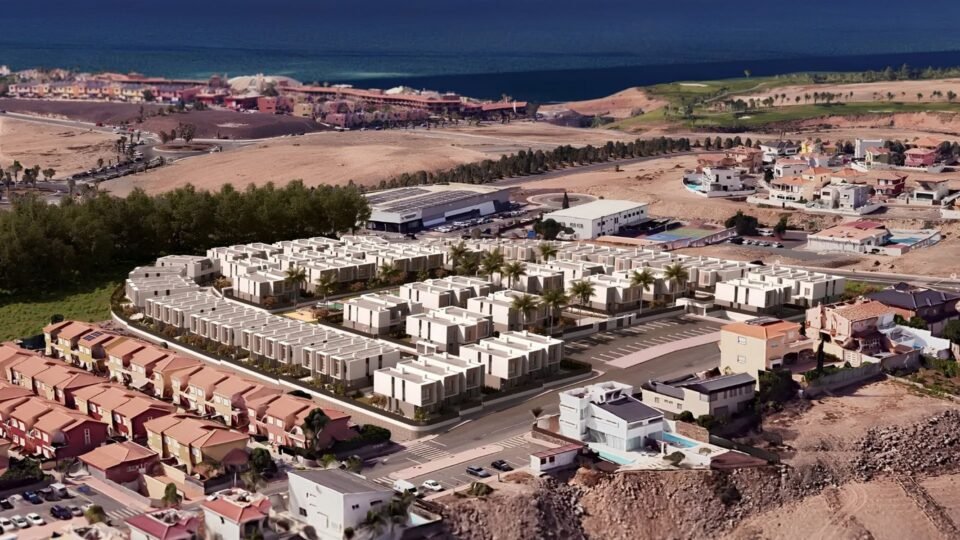
The consolidated census of residential structures in the area encompassing the urban and tourist zone of Maspalomas reveals a profound shift in ownership patterns, family size, and building age. Local property records show a total of 32.766 residential units, a critical mass broken down into 22.312 primary residences and 10.454 properties classified as secondary residences, which include second homes owned by international investors and assets used for short-term tourist rentals. This distribution confirms the duality of a real estate market where the housing pressures of the local workforce coexist with the profitability demands of foreign capital.
The internal demographic composition of households reveals an irreversible trend toward family fragmentation, which exerts direct pressure on the types of housing demanded by the market. Single-person households constitute the majority, totaling 7.736 homes, followed by two-person households, which number 5.986. Traditional structures are losing relative importance in the coastal region, with 4.029 three-person households, 2.744 four-person households, and only 1.817 larger households. This reality translates into a preferential demand for compact housing assets, with 15.042 primary residences located in the usable floor area bracket of less than 60 square meters, while the stock of larger residential properties, those exceeding 120 square meters, barely totals 3.342 properties across the entire municipality.
The tenure system for primary residences reflects the historical importance of access to private property ownership compared to new trends toward greater flexibility in the rental market. Statistics show 13.203 residential properties under consolidated ownership, a figure that more than doubles the 6.018 commercial units managed under traditional or seasonal rental agreements. Alternative housing arrangements, including employer-provided leases, usufructs, and co-housing models, account for a total of 3.090 households, highlighting the market’s difficulties in absorbing local solvent demand in an environment where land prices are under significant pressure from corporate capital.
The age of the existing buildings reveals a structural slowdown in residential construction activity that threatens to perpetuate the shortage of qualified housing during the current economic cycle. The bulk of San Bartolomé de Tirajana’s housing stock was built during the decades of intensive tourism expansion, with 11.892 buildings constructed between 1961 and 1980, and 12.192 between 1981 and 2000. New construction experienced a severe contraction between 2001 and 2020, with only 4.299 units built—a stagnation exacerbated by the fact that the census records only three buildings constructed before 1900 and 1.536 properties built in the first half of the 20th century.
Analysis of the historical series of real estate transactions over the last five years confirms the absolute dominance of the resale market compared to the inactivity of the new construction segment. The total volume of transactions reached its historical peak in the third quarter of 2022 with 556 sales of existing homes, subsequently initiating a process of moderation and liquidity adjustment. The balance sheet for the last full fiscal year shows a stabilization of the secondary market with 335 transactions in the first quarter, 309 in the second, 224 in the third, and 221 completed transactions in the fourth quarter, confirming a high turnover of the portfolio of mature residential assets.
The contribution of new housing to the commercial dynamism of southern Gran Canaria remains marginal, bordering on inactivity in the development sector. Transactions of newly built properties have been negligible over the last five years, registering barely two transactions per quarter and even reaching zero in several periods. The last significant increase in this indicator occurred in the fourth quarter of 2024 with 17 new-build sales. Construction activity has since stabilized in the final quarter of the period with seven initial transactions, six mid-quarter transactions, and only two transactions recorded in the final part of the year. This technical factor reinforces the generalized increase in the price per square meter due to the lack of new developments capable of alleviating market pressure from buyers.