
Guangzhou and Shanghai have just announced a number of groundbreaking measures to stabilize the commercial real estate market and bolster investor confidence, as China strives to revive its real estate sector.
New regulations on land leasing for commercial and industrial purposes will also facilitate the issuance of publicly traded real estate investment trusts (REITs). This is a financial instrument that real estate developers can use to supplement their capital.
Yan Yuejin, Vice President of the E-House Real Estate Research Institute in China, commented: “These policies have effectively addressed legal loopholes related to the renewal of expired non-residential land use rights. They mark an important milestone in helping the government and market participants unlock existing real estate assets, promote urban renewal, and stabilize market expectations.”

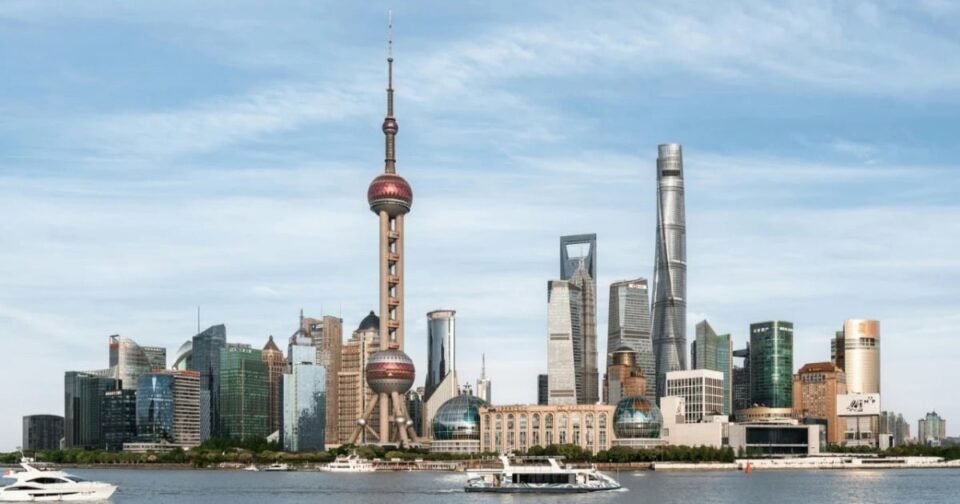
Shanghai city, China (Illustrative image: CV).
The Guangzhou and Shanghai authorities have proposed that owners of non-residential properties who wish to renew their contracts after expiration must pay land use fees no less than 70% of the fair market value.
In China, developers and property owners pay fees to obtain land use rights through lease agreements with the government.
In the early 1990s, when Beijing began to loosen its real estate market regulations, land lease terms were stipulated as follows: 40 years for land designated for commercial real estate such as shopping malls, 50 years for factory and office building land, and 70 years for housing projects.
Several commercial land leases are set to expire in the next few years, raising concerns about property values and the impact on the legitimate rights and interests of users.
Guangzhou issued a detailed policy on land use right renewals in April, followed by Shanghai at the end of July. Since then, Xiamen and Hangzhou have also announced similar regulatory frameworks for upcoming contract renewals.
CBRE estimates that by 2030, 30 million square meters of office and retail space in 18 major Chinese cities will have less than 20 years remaining on their land leases.
In a report published in August, Beijing-based Grandall Law Firm argued that detailed implementation guidelines are needed to ensure smooth renewals with reasonably priced land use fees.
Wang Feng, chairman of Shanghai-based financial services group Ye Lang Capital, believes that “more time will be needed for central and local governments to develop clear regulations to facilitate transactions and maintain market order.”
He added: “The real estate market is of vital importance to the national economy , and senior policymakers will be cautious about extending land use rights. The policies in Shanghai and Guangzhou are seen as pilot programs and may be adjusted in the future.”
According to brokers, office building prices in Shanghai have plummeted 30-40% from their peak due to the nationwide real estate crisis that began in 2021. This has led domestic investors to seek bargain opportunities.
Mr. Nghiem Duoc Tien stated that the extension policies have truly eased investors’ concerns regarding REITs based on commercial real estate, as the extension of land lease contracts means these assets can generate stable and sustainable returns.
REITs allow owners to raise cash from valuable but illiquid assets without losing control. These investment instruments also help investors receive regular dividends from the income generated by the underlying property.
The first four REITs listed in mainland China, based on commercial real estate, officially began trading in Shanghai on June 18th.