
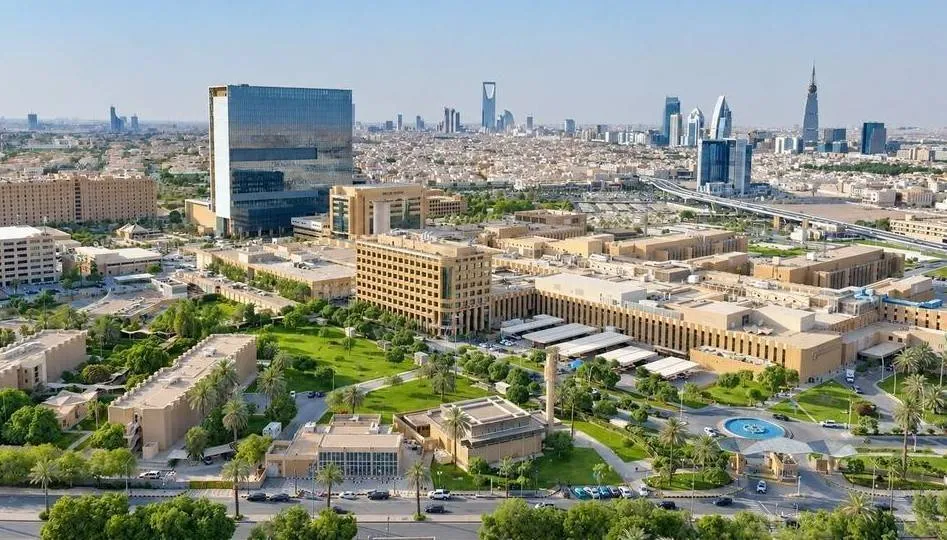
Saudi Arabia’s listed real estate companies reported a 7% decline in combined net profits during the first nine months of 2026, reflecting uneven performance as expanding property supply and intensifying competition put greater emphasis on operational efficiency, financing and liquidity management.
Combined net profits of property management and development companies fell to SAR 4.11 billion ($1.1 billion), from SAR 4.42 billion ($1.18 billion) a year earlier, a decline of approximately SAR 310 million ($82.7 million).
While several major companies posted earnings growth, weaker results and losses at others weighed on the sector’s overall performance.
The figures highlight differences in companies’ ability to capitalize on market growth and development projects, particularly as property supply expands in Riyadh. Capital management, project execution and the ability to generate sustainable cash flows are becoming increasingly important determinants of profitability.
Most profitable companies
Cenomi Centers topped the sector with net profits of SAR 993.1 million ($264.8 million), despite a 16.6% year-on-year decline from SAR 1.19 billion ($317.3 million).
Masar, the listed Umm Al Qura for Development and Construction Co., ranked second with SAR 927.95 million ($247.5 million), up 1.7%. Dar Al Arkan Real Estate Development came third, reporting a 12.1% increase in profits to SAR 789 million ($210.4 million), from SAR 703.6 million ($187.6 million).
The rankings reflect differences in revenue sources. Companies operating income-generating properties and shopping centers rely more heavily on recurring operating income, while developers’ earnings fluctuate according to land and unit sales, project handovers and revenue recognition.
Saudi Real Estate Company (Al Akaria) recorded one of the strongest increases, with net profits surging 127.2% to SAR 609.9 million ($162.6 million), from SAR 268.5 million ($71.6 million).
However, revenue fell 27.3% to approximately SAR 1.1 billion ($293.3 million), from SAR 1.53 billion ($408 million), alongside a decline in operating profit. The earnings increase was partly driven by nonrecurring gains recorded in the first quarter, underscoring the distinction between one-off accounting gains and profits generated by core operations.
Makkah Construction and Development Company reported profits of SAR 415.6 million ($110.8 million), up nearly 9%, while Taiba Investments earned SAR 230.9 million ($61.6 million).
Sumou Real Estate posted SAR 110 million ($29.3 million), up 1.3%, supported by higher revenue from development and contracting activities. Retal Urban Development Company reported SAR 93.7 million ($25 million).
Meanwhile, Emaar, The Economic City, Red Sea International, Ladun Investment and Ayyan Investment Company recorded losses, weighing on combined sector earnings.
Third-quarter results
Combined third-quarter net profits fell 16.8% year-on-year to SAR 1.51 billion ($402.9 million), from SAR 1.82 billion ($484.1 million). However, earnings rose 16.5% from the second quarter, when they totaled around SAR 1.3 billion ($346.7 million), indicating a sequential improvement despite continued year-on-year pressure.
Masar led third-quarter earnings with SAR 666.9 million ($177.8 million), up 29.1% year-on-year.
Cenomi Centers followed with SAR 404.9 million ($108 million), down 19.1%, while Dar Al Arkan ranked third with SAR 290 million ($77.3 million), up approximately 13.5%.
Knowledge Economic City recorded a 253% surge in quarterly profits to SAR 99.7 million ($26.6 million), from SAR 28.2 million ($7.5 million).
By contrast, Al Akaria’s quarterly profits fell 20.6% to SAR 30.9 million ($8.2 million), alongside a 10.3% decline in revenue.
Riyadh Development Company reported a 73.8% drop in profits to SAR 37.7 million ($10 million), while Alramz Real Estate Company saw earnings plunge 94.1% to SAR 10.1 million ($2.7 million).
Emaar, The Economic City posted a quarterly loss of SAR 241 million ($64.3 million), while Red Sea International recorded a loss of SAR 31.2 million ($8.3 million).
Uneven performance
Real estate expert Abdullah Al-Mousa told Asharq Al-Awsat that the nine-month results reflected disparities in companies’ financial and operational performance rather than a broad downturn in the sector.
He said the 7% decline in combined profits, despite continued earnings growth at several companies, demonstrated differences in their ability to adapt to market conditions, depending on their business activities, revenue sources and stages of project execution.
Al-Mousa stressed the importance of distinguishing property market performance from companies’ reported accounting profits.
Earnings, he explained, are influenced not only by demand and property transactions but also by project execution and handover schedules, revenue recognition, financing and operating costs, and exceptional gains that may not reflect improvements in underlying operations.
He noted that owners of income-generating assets benefit from recurring operating revenue, while developers are more exposed to project cycles and the timing of land and property sales.
He added that the sector is gradually shifting toward greater emphasis on operational efficiency, earnings quality and liquidity management. Portfolio size and project value are no longer sufficient measures of a company’s strength, he said. What increasingly matters is its ability to convert investments into stable cash flows and sustainable returns.
Profit margins in 2027
Looking ahead to 2027, Al-Mousa expects growth opportunities to persist, supported by population growth, urban expansion, development projects and housing programs.
However, companies’ ability to capitalize on these opportunities will depend on their financial strength, execution efficiency and capacity to deliver products aligned with market demand and buyers’ purchasing power.
He said increasing property supply, particularly in Riyadh, presents both opportunities and challenges. While greater supply expands consumer choice and strengthens competition, it could also put pressure on prices and developers’ profit margins, particularly for similar properties or those whose prices are not aligned with actual market demand.
More efficient companies could offset some margin pressure through higher sales volumes and faster capital turnover.
Al-Mousa said competitive advantages would increasingly favor developers capable of diversifying their portfolios, controlling construction and financing costs, and accelerating project completion.
Financing and construction expenses, lengthy development cycles, liquidity management and project handover schedules will remain major challenges, particularly for companies pursuing capital-intensive expansion and relying heavily on financing.
He expects 2027 to test developers’ ability to deliver sustainable growth as competition intensifies and pricing becomes more disciplined.
Ultimately, he said, the strongest performers will not necessarily be those with the largest portfolios or the most projects, but those capable of developing assets efficiently, meeting market needs and converting investments into sustainable cash flows and profits.