
South Africans seem to be sleepwalking their way into mortgaging their future. We are not just willing participants but enthusiastic ones. Steadfastly refusing to learn from examples all around us.
English poet Thomas Gray, in his poem Ode on a Distant Prospect of Eton College, wrote: “When ignorance is bliss ‘tis folly to be wise.” But then again, American punk-rock band Green Day wrote: “Don’t want to be an American idiot” in their song, American Idiot.
Thus, with due apologies to all Anglophiles out there, let us refuse to be South African idiots and be blissfully ignorant.
Many across the world have deliberately taken actions to roll back the private markets and their interests from controlling their cities and all parts of their lives.
But we, as South Africans, seem to be swimming against the current and waving through private market creep.
Just the other day, on September 20, the Left Party got the most votes in the Berlin city elections. Elif Eralp, a child of Turkish immigrant parents, is its top candidate and expected to become the city mayor when a coalition is formed. The party’s main issue is affordability. As part of its plan to make Berlin affordable, the Left Party pledged to nationalise private housing associations.
Eralp’s campaign echoes the groundbreaking campaign and election of Zohran Mamdani in New York in November 2025. Mamdani, also a child of immigrant parents, placed the matter of affordability at the centre of his campaign. Among the raft of his socio-economic pledges was expanding rent-control or regulated housing, bringing him into conflict with private housing associations.
Berlin and New York are metropolitan cities. The fact that their residents have chosen to elect parties and politicians who promise to face-off and even nationalise housing is revealing. It must tell us that at the core of affordability is property ownership and when that ownership is tied to private housing associations, there seems to be a problem.
As South Africans, we talk a lot about generational wealth. Property ownership and a pension are fundamental pillars for generational wealth. If you own a property and your parents owned property and their pension allows them to take care of themselves, it means your child or children can begin working life by living with their grandparents. They save money on rent and when they marry, they can then buy a starter home. When you lose your parents, that house becomes a family home or is rented out to provide passive income. It could even be sold.
In apartheid, generally speaking, black people were denied property ownership and received a watch rather than a pension.
Cape Town is mimicking the problems of Berlin and New York. The land in the city is essentially owned by private property developers and speculators. In 2006, when Helen Zille was elected mayor, it ushered in accelerated interest and speculation by private property interests.
Today, 20 years later, speak to most middle- and working-class residents in Cape Town and they will tell you, even before you ask them, their city is unaffordable.
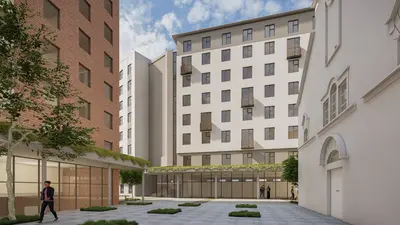
Before you think this is just a Zille and Democratic Alliance party problem, take a good look around your own city or town. Do you not see the mushrooming of private property developments?It began as townhouse developments, then it became free-standing houses on golf estates and then just free-standing houses in estates, without the pretence of a golf course. In many of the private developments, many of the units are owned by property companies that rent them out and have control of the body corporates.
The levies are huge — often equal to rent or even close to a bond payment. The levies are not regulated, meaning that if we pay off our bond, we still have a monthly cost that is a burden, especially when we reach retirement age. We could easily lose our paid-up house.
We seem to be very excited about the idea of private and boomed-off estates. It titillates our notions of having arrived to lives of opulence and wealth. We mortgage our future, blissfully unaware or hoping that we can return from the big cities to our places of birth and live out our dying days.
Eralp and Mamdani’s victories are trying to tell us that the fantasy will not be realised.
We are reminded that socialism and communism are bad because they do not allow private and individual ownership. What we are not told is that neoliberal capitalism also does not allow genuine individual ownership. Everything we think we own, will be owned by the financiers and private developers.
Take your cellphone, for example. Even if you bought your phone rather than took out a contract, in two to three years you will have to get another, not just because its software is outdated but most probably because the battery is acting up. No matter how well you take care of your smartphone, the chances of the battery working for more than five years are slim to none.
Extrapolate the lived example of your smartphone battery with all the German, Japanese and Chinese electric and hybrid motor vehicles. We are told that the batteries are supposed to last 10 to 20 years. Initially cellphone batteries lasted a long time but as newer models came out, their durability decreased. We must expect motor vehicle batteries to go the same way.
When will we learn that the political and private market elite are one and the same — they do not have our interests at heart. Ordinary people, like ourselves, are expendable, only useful when we are young and can buy things.
When we get old we will be tossed out, just like the apartheid farmer or factory owner did with his old workers.
Mamdani recently said the Left must take pothole politics from the Right. He is correct.
In South Africa we are not just drifting to the Right but running enthusiastically towards it. We want roads without potholes, cut grass, well-lit areas, running water, crime-free areas, and so forth.
We are buying the story that to get what we need, we must hand our freedom to profiteers and bandits. Otherwise, all we will hear is the plight of Palestinians and how racist the elite are, while remaining with potholed roads and all that goes with it.
But do we need to give up on ourselves just to have a normal boring life?
The real battle is not who wins the local government elections in November. The real battle will be to ensure that whoever wins does not hand over government to the millionaires and billionaires.
Otherwise we will be driving in a car that we will never really own, on a private road that does not have potholes and in an area that is owned by some faceless letterbox company.
We need strong and popular anti-capital voices. But we do not need charlatans who use populist rhetoric to create lucrative deals for themselves.
Centrist politics has emboldened only the conservatives and elitists. It has given away our power. As a people, we have to create a political movement that is not interested in government power but is present to hold politicians, the private sector and all elites to account without fear or favour.
Until we do that, we will be blissfully and ignorantly marching to a life owned by others. Donovan E Williams is a social commentator. TheSherpaZA on X (formerly Twitter)