
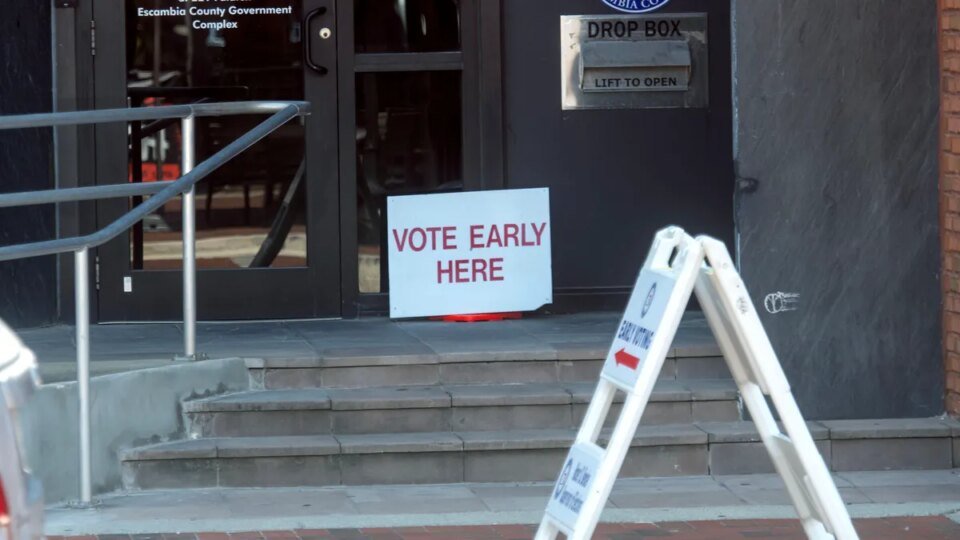
Florida voters will have the opportunity to vote on three constitutional amendments in the 2026 midterm general election on Nov. 3.
Amendment 3, which tackles homestead tax exemptions, has received the most attention as it has major implications for how local governments fund critical services. The other amendments touch on the budget stabilization fund and exempting agricultural-related tangible personal property from property taxes.
More than 1.1 million Floridians have cast their ballots through early voting, which started on Oct. 19, or by mail-in ballots. More than 12.5 million voters have yet to vote or return their ballots.
If you’re one of those voters who is still trying to figure out more about each of the amendments, here’s a quick breakdown of what each does and what voting yes or no would do.
2026 Florida Amendments: What is Amendment 1, ‘Budget stabilization funds’
Summary of Florida Changes to Budget Stabilization Fund Amendment: The measure would “increase the amount of funds that may be retained in the budget stabilization fund from 10% to 25% of net general revenue,” according to Ballotpedia. It would also require the legislature to transfer the lesser of $750 million or the amount required to reach 25% of the general revenue collections each year, unless certain conditions are met and it and sets conditions for withdrawals.
Voting yes: Voting yes would pass the amendment, which increases the amount of funds held in the budget stabilization fund to 25%.
It would also set up three conditions for withdrawals:
- The legislature passes a bill to withdraw funds to pay the expenses associated with an emergency.
- The legislature passes a bill to withdraw funds to cover a shortfall in revenue, such as less than anticipated sales tax receipts.
- The legislature determines there is a nonrecurring critical state need, the principal balance of the BSF is greater than 15% of state revenue collections, and two-thirds of the legislature approves the withdrawal of funds.
It outlines the requirements to suspend the annual revenue transfer to the budget stabilization fund:
- No more than once every five years, the legislature determines that there is a critical state need that requires funding in an amount exceeding that which would have been transferred into the BSF, and two-thirds of the legislature approves the suspension of the transfer; or
- The legislature withdraws funds from the budget stabilization fund during the same fiscal year.
Voting no: Voting against the measure would maintain the current 10% cap.
What is a budget stabilization fund? The Tax Policy Center calls these rainy-day funds because they are essentially funds that states can set aside and use to finance unexpected deficits or emergencies.
What supporters say: The Republican Party of Florida and Florida TaxWatch support the amendment, according to Ballotpedia. Supporters say that the state could use the funds to help it endure more difficult times.
What opponents say: Florida Gov. Ron DeSantis and Americans for Tax Reform oppose the measure. DeSantis called the proposal “foolish” and claimed that the state already has a maxed-out rainy day fund and the largest surpluses in state history.
2026 Florida Amendments: What is Amendment 2, ‘Agritourism from property taxes’
Summary of Agriculture policy; Property tax exemptions: Exempts tangible personal property used in agricultural production or agritourism that is located on agricultural land from property taxes.
Voting yes: Voting yes would allow an exemption of tangible personal property from property taxes. This would include property like farm equipment or tools typically found on agricultural land, used for farming or agritourism activities, and owned by the landowner or leaseholder of the land, according to Ballotpedia.
Voting no: Voting against the measure would not exempt tangible personal property used for agriculture or agritourism from property taxes.
What supporters say: Florida Department of Agriculture Commissioner Wilton Simpson supports the measure, which he says prevents taxing agricultural landowners for both their land and their equipment.
What opponents say: “This bill would have a $30 million fiscal impact for local governments, with no guardrails to prevent windfalls. It would also mostly benefit a handful of giant agribusinesses with multiple TPP (tangible personal property) accounts. There could be a more targeted approach to support smaller business owners and farmers, but this approach is not targeted enough to earn my support,” said State Rep. Anna Eskamani (D).
2026 Florida Amendments: What is Amendment 3, ‘Homestead tax exemptions’
Florida’s homestead property tax exemption amendment has extremely wide repercussions that impact more than just homestead property owners. You can dive deeper into the topic here.
➤ How much Amendment 3 would save Escambia County residents
➤ How much Amendment 3 would save Santa Rosa County residents
Summary of Homestead tax exemptions, property taxes, property tax exemptions, local government finance and taxes: “Increase the homestead tax exemption, decrease the cap on how much the assessed value of non-homestead properties can increase and limit how municipalities can spend property tax revenue.”
Voting yes: Voting yes on Amendment 3 would increase the homestead tax exemption for non-school taxes to $150,000 in 2027 and $250,000 in 2028. The amount would be indexed to inflation starting in 2029. It would also provide new residents a smaller exemption until they have lived in the state for five years. The cap on how much the assessed values of non-homestead properties would decrease would be reduced from 10% to 5%, with the exception of school levies. The measure would also limit counties and municipalities to spending property tax revenue on public safety, education, infrastructure, natural resource projects and flood control, local bonds, employee retirement benefits, and government operations, according to Ballotpedia.
Voting no: Opposing the amendment would keep the current homestead exemption in place.
What supporters say: Support around Amendment 3 is largely centered around combating Florida’s rising cost of living. Supporters argue that the measure would allow homeowners to retain more of their income and home equity.
Supporters also believe that the proposal would make local government more accountable for how tax dollars are spent by increasing transparency and requiring them to prioritize essential functions.
What opponents say: Amendment 3 opponents include a wide range of organizations that include Florida Sheriffs Association, police and fire unions, environmental groups, economic development organizations, health care organizations and the Florida Democratic Party.
Passing the amendment would require counties to cut public safety funding, according to the Florida Association of Counties, but cuts would reach other important public services, too. Opponents say that local governments would have to come up with new ways to pay for parks, garbage pickup, summer camps, mosquito control and other things or face reducing those services.