
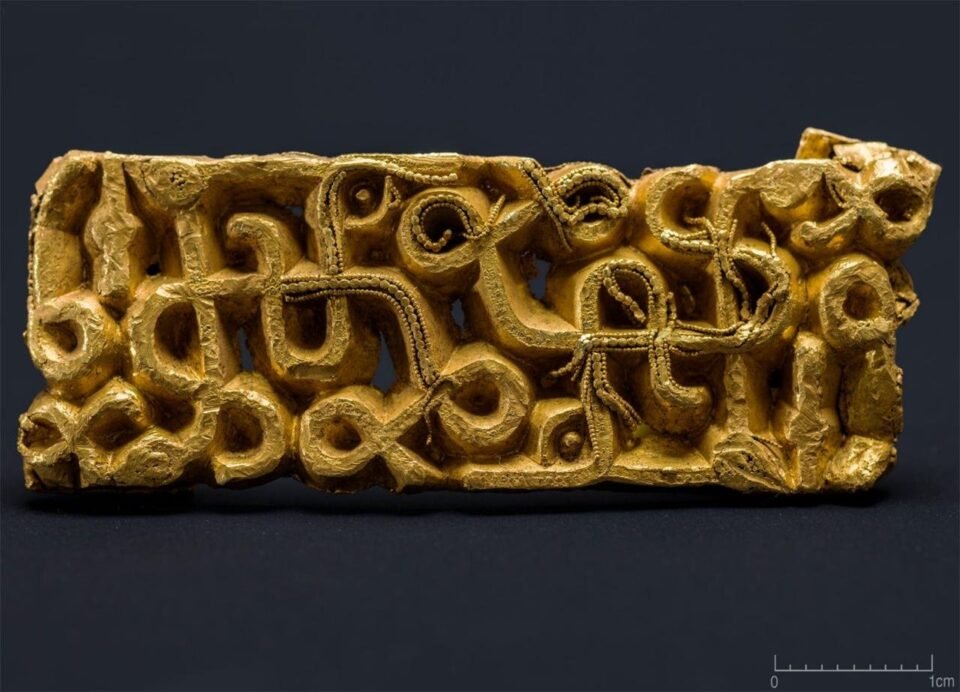
A routine morning walk in southwest Norway led to the discovery of a rare gold artifact linked to an elite warrior who lived about 1,500 years ago. The object was found in the Austrått district of Sandnes, near the hill Riaren, an area already known for important archaeological finds.
The discovery happened when a local resident noticed an old tree that had fallen years earlier during a storm. Curious about a raised patch of soil beneath the roots, he poked the ground with a stick and spotted something shining in the dirt. What first looked like a small glittering object turned out to be a highly unusual gold fitting from a sword scabbard.
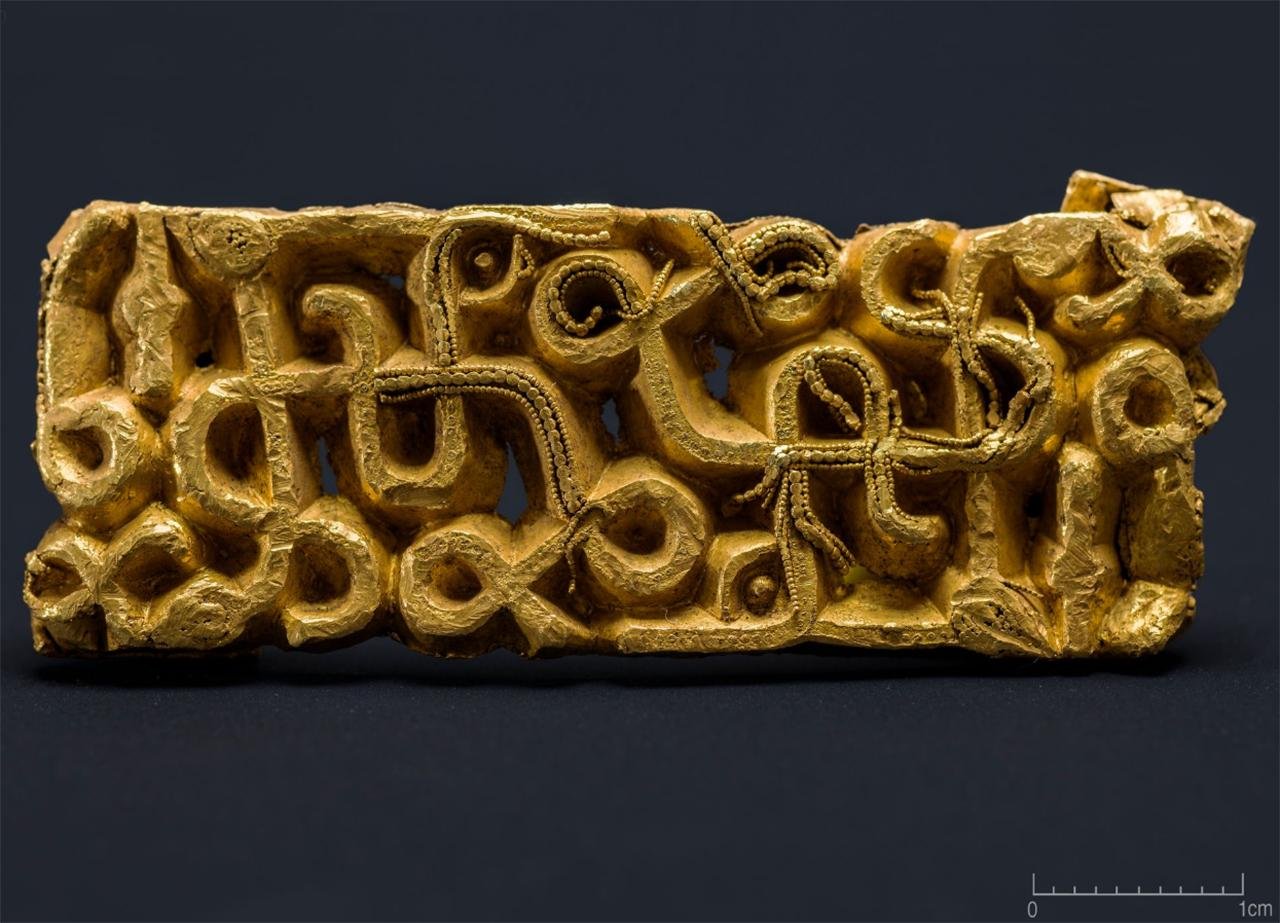
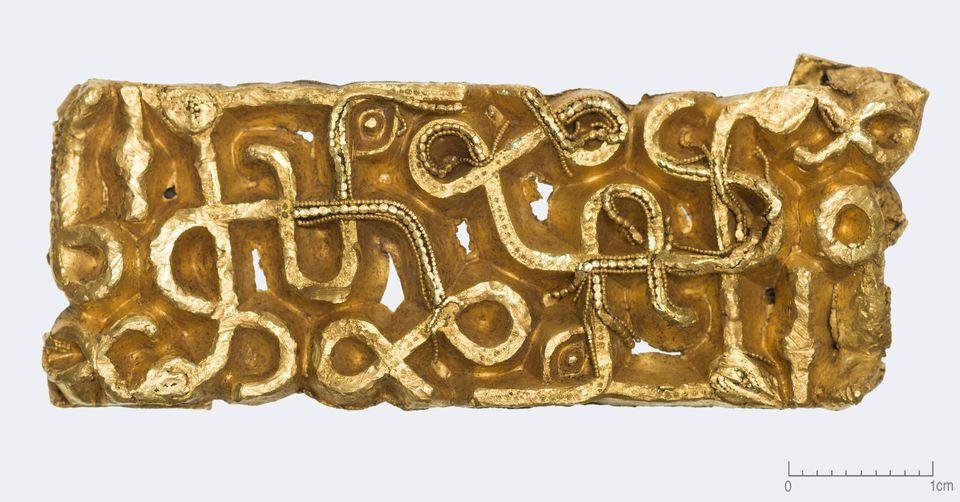
Archaeologists later identified the artifact as a sixth-century gold scabbard ornament from Norway’s Migration Period. The object measures about 6 centimeters long, weighs 33 grams, and is decorated with detailed filigree made from triple beaded gold threads. Its surface also includes serpentine animal motifs, a style commonly seen in early sixth-century Scandinavian art.
Researchers say the fitting once decorated the scabbard of a ceremonial sword carried by a high-ranking warrior or local ruler. The artifact is especially rare. Only 17 similar examples have previously been recorded across Northern Europe, and this is the first object of its kind discovered in Rogaland.
Unlike many similar fittings, which show little evidence of use, this piece has visible wear. Archaeologists believe this suggests the sword was not made only for display or ritual purposes. Instead, its owner likely used it regularly, possibly as both a weapon and a visible symbol of authority.
The person connected to the sword was likely part of the ruling elite centered at nearby Hove, an important political and economic hub during the Migration Period. Excavations in the area have previously revealed a large farm complex and multiple gold objects, pointing to the presence of wealthy and powerful families.
Southern Norway faced severe hardship during the sixth century. Volcanic eruptions triggered years of colder climate conditions, which likely damaged crops and contributed to famine. At roughly the same time, outbreaks of plague also affected parts of Europe. Archaeologists think these overlapping crises may have shaped ritual behavior in the region.
The newly discovered gold fitting was found deliberately placed inside a rock crevice rather than lost by accident. Researchers believe the object was intentionally deposited as an offering to the gods. Valuable weapons and ornaments were sometimes “sacrificed” in this way, either buried or hidden to seek divine protection during periods of instability.
The area around Riaren has produced other unusual finds in the past. Earlier discoveries in nearby marshland included silver neck rings decorated with gold and an unusually large Roman bronze cauldron made along the Rhine around 300 CE. Together, these finds suggest the landscape held ritual importance for centuries.
Archaeologists also noted the high artistic quality of the new discovery. At first glance, the decoration appears to consist of flowing curved lines, but closer study revealed stylized animal forms facing one another. Some experts suggest the imagery may even combine human and animal features, a visual theme often seen in Scandinavian Migration Period art.
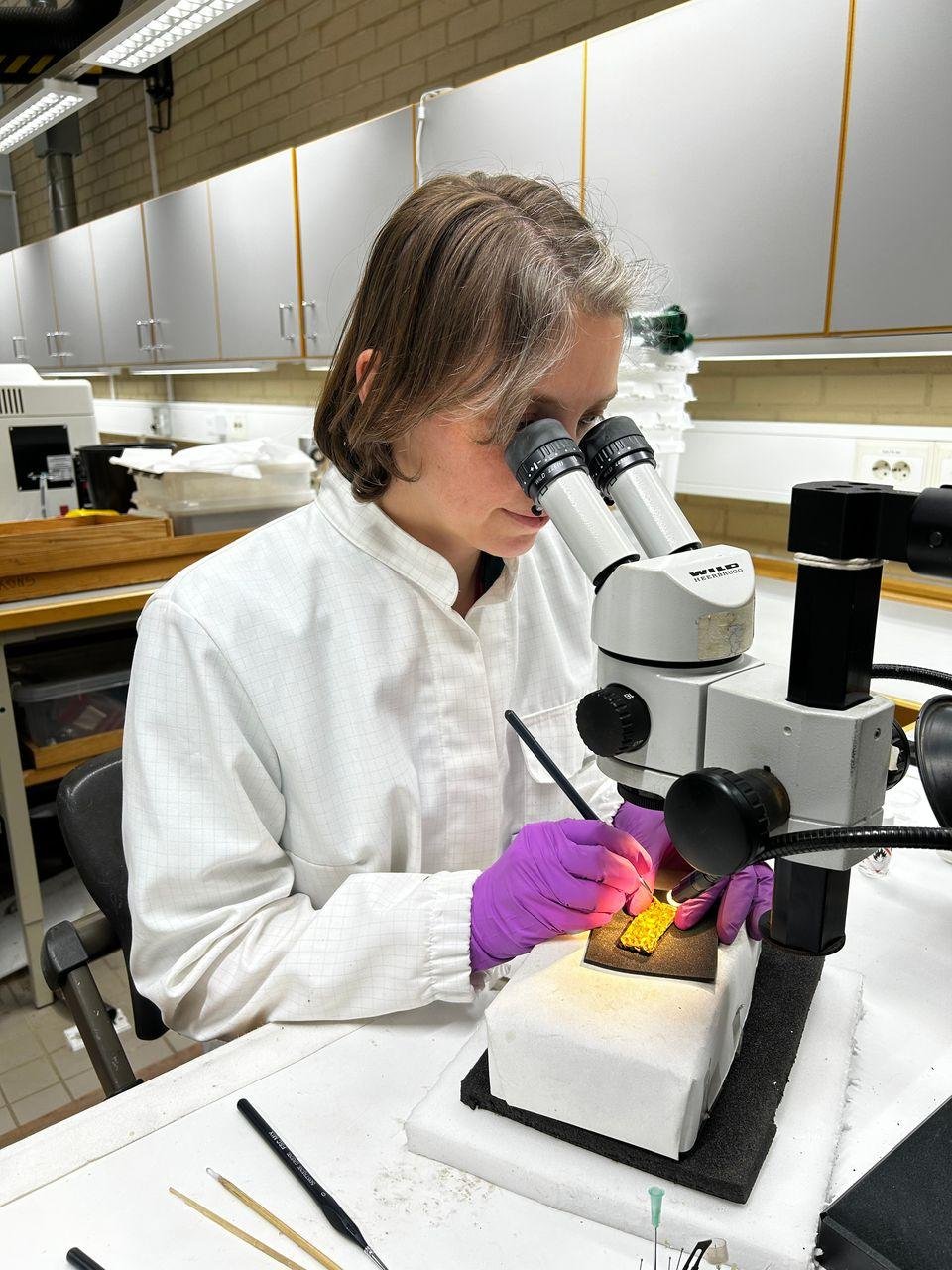
The gold fitting is now being studied by specialists at the Archaeological Museum at the University of Stavanger. After examination is complete, the object will go on public display.
The discovery adds another piece to the growing archaeological evidence for a regional center of power at Hove between roughly 200 and 550 CE. What began as an ordinary walk has now provided researchers with a rare object connected to elite leadership, ritual practice, and social life during one of Scandinavia’s most difficult historical periods.
More information: Museum of Archaeology, University of Stavanger