
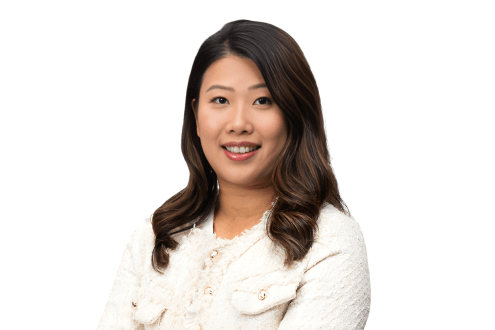
As clients across Asia become more institutionally minded, globally allocated, and more demanding in their expectations of portfolio resilience, the role of funds and alternatives within private wealth is changing. For Connie Sin, Head of Funds & Alternatives at Nomura International Wealth Management, the opportunity is not simply to source products, but to build portfolios that are consistent, transparent, diversified, and aligned with what sophisticated clients are trying to achieve.
Key Takeaways
- Consistency and transparency sit at the centre of Sin’s investment philosophy
Sin argues that wealth clients want portfolios they can understand and trust, particularly when delegating investment decisions to managers. For her, transparency around positioning, volatility, performance expectations, and manager behaviour is essential to giving clients confidence through changing markets. - Portfolio construction must be guided by both strategic direction and tactical adjustment
Nomura’s approach combines a three-to-five-year roadmap with more regular portfolio fine-tuning. The objective is not to eliminate volatility, but to ensure clients understand the role of each allocation and are not surprised by how the portfolio behaves. - Asia and alternatives are core building blocks in the allocation framework
Sin sees opportunity in Asian markets and believes portfolios need to avoid excessive concentration in US assets and the US dollar. Alternatives are also central to the proposition, with hedge funds, private equity, private credit, and short-duration credit all playing different roles depending on market conditions and client objectives. - Sophisticated clients are treating dislocation as opportunity, not simply risk
Nomura’s client base, including institutional-style investors and single family offices, is described as active and informed. Rather than retreating during periods of volatility, many clients are looking for secondary opportunities, dislocated assets, and managers capable of generating differentiated returns through stress. - Manager selection depends on cycle-tested discipline, not just headline performance
Performance may open the conversation, but Sin places greater emphasis on how returns were generated, whether managers stayed true to their stated process, and how they behaved during difficult periods. Transparency, mistake correction, and evidence of discipline across cycles are key selection criteria. - The future of wealth management will require more education, interpretation, and human value-add
Sin expects AI, digital access, generational transfer, and convergence across alternatives to reshape the industry. However, she does not see wealth management becoming purely digital. Advisers, selectors, and platform specialists will need to prove their relevance through service, judgement, portfolio construction, and client education.
Nomura International Wealth Management’s proposition is rooted in its position as an Asian private bank serving high-net-worth clients across the region, with a long-established wealth franchise and a stated focus on helping clients manage volatility through long-term planning and bespoke solutions. Sin’s role sits within this broader platform, bringing together funds, hedge funds, private assets, managed solutions, and portfolio construction for a client base that increasingly includes institutional-style investors, single family offices, and experienced wealth owners.
The result is a funds and alternatives agenda shaped by two central disciplines: understanding the client’s existing portfolio, and selecting managers who can withstand scrutiny across cycles. In Sin’s view, wealth clients do not want unexpected volatility, unexplained performance, or managers who only communicate when conditions are favourable. They want solutions that allow them to sleep at night.
A Portfolio Philosophy Built Around Consistency and Transparency
Sin frames her investment philosophy around two core principles: consistency and transparency. These apply not only to the funds selected for client portfolios, but also to the managers behind them, the portfolio construction process, and the communication clients receive through changing market conditions.
For many wealth clients, the attraction of funds is that they can delegate part of the investment process to professional managers. However, that delegation only works if clients understand what they own, why they own it, and what type of volatility or return pattern they should reasonably expect.
“For me, consistency and transparency are the key to everything,” Sin says. “Clients want to sleep well at night. If they are offloading part of the portfolio to managers, they should not have to monitor every movement unless something genuinely unexpected is happening.”
This approach is closely connected to the way Sin thinks about strategic and tactical asset allocation. The platform works with a broader roadmap over a three-to-five-year horizon, while portfolios are refined more regularly to reflect changing market conditions. The objective is not to remove volatility altogether, but to ensure that clients are not surprised by the behaviour of their portfolios.
“The portfolio needs to fit the client’s objectives,” she explains. “We may fine-tune every month, but there is already a bigger roadmap. Clients should know what to expect from volatility, performance, and positioning.”
Macro Views, CIO Input and the Case for Asia
Sin’s process is not purely bottom-up. Macro views and CIO guidance play a central role in shaping where portfolios should take risk, where they should diversify, and where allocations need to be adjusted.
At the broadest level, Sin believes capital should be directed towards areas that create value, show growth, and offer earnings potential. That has led to a stronger emphasis on Asian opportunities within the allocation framework, reflecting both regional growth potential and the need to avoid excessive concentration in crowded global trades.
She describes Nomura’s positioning as having a tilt towards Asia, both within strategic asset allocation and across the broader portfolio mix. This does not mean ignoring the US, but it does mean recognising that many global portfolios remain heavily concentrated in US assets and the US dollar.
“Everyone is very concentrated in the US market and the US dollar right now,” she says. “We need portfolios that diversify that exposure properly for clients.”
Sin links this to a broader view that de-dollarisation themes may re-emerge once geopolitical tensions become less dominant. Earlier in the year, euro strength pointed to renewed interest in non-dollar exposures, and she expects these conversations to return as investors reassess currency concentration and regional allocation.
The broader industry backdrop supports the importance of this positioning. Across Asia, wealth platforms are competing more actively for cross-border clients, offshore assets, and higher-value advisory relationships, with major banks continuing to expand regional wealth capabilities in markets such as Hong Kong, Singapore, Southeast Asia and the Gulf.
Alternatives as a Core Building Block
Alternatives are central to Sin’s portfolio construction approach. She says Nomura has one of the higher allocations to alternatives among comparable platforms, reflecting the role these strategies can play in diversification, risk management, and differentiated return generation.
Client appetite remains strong, particularly for hedge funds. Despite headline volatility and periodic concerns around specific strategies or managers, Sin says sophisticated clients often interpret market dislocation as a source of opportunity rather than a reason to exit.
For Nomura’s client base, which includes institutional and single family office investors, alternatives are not viewed as an exotic satellite exposure. They are increasingly treated as part of a more complete portfolio architecture.
“Hedge funds are supposed to provide something different,” Sin says. “If the allocation is disciplined and not excessive, clients still want exposure, especially where managers can show consistency and double-digit annualised returns over time.”
Private markets remain important as well, although Sin draws a distinction between private equity and private credit. In private credit, she says some clients had hoped for more meaningful secondary opportunities following periods of stress, but actual markdowns were not always as visible as expected. Private equity has offered more apparent dislocation, particularly where valuations have adjusted more clearly.
She also notes that clients who have already taken profit in private credit are currently being steered more towards short-duration income and credit strategies. With fewer rate cuts expected this year, short-duration positioning remains more appropriate in the near term.
Smart Clients, Dislocation and Manager Access
Sin’s comments reflect a client base that is active, informed, and often opportunistic. When markets sell off or headlines create uncertainty, clients are not automatically retreating. In some cases, they are asking where secondary opportunities may exist, which managers are positioned to benefit, and how to access dislocated assets with discipline.
This is an important distinction in the current alternatives cycle. Demand for private markets has broadened across private wealth, but Sin’s focus is not on democratisation for its own sake. It is on suitability, sequencing, and portfolio role.
Nomura’s alternatives agenda has also become more visible externally. The firm hosted its inaugural Alternatives Deep Dive Forum in Hong Kong in 2025, bringing together relationship managers, high-net-worth clients and global fund partners, with a format designed around practical engagement rather than a conventional conference structure.
For Sin, however, the product itself is only one part of the proposition. The more important question is whether a strategy makes sense inside the client’s broader portfolio.
“We are often just one building block,” she says. “Many clients already work with CIOs or have their own gatekeepers. Our role is to help enhance and diversify what they already have.”
Selecting Managers Through the Full Cycle
Manager selection begins with performance, but Sin is clear that performance alone is not enough. Strong returns may open the door, but they do not secure a place on the platform.
She wants to understand how performance was generated, whether the manager remained true to its stated discipline, and how the team behaved under pressure. A manager that has done well by drifting away from its stated objective is not attractive, even if the headline numbers look compelling.
“Everyone looks at performance. We are no different,” Sin says. “But I need to know how it was achieved. If a manager is only telling me they are good at what they do, that is not enough.”
Sin is particularly focused on cycle-tested managers. She is cautious on very new managers, and also wary of large, overly commercialised platforms where the strategy may be difficult to assess with precision. Her preference is for managers with enough history to show how they behave in difficult periods, including how they acknowledge mistakes and correct them.
“I need to know how you handle bad times,” she says. “I want to see how you help clients through volatility, what mistakes you have made, and how you fixed them.”
Transparency is therefore a condition of access. Managers need to explain their process, portfolio actions, risk management, and lessons learned. Without that transparency, Sin says it becomes difficult to assess whether the manager can be trusted as part of a client’s long-term allocation.
Protecting Growth and Safeguarding Clients
Sin’s immediate priorities are shaped by the rapid development of Nomura’s Asian wealth platform. She describes the platform as still relatively new in its current regional form, but already substantial enough that the focus must now include both growth and protection.
The first priority is safeguarding clients. Having built a strong pool of clients and assets, Sin wants to ensure that the platform protects them from market noise, behavioural mistakes, and irrational decision-making during volatile periods.
“We have built a good and big platform,” she says. “Now we need to protect clients, maintain high-touch service, and keep the growth momentum.”
This is not a defensive statement. Rather, it reflects the next phase of platform maturity. As Nomura moves from expansion to scale, the funds and alternatives proposition needs to support both continued growth and stronger portfolio discipline.
The second priority is team development. Sin wants to add talent, particularly on the alternatives side, but she is specific about the type of people she wants. The requirement is not simply product expertise or access to deals. She wants people who understand portfolio construction, macro context, and client suitability.
“Alternatives and private markets can become very single-deal driven,” she says. “I do not want that. I want people who can think holistically, explain the macro picture, and help clients construct portfolios.”
The third priority is moving the platform further up the competitive ladder. Sin describes the ambition as shifting from a second-tier to a first-tier platform, with the ability to identify where managers, opportunities, and new product structures are heading.
An Open-Minded Approach to New Solutions
Sin does not confine managed solutions to conventional fund structures. She expects the product universe to keep evolving, particularly as clients become more interested in digital assets, tokenisation, and newer forms of access.
Hong Kong’s crypto and digital asset landscape remains more restrictive than Singapore’s in some areas, but Sin is open-minded about where client demand and regulatory frameworks may move next. Her focus is on ensuring the team has the capability to assess these developments properly, rather than chasing every new theme as a product opportunity.
Nomura has also been positioning digital and thematic engagement as part of its broader wealth dialogue. In 2026, Nomura International Wealth Management held its first Managed Investments Live summit in Hong Kong and Singapore, focused on positioning portfolios for the AI economy. That type of engagement aligns with Sin’s view that the future of wealth management will require more education, more interpretation, and more support around complex investment themes.
The Future of Wealth Advice in an AI-Enabled World
Looking ahead, Sin expects wealth management to become more competitive as AI and digital tools become more embedded in the industry. Her view is pragmatic. AI will not remove the need for advisers, selectors, and platform specialists, but it will force them to prove where they add value.
This is especially relevant as wealth transfers from first-generation wealth creators to second-generation family members. The next generation is already more comfortable sourcing information digitally, comparing solutions, and using technology to shape decisions. Wealth platforms will need to educate them differently, communicate differently, and connect them to solutions in ways that reflect how they engage with the world.
“If we want to keep our value in a more competitive and AI-driven industry, we need to keep creating value for clients,” Sin says. “The next generation can source a lot digitally, so the service has to go beyond simply providing product.”
She expects more convergence across the alternatives landscape. Hedge funds and liquid alternatives may continue to overlap. Private equity, pre-IPO exposure, continuation vehicles, and structured solutions may also become more interconnected, particularly as private market exposures are adapted for wealth clients.
Continuation vehicles are one area she sees as increasingly relevant. As they grow in institutional markets, the question is whether they can be structured in ways that are more accessible, transparent, and wealth-friendly.
Sin is careful not to overstate the ability to predict what comes next. But she is clear on one point: wealth management remains a people and service business.
“This is not a hard-asset business,” she says. “It is about people and service. If you have good people and maintain the service, that is how you keep creating value.”
Key Priorities
Nomura International Wealth Management’s funds and alternatives agenda is being shaped by three major priorities:
Safeguarding Clients While Sustaining Growth: Protecting an expanding client base from market noise, behavioural mistakes, and irrational decision-making, while maintaining the growth momentum already built across the platform.
Building a Stronger Alternatives Team: Adding talent with a portfolio-construction mindset, particularly in alternatives, and avoiding an overly deal-driven approach. The priority is to develop professionals who can connect macro views, manager selection, and client portfolio needs.
Moving Towards a First-Tier Platform: Continuing to strengthen the platform’s ability to identify managers, source opportunities, and assess new product structures, including areas such as digital assets, tokenisation, and other emerging managed-solution formats.
Into the Future
The wealth management industry is likely to become more demanding as AI, digital access, and generational transfer reshape how clients source information and evaluate investment opportunities.
For second-generation wealth owners, digital familiarity will be a baseline expectation. They will be able to compare products, research managers, and access investment information more easily than previous generations. This means wealth platforms will need to offer more than product distribution. Education, interpretation, access, and portfolio relevance will become more important.
Alternatives are also likely to continue evolving. The distinction between hedge funds and liquid alternatives may become less rigid, while private equity, pre-IPO exposure, continuation vehicles, and structured private-market solutions may increasingly converge. The challenge will be to make these opportunities more suitable for wealth clients without losing the discipline, transparency, and long-term orientation that private markets require.
Sin does not see the future of wealth management as a purely digital model. Technology will become more powerful, but the core of the industry will remain grounded in people and service. Advisers, selectors, and platform specialists will need to prove their value by helping clients make better decisions, avoid behavioural errors, and construct portfolios that can endure across cycles.
Getting Personal with Connie Sin
Connie Sin was born in Hong Kong and grew up in a village in the New Territories before moving to Canada for secondary school and university. Her parents ran a manufacturing business and travelled frequently, which was one reason the family sent her to Canada for her education.
She studied finance at the University of British Columbia in Vancouver. After graduating, she decided to return to Hong Kong by herself, while her younger siblings were still studying. At the time, China was growing rapidly, and Sin felt she needed to understand the market more deeply. She also wanted to improve her Mandarin and gain a stronger grasp of Chinese business dynamics.
That led her to the Hong Kong University of Science and Technology, where she completed a master’s degree focused on Chinese business. The decision reflected an early instinct that would shape much of her career: the need to go where markets are changing, rather than staying where things feel comfortable.
Sin began her career at Citibank before moving into a CIO and discretionary portfolio management-type role at a Chinese external asset manager, working with major family clients from China. The role required extensive travel across China and Hong Kong, and gave her close exposure to clients, portfolios, and the changing investment landscape.
Regulatory change in Hong Kong later became a significant turning point. As requirements around complex products, disclosure, commercial arrangements, and conduct responsibility became more demanding, Sin decided she needed the institutional support of a larger platform. She moved to BNP Paribas, where she spent seven years.
She describes that period as enjoyable and stable, with the support of a larger organisation and a more established risk and legal framework. However, after seven years, she felt that if she did not leave then, she might never move.
Sin then joined Standard Chartered as Head of Managed Investments for Hong Kong. The role placed her at the centre of a major change programme, combining retail wealth and private wealth. It was a demanding position, and one that gave her a clear view of the difficulty of aligning very different client segments, product appetites, compliance requirements, and platform priorities.
The opportunity at Nomura came at a time when Japan and the broader Nomura platform were gaining momentum. She joined Nomura in 2024 as Head of Funds and Alternatives for International Wealth Management, with responsibility for leading and developing the funds and alternatives platform.
Across her career, the part Sin has enjoyed most is working directly with people. She does not see herself as someone who wants to sit behind a desk. In earlier roles, she recalls walking across Hong Kong and China in high heels to meet clients, speak with investors, and understand what was changing on the ground.
Outside work, Sin is married and has a 10-year-old daughter. Family is her main focus away from the office, and weekends are often shaped around her daughter’s activities. Her daughter is athletic and enjoys swimming and golf, which means Sin spends much of her free time at driving ranges, golf courses, or travelling to China for weekend rounds.
Hong Kong golf, she says, can be intense, with players behind often pushing the pace. She prefers quieter courses around Zhuhai and the Macau side, where the rhythm is more relaxed and the weekend feels less pressured. Her daughter, she admits, is already the better golfer.
Sin also enjoys movies and quieter downtime, but her weekends are now more active because of her daughter. That balance between work, family, movement, and client-facing energy reflects the same quality she brings to her professional life: she prefers to be in the market, speaking to people, learning from them, and staying close to how investment needs are changing.