

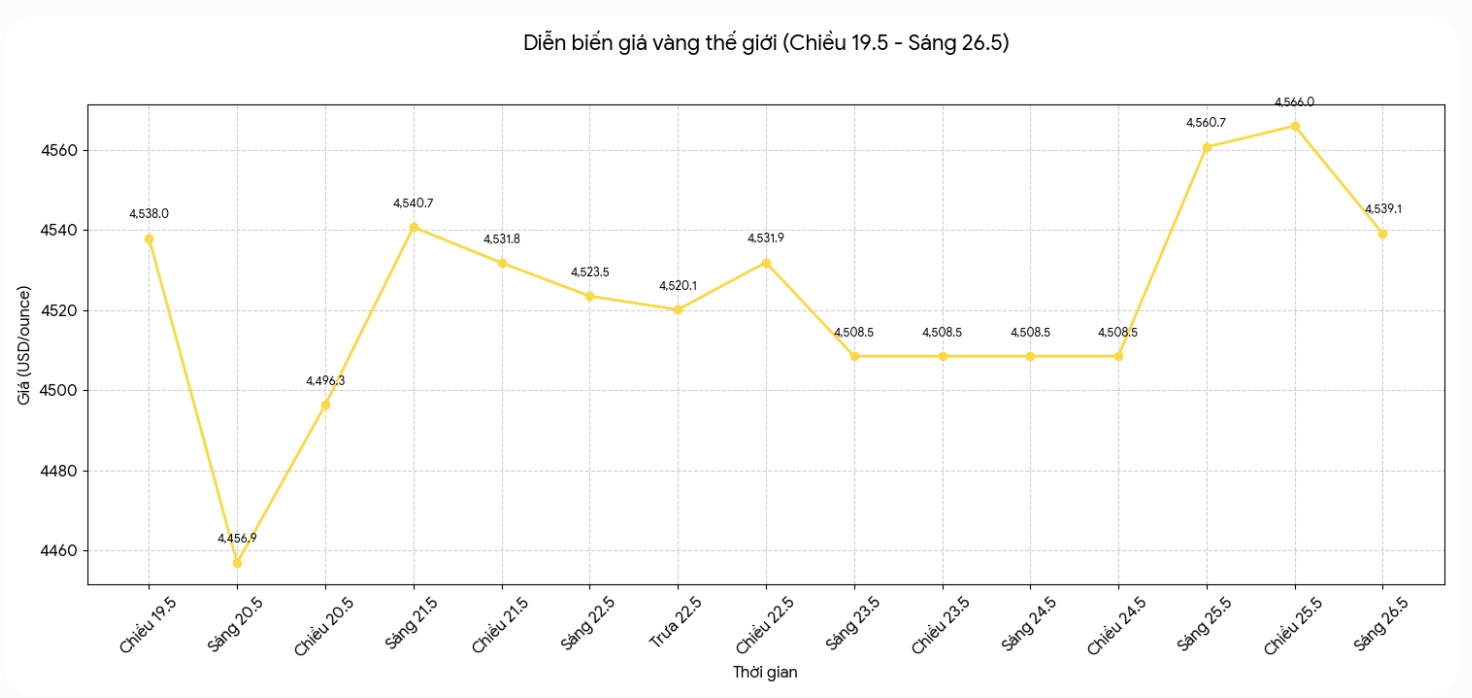
According to Kitco – World gold prices have recently fluctuated sharply amid geopolitical tensions in the Middle East, rising US bond yields and concerns about inflation returning.
According to Mr. Stephen Innes – management partner at SPI Asset Management, the adjustment trend of gold today may just be a “cleansing” phase before entering a larger growth cycle.
In a newly released report, Mr. Innes said that the sharp drop in gold after the Hormuz Strait shock did not stem from investors losing confidence in the precious metal, but mainly from liquidity pressure.
According to him, when oil prices soared, transportation costs escalated and inflation expectations exploded, many energy importing countries had to urgently seek USD sources to maintain domestic financial stability. In that context, even gold – a strategic reserve asset – was also sold to solve short-term liquidity needs.
The market once thought that central banks selling gold was the end of the upward trend. But in reality, it could be completely the opposite. This is a mandatory sell-off activity, not a change in strategic views on gold,” Mr. Innes said.

According to him, crises usually take place in three phases. The first is the inflation shock that causes yields to increase sharply. The next is the period when the economy is damaged by rising energy costs. Finally, central banks are forced to return to loose monetary policy to save growth, jobs and credit markets.
Gold usually does not rise sharply right in the first inflationary panic phase. This precious metal usually breaks through when policymakers realize that they cannot continue to maintain high interest rates without hurting the economy,” he added.
According to SPI Asset Management’s assessment, if geopolitical tensions subside and oil prices cool down, inflationary pressure will gradually decrease. However, the economic “scars” caused by the energy shock will continue, from weakening purchasing power to eroded corporate profits and tighter liquidity conditions.
In that context, the bond market may begin to be valued for a period of slowing growth and the possibility of central banks lowering interest rates in the future. This is considered a major supporting factor for gold prices in the medium and long term.
Mr. Innes also mentioned the view of Mr. Jeffrey Currie – one of the famous commodity experts on Wall Street – that when central banks are forced to sell gold to pay for energy import costs or protect the domestic currency, gold temporarily loses its largest source of demand. However, that is only short-term.
According to SPI Asset Management, a more important factor lies in the long-term trend of the global economy. For many years, capital has mainly flowed into the digital economy, artificial intelligence (AI), data centers and semiconductor technology, while the mining, energy and physical infrastructure sectors have seriously lacked investment.
Mr. Innes said that the explosive development of AI further increases demand for energy, industrial metals, copper, uranium and infrastructure systems. Meanwhile, global material supply is not capable of responding quickly.
The increase in commodity prices is not a disease, but just a fever reflecting a deeper problem: years of lack of investment in the material economy while the world is entering the stage of AI scale expansion, electrification and ensuring energy security,” he said.
In that context, gold is increasingly playing the role of a “currency insurance” in a more fragmented world, with higher public debt and increasing geopolitical instability. According to Mr. Innes, even the fact that countries have had to sell gold recently may make them more aware of the importance of this reserve asset in the future.
Mr. Stephen Innes believes that the recent correction of gold is more like a “scalping off speculation” process than the end of a long-term upward market.
According to him, investors using high leverage and short-term trading have been excluded from the market, while fundamental factors such as foreign exchange reserve diversification, geopolitical instability and the possibility of monetary easing continue to support gold in the long term.