
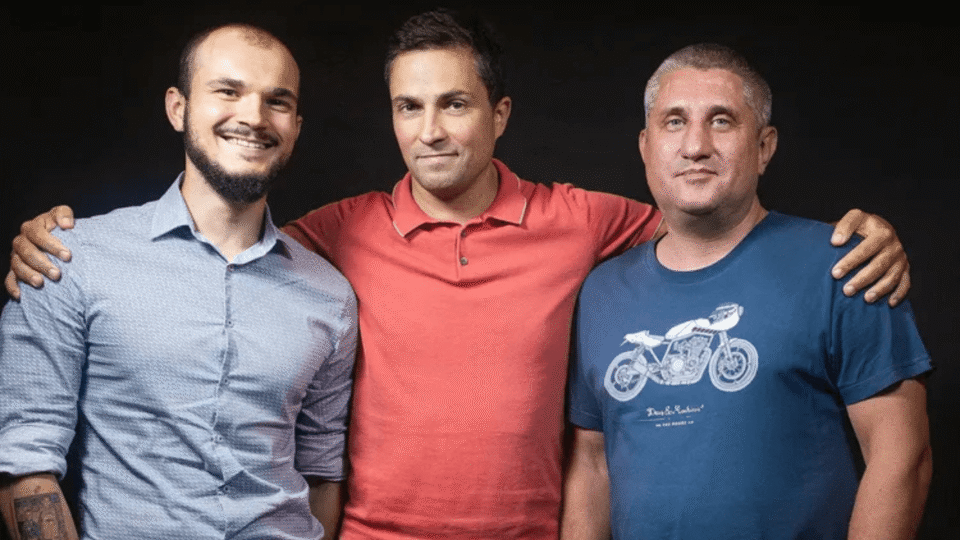
Roman Sulzhyk, Founding Partner of Ukrainian investment fund Resist.UA, has a message for the world when it comes to investing in the Ukrainian startup ecosystem:
“If you wait until after the war, you’re already too late.”
He contends that the really entrepreneurial people didn’t wait. Rather, “they recognised the opportunity during the war and came anyway.”
Founded in 2023 during Russia’s unprovoked full-scale invasion of Ukraine, Resist.UA operates at the intersection of international capital, military expertise, and battlefield-tested innovation. Its first fund was backed by Ukrainian capital and focused on early-stage miltech/defencetech companies at the pre-seed and seed stages.
The fund supports teams at the earliest stages, combining investment with operational support to help transform battlefield-tested prototypes into scalable companies.
Interviewing defence tech investors is unlike covering most venture capital. For operational security, a significant share of their portfolio remains confidential.
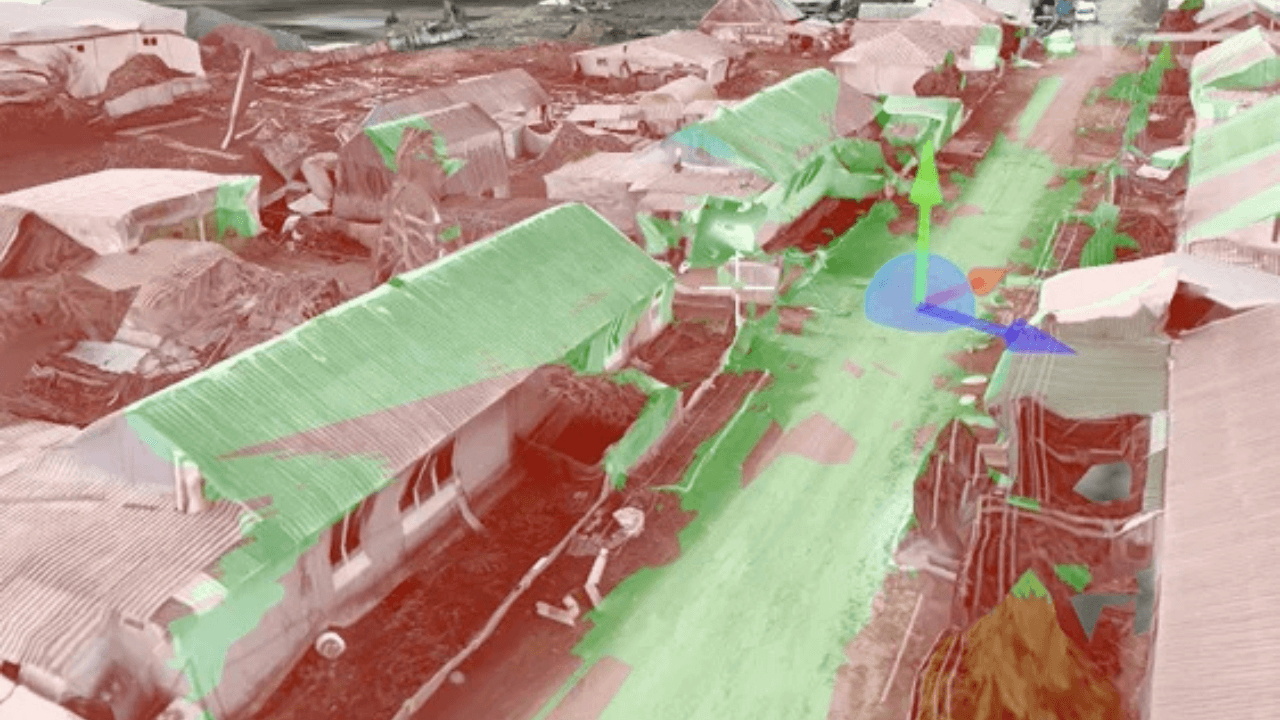
What we do know is that Resist.UA’s investments span battlefield software, autonomous aircraft and robotics. Portfolio company Farsight Vision develops AI-powered intelligence software that integrates data from multiple battlefield sensors, while M-FLY is building autonomous drones for reconnaissance and strike missions.
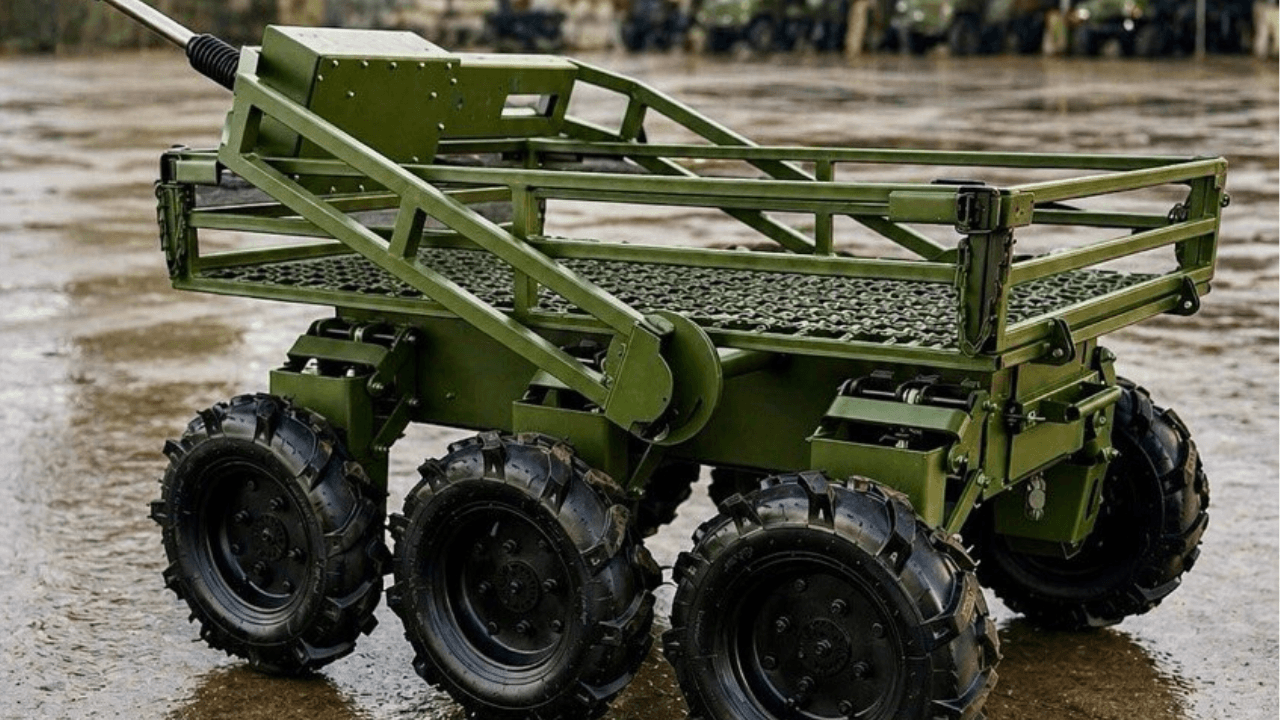
The fund also backed Phantom Technology, developer of the Teslia unmanned ground vehicle (UGV), which is used by Ukraine’s Defence Forces for frontline logistics and casualty evacuation.
In May 2026, Resist.UA completed its first exit when defence manufacturer TAF Industries acquired a majority stake in Phantom Technology to scale production of the battlefield-proven Teslia platform.
This demonstrates how Resist.UA helps mature startups to the point where established defence manufacturers can take over industrial-scale production.
Resist.UA operates through a hybrid model combining venture capital and private equity, with a strong focus on long-term company growth and manufacturing capacity development.
One of the platform’s core principles remains its reinvestment-first approach, where returns are primarily directed toward further scaling companies and strengthening the broader ecosystem. Through its first fund, Resist.UA built a portfolio valued at over $10 million, reviewed more than 600 projects and engaged with over 100 Ukrainian defence tech teams.
From Wall Street to Ukraine’s defence evolution
Sulzhyk has a rich history in finance. Before founding Resist.UA, Sulzhyk spent years on Wall Street, working as a trader at Deutsche Bank during the 2008 financial crisis. He admits that when Russia’s full-scale invasion began, it became obvious that Ukraine would have to build its own defence industry.
“At first, I didn’t think about venture capital. I simply saw groups of engineers trying to solve urgent problems.”
He was serving on the supervisory board of PrivatBank when one of these teams needed help transferring money abroad to buy components. The bank had frozen the payment because of wartime capital controls, so he went to verify what they were actually building.
“I walked into a garage and saw around ten people assembling FPV drones by hand. I’d never seen anything like it.”
After confirming they really were supplying the military, he pushed for the payment to be released. Looking back, that garage became one of the first examples of what would evolve into Ukraine’s modern defence-tech ecosystem.
By 2023, hundreds of founders were building military technologies. Sulzhyk wanted to help create a real defence industry so that, after the war, these incredibly talented engineers wouldn’t simply go back to outsourcing software for overseas clients.
He contends that “this is the first time in Ukraine’s 30-year history that we’ve had dedicated, professional investment capital focused on startups.”
Sulzhyk isn’t alone in believing Ukraine is at the beginning of something much bigger. When I attended European Defense Tech Hub’s Defencetech Startup Week in Kyiv, multiple investors told me it’s a founders’ market.
Startups attracting attention ranged from those founded by early-stage university students to active military and veterans.
Sulzhyk revealed that one of his limited partners, who manages multi-billion-dollar funds in Ireland, shared that the atmosphere reminds him of the early internet era.
“He said it feels like 1996 or 1997—the beginning of the internet boom. He never expected to see that kind of opportunity in Europe, let alone in Ukraine.”
Obviously, the numbers are much smaller. Ukraine may ultimately absorb one or two billion dollars rather than the hundreds of billions invested during the internet revolution. But relative to where Ukraine started, it’s equally transformational.”
Ukraine’s fastest-growing investment sector
According to research from AVentures Capital, defencetech remains the fastest-growing sector in Ukraine’s entire technology ecosystem.
By the end of 2025, the fund recorded more than $129 million in publicly disclosed investments and grants raised by Ukrainian defence startups. Investments included:
- Swarmer – $15 million
- Tencore – $3.74 million
- Dropla – $2.75 million
- Teletactica – $1.5 million
- M-Fly – $1.3 million
- Norda Dynamics – $1 million
Helping build the next generation of Ukrainian industry
Sulzhyk says his mission has evolved far beyond financing startups.
“When I started Resist.UA, I thought I was building an investment fund. Today I see it differently. We’re helping decide who becomes the next generation of industrial leaders.”
That shift has fundamentally changed how he evaluates founders.
“The question isn’t whether someone can build a billion-dollar company. It’s whether they’re the kind of person I want helping to shape Ukraine’s future.”
For Sulzhyk, that’s an enormous responsibility. It means spending as much time assessing a founder’s values and character as their technology or business model. He wants to back people who will build companies with integrity, create places others aspire to work, and avoid repeating the oligarchic business culture that emerged after the Soviet Union’s collapse.
“Long after the war ends, these are the people who will still be building companies, creating jobs and attracting international investment into Ukraine.”
Most of the entrepreneurs he backs are still in their twenties or early thirties, yet he believes they will define the country’s next industrial era.
“They’re exactly the kind of people who could shape what Ukraine looks like over the next twenty years. At this point, backing them isn’t just about venture returns — it’s about helping build the next generation of Ukrainian industry.”
Executive search meets venture capital
While Roman Sulzhyk brings decades of investment experience, fellow investor Oleksii Komlichenko, who joined our interview briefly, leads fundraising, deal sourcing, government relations, and team assessment at Resist.UA. He also supports portfolio companies in leadership development, HR strategy, and organisational design. His executive search background has proven unexpectedly valuable in venture investing.
“The first step is identifying the right people to invest in. The second is helping them develop.”
He explained:
“Building the investment pipeline is about meeting founders, understanding what motivates them and establishing trust long before an investment takes place.”
For Komlichenko, the transition from engineer to company builder is one of the most important stages in a startup’s evolution.
“Successful founders eventually have to transition from being outstanding engineers into people capable of building organisations, attracting talent and leading teams. That’s often where we spend the most time helping.”
Unlocking Ukraine’s overlooked founders
Sulzhyk contends that amongst the thousands of defence tech startups now operating in Ukraine. Brave1 is a critical investment gateway into the ecosystem as the sector has scaled:
“The first investor day had maybe five companies and three investors. Now there are around a thousand companies and dozens of international investors.”
But that’s only the visible part of the market. There are thousands of companies building defence technologies in Ukraine today. Only a small proportion have actually raised professional venture capital. He estimates that around 150 to 200 companies have received structured investment from venture funds.
“That means there’s still a huge pool of founders that international investors simply haven’t discovered.”
Sulzhyk thinks of the ecosystem as a pyramid. At the top are founders who already understand Western venture capital.
“They speak English, they pitch well, they’ve met international investors, and they know how fundraising works.”
Below them is a much larger group.
“These founders have excellent technology, strong reputations with the military and real customers — but they don’t know how to access Western capital.
Sometimes they’ve never pitched before. Some don’t even speak English. They’re exceptional engineers who have spent the last three years solving battlefield problems rather than learning how venture capital works.
That’s the group we’re most interested in.”
Below that is another layer of companies that aren’t looking for venture funding at all because government procurement already provides enough work. Those businesses may never raise outside capital.
For many founders, investment is only the beginning. As they begin expanding beyond Ukraine, they often turn to Resist.UA for practical support in navigating partnerships, hiring and international growth.
Sulzhyk recalls:
“Recently, one company wanted to negotiate a partnership in Sweden. They approached my partner and asked: “Can you effectively become our CEO for a while and help us do this?” They understood the technology perfectly. What they lacked was experience negotiating with international partners. That’s where we can add value.”
Finding companies before anyone else
Ukraine’s startup ecosystem is also attracting a growing number of international investors with an on-the-ground presence. Green Flag Ventures, one of the first foreign VC firms dedicated to Ukrainian defence tech, operates from both Los Angeles and Kyiv and has backed startups including HIMERA and Swarmer.
Horizon Capital, while Ukrainian-founded, is supported by more than 40 international institutional investors and has maintained its Kyiv headquarters throughout the war while continuing to raise international capital, including its Catalyst Fund for reconstruction.
The International Finance Corporation (IFC) has also expanded its local engagement through investments such as Horizon’s Catalyst Fund, supporting Ukraine’s private sector recovery.
Beyond these, international defence-tech investors, including D3, Radius Capital, Scout Ventures and Andreessen Horowitz (a16z) have become active backers of Ukrainian startups, often via venture scouts or regular in-country visits.
However, Sulzhyk contends that Resist.UA’s early access to startup founders provides a critical advantage:
“We’re much closer to the ecosystem. We meet founders before they’ve learned how to raise venture capital, and by the time many international investors discover a company, we’ve often known the founders for a year or two.
That’s incredibly valuable. It means investment decisions are based on relationships built over time rather than a single pitch meeting.”
Sulzhyk contends that if Ukraine wants to attract long-term Western investment, founders need to become comfortable building genuine partnerships.
“That’s why I spend as much time evaluating people’s values as I do their technology. Technology changes. Markets change. But people don’t.
The companies we’re backing today won’t simply build products. They’ll shape how international investors see Ukrainian business for decades. That’s an enormous responsibility.”
Rebuilding Ukraine together
Sulzhyk believes Ukraine’s future will be shaped not only by government policy or foreign aid, but by the generation coming of age during the war.
“The founders building companies today and the soldiers fighting on the front line belong to the same generation. One happened to go to war. The other stayed behind to build businesses.
It could easily have been the other way around. The responsibility doesn’t end when the war ends.”
He believes Ukraine’s next generation of business leaders will also need to create opportunities for returning veterans, support communities affected by the conflict, and build industries capable of keeping talent — and attracting investment — at home.
Looking beyond defence
Listening to Sulzhyk, I felt as though defence technology is almost secondary to the bigger mission. He asserts that defencetech is simply where Ukraine’s transformation began.
“I’m not trying to fund the next unicorn. I’m trying to help build the generation that will rebuild Ukraine.
If we succeed, international investors won’t come here simply because of the war. They’ll come because Ukraine has become one of Europe’s most dynamic places to build technology companies.”
And that’s ultimately the future he wants Resist.UA to help create
. “The ultimate goal is to become one of the conduits through which Western capital flows into Ukraine — not just during the war, but for decades afterwards.”
The next global tech hub is Kyiv
Sulzhyk shares my belief that Kyiv will become one of the world’s leading tech ecosystems after the war.
“The day commercial flights resume, you won’t be able to book a hotel room.”
He tells investors that now is the time to build relationships.
“We’re not simply raising capital. We’re building long-term relationships. If you’re already part of our network, we’ll help you understand how Ukraine works. After the war, there simply won’t be enough time to build those relationships from scratch.”
Lead image: Taras Zharun, Alexey Komlichenko, and Roman Sulzhik, Resist.ua. Photo: Julia Weber.