
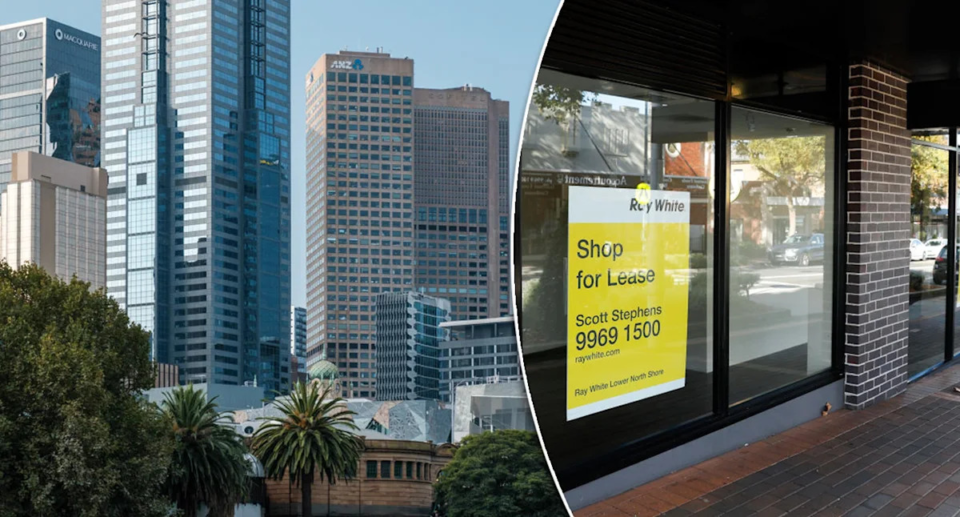
Since the budget removed negative gearing from established residential property for future buyers, commercial property has become the most talked-about alternative investment in Australia. The problem is, it is also one of the most misunderstood.
Ask the average Australian investor about commercial property, and many will tell you it is too risky, overly complicated, or simply out of reach for someone without millions behind them.
That perception is understandable. It is also, in many cases, wrong. And when perception lags reality in any asset class, the gap between the two tends to represent an opportunity for investors prepared to look a little closer.
RELATED
The branding problem
The single biggest reason commercial property is misunderstood is that most Australians treat it as one thing. Mention commercial property and the image that forms is almost always of empty office towers in a CBD, or tired retail shops sitting vacant on a suburban high street. Those assets exist, but they represent a fraction of what commercial property actually covers.
Industrial warehouses, logistics facilities, medical centres, childcare centres, neighbourhood retail strips and self-storage facilities are all commercial property. Each sector has its own supply and demand dynamics, its own tenant profile, and its own investment characteristics. Judging the entire commercial market by what is happening in CBD office towers is roughly equivalent to judging the entire residential market by one oversupplied apartment block.
The post-budget environment has increased this problem. Capital is moving toward commercial property at an increasing pace, and much of it is coming from residential investors who have never operated in the sector before. For those investors, the risk is not commercial property itself. It is approaching an unfamiliar asset class with a residential investor’s assumptions and framework.
What the fundamentals actually look like
Commercial property has its own investment framework, and it starts in a different place to residential.
Rather than focusing on comparable sales or median prices, commercial investors assess the quality of the income a property produces and the sustainability of that income over time. The first question is always about the tenant. Who are they, how does the business operate, and are they financially sound? A property is only as valuable as the business paying the rent.
