

Age before beauty
Is quite often heard.
But put them together,
And that’s the last word.
So may we suggest:
Take a stroll in the sun,
Wear a smile on your face.
Getting gray can be fun
If you do it with grace.
And thank you to Anonymous for providing this verse and suggesting our subject.
One of the first questions for this column to address is, “What constitutes what we call aging and especially elder aging?” Ogden Nash has a formula that seems to work.
Senescence begins
And middle age ends
The day your descendants
Outnumber your friends.
* * *
For growing old gracefully, let’s let Canadian poet Rose Rideout set the scene.
There comes that time in life,
When we all must age,
Like finishing a book,
as we turn to each new page.
The story seems to get our interest,
And so will our age with time,
The beauty we’ve hidden for years,
Will now show through each line.
We can be proud of our years,
Parade ourselves, for all to see,
Cause there isn’t any shame,
To grow old gracefully.
* * *
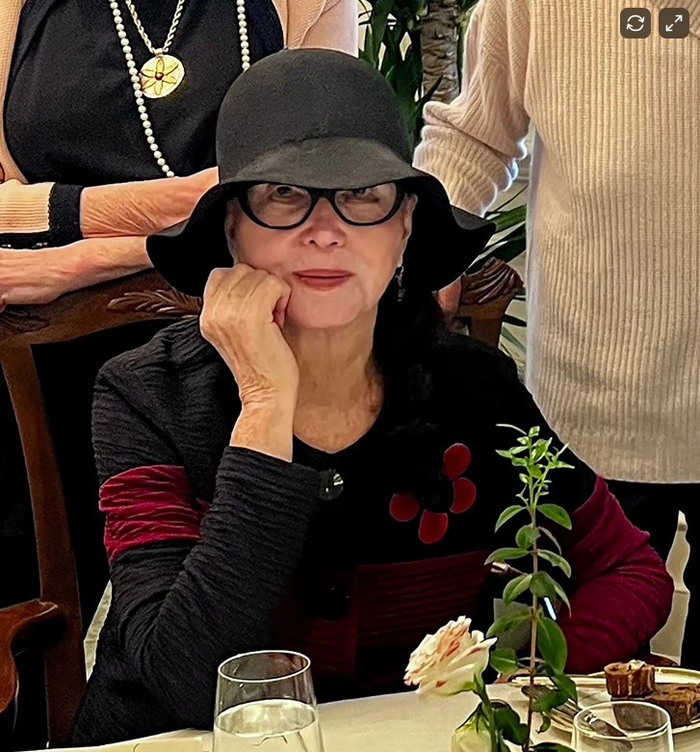
Has anyone written a poetic primer about aging? Yes, in fact there are several books about aging by Judith Viorst, a gifted light verse artist who is still actively writing at the age of ninety-five. Many of you who are raising young poets-to-be will recognize Viorst’s many contributions to children’s literature. Of her adult books, one of my favorites is titled “Making the Best of What’s Left When We’re Too Old to Get the Chairs Reupholstered.” To which she has added “I could be dead before the fabric arrives.”
* * *
* * *
Here are several of her poems I particularly like, especially as she approaches her elder years. This is how she views life at seventy.
Instead of “old, ”
Let us consider “Older,”
Or maybe “oldish,”
Or something, anything,
That isn’t always dressed
In sensible shoes
And fading underwear.
Besides which,
Seventy isn’t old.
Ninety is old.
And though eighty
Is probably old,
We needn’t decide that
Until we get there.
In the meantime
Let us consider
Drinking wine,
Making love,
Laughing hard,
Caring hard,
And learning a new trick or two
As part of our job description
At seventy.
* * *
And this buoyant Viorst piece is called “Some of the Things That Are Not on My Bucket List.”
I don’t plan on fearlessly riding a camel across the desert sands.
I don’t plan on running a marathon up in Boston.
I don’t plan on reading M. Proust in French, nor do I have any plans
To be playing acoustic guitar in a bar down in Austin.
I don’t plan on being the oldest student at Harvard Medical School,
Or suiting up for some under-the-sea expedition.
I don’t plan on piercing my labia, or places equally cool,
Or exploring the meaning of life in the lotus position.
I don’t plan on writing a book that is unostentatiously profound.
I don’t plan on getting into competitive rowing.
I just plan on planting some tulip bulbs, hoping to still be around
When the tulips start growing
* * *
A famous anthem for aging, and the title of this column, is “Silver Threads Among the Gold” written in 1848 by Eben Rexford who, would you believe, penned this when he was a teenager. Over the years it has been the go-to song for any barbershop quartet worth its salt.
Darling, I am growing old,
Silver threads among the gold
Shine upon my brow today,
Life is fading fast away.
But, my darling, you will be, will be,
Always young and fair to me,
Yes, my darling, you will be,
Always young and fair to me.
When your hair is silver white,
And your cheeks no longer bright,
With the roses of the May,
I will kiss your lips and say:
Oh! my darling, mine alone, alone,
You have never older grown,
Yes, my darling, mine alone,
You have never older grown.
* * *
Contemporary poet Shel Silverstein, whose whimsy is often addressed to children, offers this anticipatory advice.
Inside you, boy,
There’s an old man sleepin’,
Dreamin,’ waitin’ for his chance.
Inside you, girl,
There’s an old lady dozin’,
Waitin’ to show you a slower dance.
So keep on playin’,
Keep on runnin’
Keep on jumpin’, til the day
That those old folks
Down inside you
Wake up . . . and come out and play!
* * *
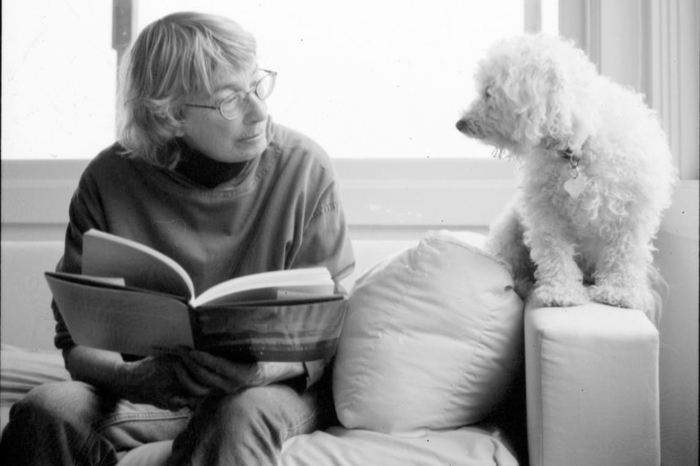
Over the years, a number of prominent poets have made age and aging a favorite topic. Here is a fine piece called “Halleluiah” by Mary Oliver.
Everyone should be born into this world happy
and loving everything.
But in truth it rarely works that way.
For myself, I have spent my life clamoring toward it.
Halleluiah, anyway I’m not where I started!
And have you too been trudging like that, sometimes
almost forgetting how wondrous the world is
and how miraculously kind some people can be?
And have you too decided that probably nothing important
is ever easy?
Not, say, for the first sixty years.
Halleluiah, I’m sixty now, and even a little more,
and some days I feel I have wings.
* * *
* * *
Here is one of the great poems of the English language, written by William Butler Yeats.
When you are old and grey and full of sleep,
And nodding by the fire, take down this book,
And slowly read, and dream of the soft look
Your eyes had once, and of their shadows deep;
How many loved your moments of glad grace,
And loved your beauty with love false or true,
But one man loved the pilgrim soul in you,
And loved the sorrows of your changing face;
And bending down beside the glowing bars,
Murmur, a little sadly, how Love fled
And paced upon the mountains overhead
And hid his face amid a crowd of stars.
* * *
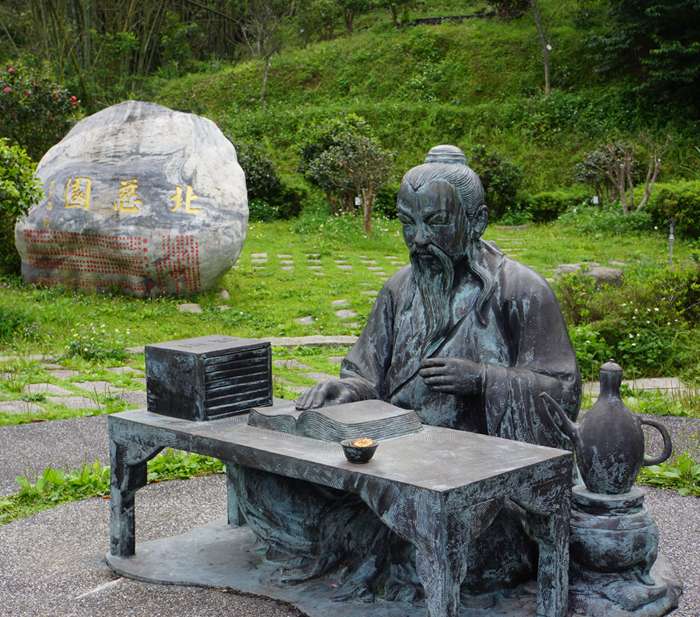
And dipping way into the past, the famous 12th century Chinese poet LuYu drew this picture of a contented elderly man. (We can all hope!)
Old man pushing seventy,
In truth he acts like a little boy,
Whooping with delight when he spies some mountain fruits,
Laughing with joy, tagging after village mummers;
With the others having fun stacking tiles to make a pagoda,
Standing alone staring at his image in the jardinière pool.
Tucked under his arm, a battered book to read,
Just like the time he first set out to school.
* * *
* * *
Growing old can have some wonderful moments to treasure but some nuisance moments as well. Chief among these would be forgetfulness, the very mention of which presents an opportunity to recall the Billy Collins piece.
The name of the author is the first to go
followed obediently by the title, the plot,
the heartbreaking conclusion, the entire novel
which suddenly becomes one you have never read,
never even heard of,
as if, one by one, the memories you used to harbor
decided to retire to the southern hemisphere of the brain,
to a little fishing village where there are no phones.
Long ago you kissed the names of the nine Muses goodbye
and watched the quadratic equation pack its bag,
and even now as you memorize the order of the planets,
something else is slipping away, a state flower perhaps,
the address of an uncle, the capital of Paraguay.
Whatever it is you are struggling to remember
it is not poised on the tip of your tongue,
not even lurking in some obscure corner of your spleen.
It has floated away down a dark mythological river
whose name begins with an L as far as you can recall,
well on your own way to oblivion where you will join those
who have even forgotten how to swim and how to ride a bicycle.
No wonder you rise in the middle of the night
to look up the date of a famous battle in a book on war.
No wonder the moon in the window seems to have drifted
out of a love poem that you used to know by heart.
* * *
And now, giving Judith Viorst the last word, here is her description of a comfortable life of aging with her husband.
“He knows when he goes for his CAT scan that I’ll gladly take him.
I know when I go for some blood work he’ll come and he’ll wait.
These are not like those torrid times on that beach in New Jersey.
But a date is a date.”
* * *
VIDEO. No reason to tease with our mentions of barbershop quartets. Listen to the four-part harmony of the popular Mellomen Quartet of the 1940’s.
CLICK ON THIS LINK FOR VIDEO: SILVER THREADS AMONG THE GOLD