
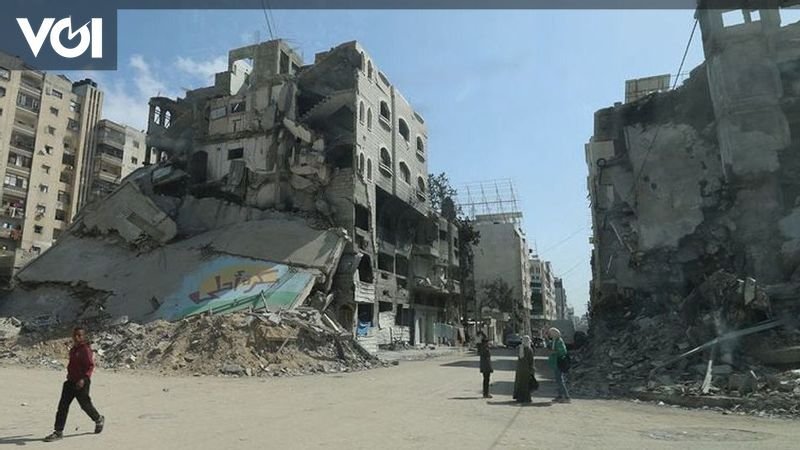
JAKARTA – The prolonged conflict in the Middle East is considered a potential to encourage a shift in investment flows from Gulf countries to safer regions, including Southeast Asia. Indonesia is considered to need to move quickly to seize the opportunity to attract foreign capital and encourage national economic growth.
The observer of Islamic Economics at Paramadina University, Imas Damayanti, said that conflicts involving military tensions in the Middle East since the beginning of 2026 not only have an impact on the economies of the countries involved, but also affect investors’ confidence in the stability of the Gulf region or Gulf States.
According to Imas, the security situation, which has not shown concrete resolution, has the potential to encourage investors to review their capital placement. This condition can open opportunities for Indonesia to attract investments that were previously planned to enter the Gulf countries.
“Apart from the cumulative impact of the prolonged conflict in the Middle East, Indonesia must welcome the opportunities from this condition. Capital flight from the Gulf States, which has been considered a safe place by investors, must be successfully relocated to Indonesia,” said Imas in Jakarta, Thursday, October 15.
Capital flight is the movement of funds from a country or region to another due to increased risk, uncertainty, or investment profit considerations. In conflict situations, these decisions can be influenced by security, business certainty, and the sustainability of long-term projects.
Imas assessed that the instability of security in the Gulf region has the potential to disrupt the mainstay sectors that are being developed to reduce dependence on oil and gas. One of them is tourism, which depends on the smoothness of flights, tourist mobility, and perception of destination security.
He said the closure of airspace in the Gulf region could potentially cause a loss of revenue from international tourist spending of up to 58 billion US dollars. In addition, strategic projects in the property and digital sectors in a number of business centers, including Dubai and Doha, are considered at risk of delays or cessation of activities.
“There is no concrete effort from the leaders of the countries in the Gulf region to resolve this conflict. Of course this makes investors no longer believe in investing in the Gulf,” he said.
According to Imas, security uncertainties can also affect the plans of multinational companies that previously considered Riyadh and Dubai as regional or regional headquarters locations. These companies, he said, are starting to look at alternative locations in Southeast Asia which are considered to offer a more stable business environment.
Indonesia, continued Imas, has the opportunity to be considered by the company. However, this opportunity needs to be followed by concrete steps by the government to strengthen the attractiveness of investment, ranging from legal certainty to ease of doing business.
“In this case, we can be confident because Indonesia is also a country in ASEAN that is relatively safe and free from maritime and air conflicts,” he said.
Imas also highlighted the impact of the conflict on the perception of security in Saudi Arabia after the missile attack on King Khalid International Airport, Riyadh, which he said was launched by the Yemeni Houthi group. He said the incident added to concerns about regional security, including for travel activities to the Holy Land.
“This is concrete evidence that the security instability in the Gulf region is very worrying. They can no longer enter as a safe country, especially for investment,” he said.
However, Imas emphasized that the opportunity for investment to enter Indonesia will not materialize just because investors reduce their exposure in conflict areas. The government needs to offer competitive conditions so that Indonesia really becomes an alternative destination for foreign capital.
He encouraged the government to move quickly to identify companies and projects that have the potential to move investments, as well as prepare offers that match investor needs. These efforts need to be accompanied by regulatory certainty, a conducive business climate, and support for the development of productive sectors.
According to Imas, capital inflows can support the strengthening of the rupiah exchange rate, expand economic activities, and encourage national development. However, these benefits depend on the realization of investments and their impact on economic activities within the country.
Therefore, he asked the government not to lose momentum in the midst of changes in the global investment risk map. Indonesia needs to ensure that the opportunity for capital shifts from Gulf countries can be translated into real investments that support economic growth and job creation.
The English, Chinese, Japanese, Arabic, and French versions are automatically generated by the AI. So there may still be inaccuracies in translating, please always see Indonesian as our main language.
(system supported by DigitalSiber.id)
Add VOI as a Preferred Source
Follow VOI news updates across Google.
+