
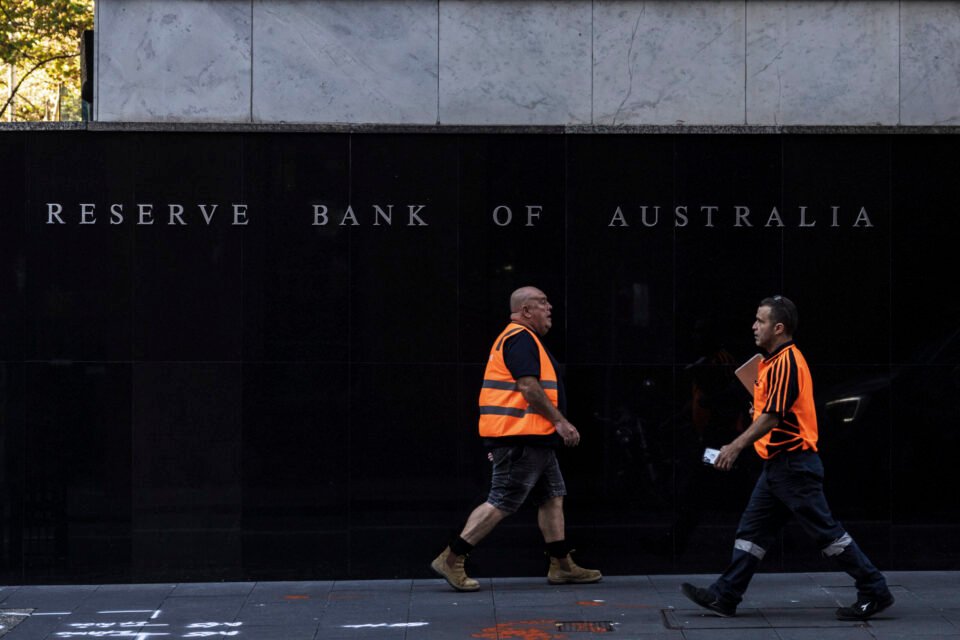
Australian homeowners are reeling from five interest rate increases this year, while households struggle with inflation and the rising cost of living. Beyond the immediate pressure on family budgets lies a more consequential challenge: governments face growing demands for expenditure at the very moment Australia needs to strengthen the productive foundations of its economy. What governments choose to fund, what they stop funding and where they invest next will shape Australia’s economic security and prosperity for decades.
The challenge is one of political leadership: making decisions that serve Australia’s long-term national interest, even when the political costs fall on those making them.
The hierarchy of needs devised by psychologist Abraham Maslow offers an interesting analogy. As people’s basic needs are met, their aspirations expand. Prosperous societies may experience something similar, with growing expectations of government making the economic foundations supporting those expectations easier to take for granted.
Those foundations require constant renewal. Reliable and affordable energy, efficient transport networks, competitive industries and skilled workers generate the wealth that pays for public services and rising living standards. They also determine how effectively Australia can withstand economic shocks, sustain defence operations and respond when international supply chains fail. Economic productivity and national security are increasingly dependent on the same capabilities.
Yet prosperity creates political pressures. Governments respond to expanding expectations with new programs and commitments. Many deliver genuine benefits but once established they become difficult to reconsider. Over time, the accumulation of individually reasonable decisions can leave governments with less flexibility to respond to changing economic circumstances and national priorities.
For much of the past three decades, economic growth, rising revenue and relatively inexpensive borrowing helped accommodate those demands. That flexibility is now rapidly narrowing.
The Productivity Commission reports that Australian labour productivity declined 0.2 percent in the year to June 2026. Meanwhile, the Parliamentary Budget Office forecasts national public debt interest payments rising from A$54.2 billion in 2026–27 to A$77.2 billion in 2029–30. Over the same period, combined federal, state and territory net capital investment is projected to fall from A$57.4 billion to A$53.2 billion.
These figures don’t establish that rising debt costs are displacing productive investment, nor do they suggest Australia’s public finances are unsustainable. But they expose an uncomfortable question about priorities. Governments are expected to meet growing demands while the share of national income devoted to public capital investment is forecast to decline and debt servicing absorbs more revenue.
Australia risks becoming a country that spends more to maintain its standard of living while investing less in the capacity to improve it.
The problem extends well beyond government budgets. Much of Australia’s future industrial capacity will be financed and operated by the private sector. Governments influence whether that investment occurs through infrastructure provision, regulation, taxation, planning and the allocation of risk. Poor coordination can prevent commercially viable projects from proceeding, even where their economic and strategic benefits are substantial.
Northern Australia demonstrates the challenge. Gas is now flowing from the Beetaloo Basin into the Northern Territory network, but turning that resource into a broader industrial opportunity requires customers, competitive energy prices, transport infrastructure, finance and a skilled workforce. Resource availability alone won’t create an industrial base.
The ports, freight networks, energy systems and industrial capabilities supporting commercial development could also strengthen Defence’s ability to sustain operations across northern Australia. But Defence cannot be expected to provide sufficient demand to underpin every proposed industrial investment. Governments must identify where commercial opportunities exist, where market failures prevent investment and where public intervention can unlock broader economic and strategic benefits.
Industrial facilities take years to develop, workforces require sustained investment, and infrastructure constraints can discourage businesses long before a crisis exposes the consequences. A government may defer expenditure today only to discover that the capability it eventually needs cannot be bought quickly, regardless of the money available.
This is where fiscal flexibility becomes a national security consideration. Governments that cannot redirect resources, coordinate investment or respond to emerging opportunities progressively surrender choices about their economic and strategic future.
None of this makes social expenditure inherently less valuable than infrastructure. Healthcare and education can strengthen productivity, while poorly conceived industrial subsidies and capital projects can destroy public value. The test must be whether spending and policy decisions contribute to long-term prosperity, public wellbeing and the capabilities Australia will need under less favourable circumstances.
Australia’s budget debate concentrates heavily on what governments propose to fund next. It pays less attention to what established commitments prevent them from doing. Medium-term expenditure reviews should explicitly examine the opportunity costs of existing programs against productive investments being deferred, including opportunities to mobilise private capital rather than rely on public funding alone.
The economic cost of delay is rarely confined to the budget in which a decision is postponed. It may become apparent a decade later, when an industry has disappeared, infrastructure cannot meet demand or a workforce no longer exists. By then, Australia may have the money to act but lack the time needed to recover the opportunity.