
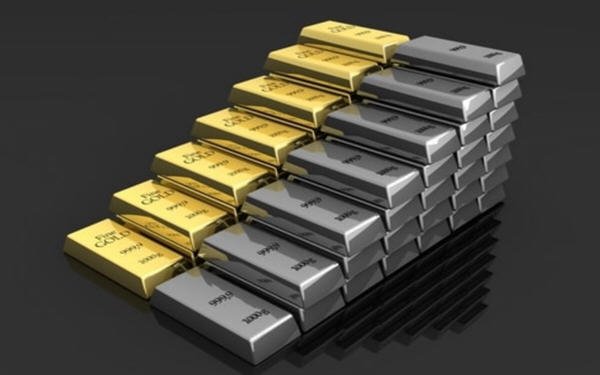
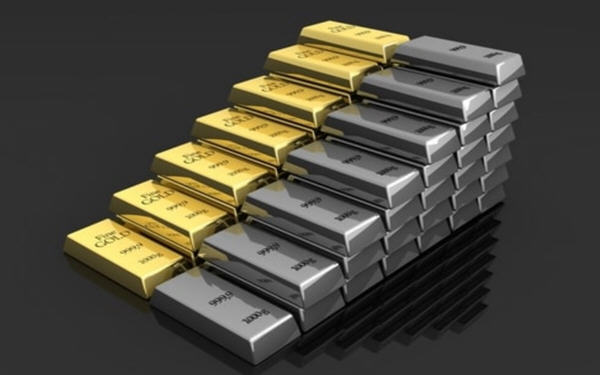
Gold and silver both hit record highs earlier this year before experiencing sharp pullbacks. Recently, both precious metals have been moving higher again – with gold hovering around $4,400 per ounce and silver holding above $66. For investors, the key question is not whether precious metals are worth allocating to, but rather which of the two – gold or silver – has greater upside potential.
The Gold-Silver Ratio: A Barometer of Market Sentiment
The gold-silver ratio (the price of gold divided by the price of silver) is a commonly used metric for gauging the relative value of the two metals. Currently, the ratio stands at approximately 67, meaning gold is 67 times more expensive than silver. While this number carries no inherent judgment of good or bad, its historical trading range offers important clues about investor sentiment.
Looking back at past periods of market panic, the gold-silver ratio has tended to spike sharply. During the COVID-19 pandemic in 2020, which triggered global market turmoil, the ratio surged to above 110. During the 2008 financial crisis, it peaked at around 80. The logic behind this pattern is straightforward: when economic uncertainty intensifies, investors increasingly turn to gold as the ultimate safe-haven asset, while silver – which has significant industrial applications – tends to face greater pressure when demand contracts. This dynamic drives gold prices higher relative to silver.
Current Ratio Below 70: How Much Room Does Gold Have?
The current ratio of approximately 67 remains below the peak levels seen during the financial crisis and is far from the extreme highs of 2020. This suggests that if the macroeconomic environment deteriorates further and risk-off sentiment intensifies, there could be room for gold’s premium over silver to expand even more. For investors concerned about the economic outlook, gold’s safe-haven case is clearer than silver’s at this juncture.
That said, this is not to dismiss silver’s investment merits. Silver’s extensive industrial applications – particularly in sectors such as solar energy and electronics – give it greater price elasticity during economic recovery cycles. However, against the backdrop of multiple uncertainties facing global economic growth, gold’s status as the ultimate store of value makes it the more prudent choice.
GLD: A Convenient Vehicle for Gold Exposure
For investors seeking to hedge portfolio risk through gold, the SPDR Gold Shares (NYSE: GLD) offers a convenient allocation channel. The ETF is up approximately 2% year-to-date and has continued to rise alongside gold’s recent rebound. As of August 17, GLD had approximately $144 billion in assets under management, with an expense ratio of just 0.40%, making it one of the most liquid gold ETFs available.
It is worth noting that gold itself is not a “risk-free” asset. Its price is influenced by multiple factors, including market risk appetite, U.S. dollar movements, and interest rate expectations, and its volatility should not be overlooked. However, as a hedging tool within a portfolio, gold exhibits low correlation with traditional assets such as stocks and bonds, making it effective for diversification purposes.
Conclusion
Gold and silver prices move in the same direction, but to varying degrees. The current gold-silver ratio of approximately 67 suggests that gold’s premium over silver has not yet reached historically extreme levels. If economic uncertainty persists or intensifies, gold’s upside potential is worth watching. For investors seeking a prudent hedge in an uncertain market, gaining gold exposure through GLD remains a practical option.