

Investing in infrastructure opens up opportunities for capital flow.
Cross-border payments originated from a simple user need: to be able to use familiar payment methods while traveling to another country. However, for a QR code scan to be processed in seconds, it requires connections between the national payment system, settlement banks, intermediary organizations, acceptance units, and foreign partners. Therefore, as the number of connections increases, the story shifts from a mere app feature to a challenge for the financial infrastructure.

Deputy Prime Minister Nguyen Van Thang acknowledged that cashless payments have become the “lifeblood of the digital economy,” connecting banks with commerce, healthcare, education, transportation, tourism, public services, and digital platforms. According to the Deputy Prime Minister, data, identification, connectivity, and digital payments are all working together to create a more modern and transparent financial system.
From the perspective of a regulatory body, Mr. Le Anh Dung, Deputy Director of the Payment Department, State Bank of Vietnam, believes that digital transformation is not just about technology; the ultimate goal must be to serve the people and businesses. Connecting domestic and cross-border systems is expected to create new value for the economy .
This is evident in the way the parties are investing. NAPAS focuses on technical standards, switching infrastructure, and international interoperability; banks invest in real-time processing systems, digital applications, and settlement; fintech companies open up partner networks; and payment intermediaries extend connections to points of sale.
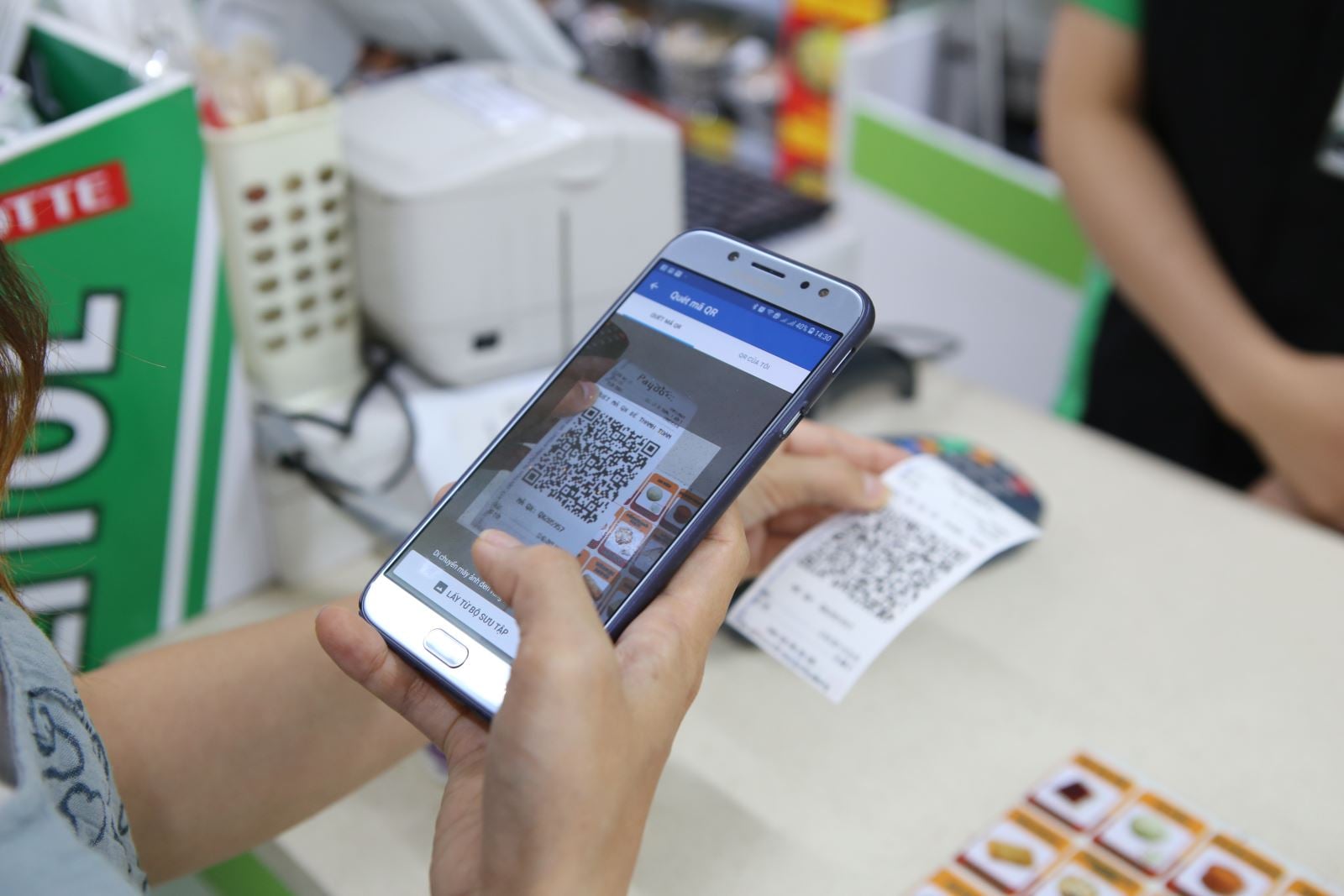
According to a NAPAS representative, QR code payments, based on the account-to-account model, reduce reliance on traditional acceptance devices, thereby facilitating implementation for small businesses and household enterprises.
This benefit is particularly evident in the inbound direction. When international tourists can use their national e-wallets or banking apps to make payments in Vietnam, even a small shop has the opportunity to receive cash flow from foreign customers without necessarily having to invest in extensive private systems.
According to 9Pay, VietQRGlobal is being integrated with payment gateways and Payment Link; transaction data can be aggregated on a dashboard for businesses to track revenue, customer markets, and spending behavior. In the future, the company plans to expand to point-of-sale devices.
Nam A Bank also places QR Global within its broader digital transformation strategy, alongside AI, Big Data, and digital services. This approach shows that cross-border payments are not being built as a separate product but are becoming part of the digital banking infrastructure.
At the economic scale, connectivity is also linked to the flow of trade and investment between countries. At the Vietnam- Korea Financial Cooperation Forum in Ho Chi Minh City in July 2026, Associate Professor Dr. Nguyen Huu Huan, Vice Chairman of the Vietnam International Finance Center in Ho Chi Minh City, stated that the direction of cooperation with Korea includes developing capital markets, cross-border payments, fintech, artificial intelligence, green finance, and human resource training.
According to information presented at the forum, Vietnam-South Korea trade turnover is projected to reach approximately US$94.6 billion in 2025, with both countries aiming for US$150 billion by 2030. As trade volume increases, a direct, convenient payment infrastructure that reduces intermediaries becomes even more significant for bilateral economic activity.
The Vietnam-Korea QR code connection currently processes real-time transactions between KRW and VND through settlement banks. According to the State Bank of Vietnam, this mechanism helps shorten the process and reduce transaction costs by eliminating the need for currency exchange through intermediaries.
The ambition to expand is therefore underway in multiple directions. NAPAS continues its plan to connect more markets in the region; 9Pay is researching the US, Europe, and India ; and banks and e-wallets are also expanding their partner networks. NAPAS has identified markets such as India, Taiwan, and Japan in its next connection plan, but the specific progress depends on the technical and legal coordination process between the parties.
The growth potential therefore lies not only in Vietnamese people traveling abroad. Conversely – channeling international tourists’ spending into Vietnamese payment networks – can create additional value for retail, tourism , accommodation, food and beverage, and household businesses.
Road construction and safety policies must keep pace.
The more money flows through multiple systems and countries, the more complex the legal requirements become. Cross-border payments simultaneously involve foreign exchange, customer identification, settlement, anti-money laundering, data protection, and the liability of participating organizations.

A key legal framework is Decree 52/2024/ND-CP on non-cash payments, issued on May 15, 2024, and effective from July 1, 2024. Besides regulations on accounts, electronic money, and payment intermediaries, the Decree adds provisions on international payments, international payment systems, international financial switching operations, and mechanisms for monitoring payment systems.
This is noteworthy because the rapid pace of technological development demands that policies not only address existing problems but also create space for new models.
At a press conference on August 11th regarding the Digital Transformation of the Banking Sector in 2026, Mr. Hoang Minh Tien, Deputy Director of the Information Technology Department of the State Bank of Vietnam, emphasized the view that “institutions must lead the way to pave the path for innovation.” Along with perfecting the legal framework, the banking sector is strengthening its data infrastructure, identification, and risk management.
Long-term orientations have been concretized in Decision 928/QD-TTg dated May 25, 2026, approving the National Comprehensive Financial Strategy for the period 2026-2030. The goal by 2030 is for 95% of the population aged 15 and over to have transaction accounts and for the value of cashless payments to reach 30 times GDP. The strategy also requires the completion of the legal framework, the development of digital financial infrastructure, and increased consumer protection, cybersecurity, and personal data protection.
Deputy Prime Minister Nguyen Van Thang also requested relevant agencies to study technical standards to increase connectivity between credit institutions, fintech companies, and financial service providers; at the same time, banks, payment intermediaries, and technology companies must continue to reduce costs, improve service quality, and ensure consumer rights.
Security requirements are becoming increasingly urgent given the massive scale of digital transactions. By August 2026, the entire banking industry had verified biometric information for over 167.8 million individual customer records and over 2.78 million institutional customer records with payment accounts through chip-embedded citizen identification cards or VNeID. Mr. Hoang Minh Tien believes that connecting and exploiting large-scale data will both improve service quality and help eliminate junk accounts and prevent impersonation and financial fraud.
At the transaction monitoring level, the Payment Fraud Management, Monitoring and Prevention Information System (SIMO) issued alerts to approximately 4.6 million customers. More than 1.5 million customers stopped or canceled transactions after the alerts, helping to prevent over 5.2 trillion VND from potentially going into suspicious fraudulent transactions.

Businesses also need to increase their security measures when scaling up. MoMo stated that its AI system currently alerts to approximately 29,000 unusual transactions daily; in 2025 alone, the company estimates that the system will have contributed to protecting approximately 15 trillion VND from fraud risks.
These layers of protection are even more significant for cross-border transactions, as an incident can involve multiple organizations and two legal systems. Along with fraud detection, the market must also address practical issues such as how exchange rates are applied, who bears the fees, transaction limits, refund times, investigation mechanisms, and liability in case of disputes.
Therefore, the number of connected countries is an easily visible indicator, but not a complete measure. The network can only become a habit if users find enough acceptance points, transactions are stable, exchange rates and costs are clearly known; businesses receive and reconcile money conveniently; and regulatory agencies can monitor the flow of money and risks.
From the basic need to exchange currency during a trip, cross-border payments are gradually becoming an integral part of the digital economic infrastructure and regional financial connectivity. The extent to which Vietnam’s payment ecosystem can expand will depend not only on the speed of market expansion but also on the ability to combine technological investment, interoperability standards, and a legal framework that is open enough for innovation yet robust enough to protect the flow of funds.
Source: https://baotintuc.vn/tai-chinh-ngan-hang/thanh-toan-xuyen-bien-gioi-bai-cuoi-mo-duong-cho-ha-tang-tai-chinh-so-20260820100609544.htm