
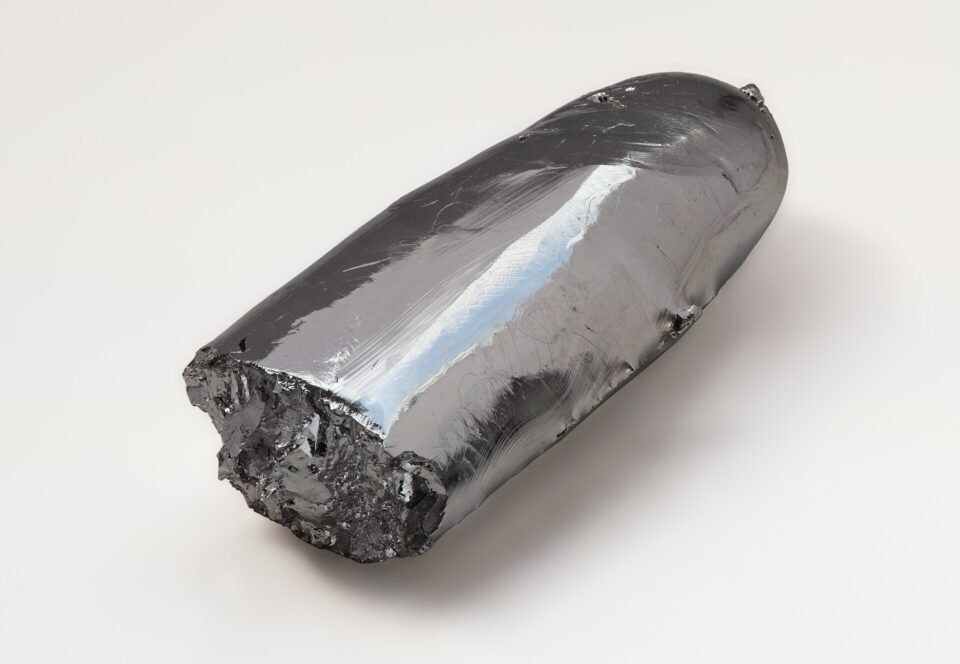
There’s a metal most people have never heard of, and it’s having the best year of its life. Ruthenium — a minor member of the platinum-group metals (PGMs) family — has smashed through its all-time price record. The reason? Artificial intelligence needs it, and there simply isn’t enough to go around.

Key Takeaways:
- Ruthenium hit approximately $1,750 per ounce on March 13, tripling from $560 per ounce just a year earlier, according to LSEG data citing Johnson Matthey’s benchmark prices.
- AI-driven expansion of data centers is fueling hard disk drive production, where ruthenium serves a critical role in magnetic storage layers.
- Metals Focus projects a supply deficit of 203,000 ounces in 2026, with no easy fix — the metal only exists as a by-product of platinum-group mining, concentrated heavily in South Africa.
Ruthenium plays a quiet but essential part in electronics, semiconductors, and chemical processing. Its latest price surge, however, is tied directly to the AI infrastructure buildout. As cloud computing and data storage expand at breakneck speed, data center operators are ordering more hard disk drives. Ruthenium is baked into the magnetic layers that make those drives work.
On March 13, the metal traded at around $1,750 per ounce, based on LSEG data referencing Johnson Matthey’s benchmark. A year earlier, the same ounce cost $560. That’s more than a threefold jump in twelve months.
Nicky Shiels, Head of Research & Metals Strategy at MKS PAMP, pointed to the growing investor interest: “The fact that it’s establishing itself as a ‘precious proxy for the AI buildout’, investors have likely also expanded positioning.”
The supply side looks even tighter going forward. Wilma Swarts, director of PGMs at Metals Focus, forecasts a deficit of 203,000 ounces in 2026. That gap won’t close easily. Ruthenium doesn’t come from dedicated mines — it’s produced only as a by-product of broader PGM mining operations, the vast majority of which are located in South Africa.
And South African output is heading the wrong direction. Platinum group metals production in the country dropped 3.8% year-on-year in January 2025, according to Statistics South Africa. The decline isn’t a one-off blip. Northam Platinum has noted that PGM production in South Africa has been shrinking for several years, the result of limited investment in new mining projects over the past two decades.
So the math is straightforward: AI demands more ruthenium, and the planet produces less of it every year. With no new mines on the horizon and demand accelerating, this once-overlooked metal has become one of the tightest commodity trades of 2026.
Written by Vytautas Valinskas