
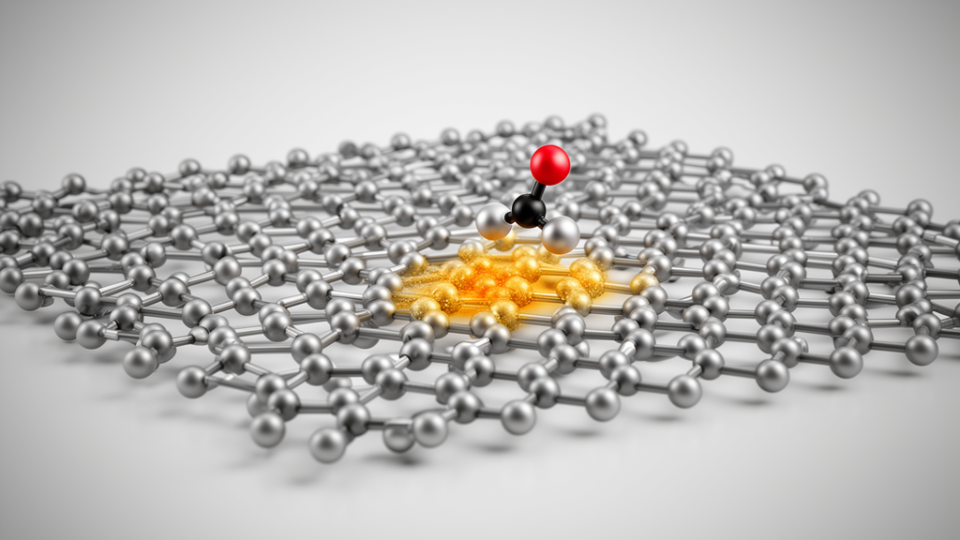
A computational investigation using density functional theory calculations has identified palladium-modified boron selenide and gallium nitride heterostructures as promising candidates for capturing hazardous airborne gases.
In the simulation, researchers systematically examined the binding behaviors of silver, gold, palladium, and platinum atoms across the surface of the BSe/GaN heterostructure material. Charge density difference analysis verified the strong binding of noble metals on the BSe/GaN surface.
Building on these stable configurations, the researchers investigated the adsorption properties of nitrogen dioxide and sulfur dioxide molecules on the palladium-modified heterostructures to identify the most favorable gas-heterostructure systems. While both target gas molecules exhibit only weak physisorption on pristine, unmodified sheets, the palladium-modified surface induced a significant transition toward chemisorption for both substances.
The calculations revealed particularly robust chemical interaction with nitrogen dioxide, which exhibited an adsorption energy of -2.47 eV on the Pd-BSe/GaN material. The computational results highlight the potential of the Pd-BSe/GaN material as a robust candidate for gas capturing and adsorption applications.
Subject of Research: Density functional theory investigation of gas adsorption on modified nanosheets
Article Title: DFT investigation of gas molecules adsorption on novel Pd-BSe/GaN nanosheets: electronic structures and adsorption properties
Article References: Vasudevan, A., Shelash, S. I., Mahmood, F., Manjunath, H. R., Ray, S., Singh, M., Thakur, K. K., Azizjanov, K., Jamoliddin, T., & Gouadria, S. (2026). DFT investigation of gas molecules adsorption on novel Pd-BSe/GaN nanosheets: electronic structures and adsorption properties. Journal of Nanoparticle Research, 28(12), Article 306. https://doi.org/10.1007/s11051-026-06816-6
Image Credits: AI Generated
DOI: 10.1007/s11051-026-06816-6
Keywords: density functional theory, palladium, nanosheets, BSe/GaN heterostructures, gas adsorption, nitrogen dioxide, sulfur dioxide, chemisorption, physisorption, charge density difference, gas capturing, noble metals, hazardous gases, surface science, nanotechnology, computational materials science