
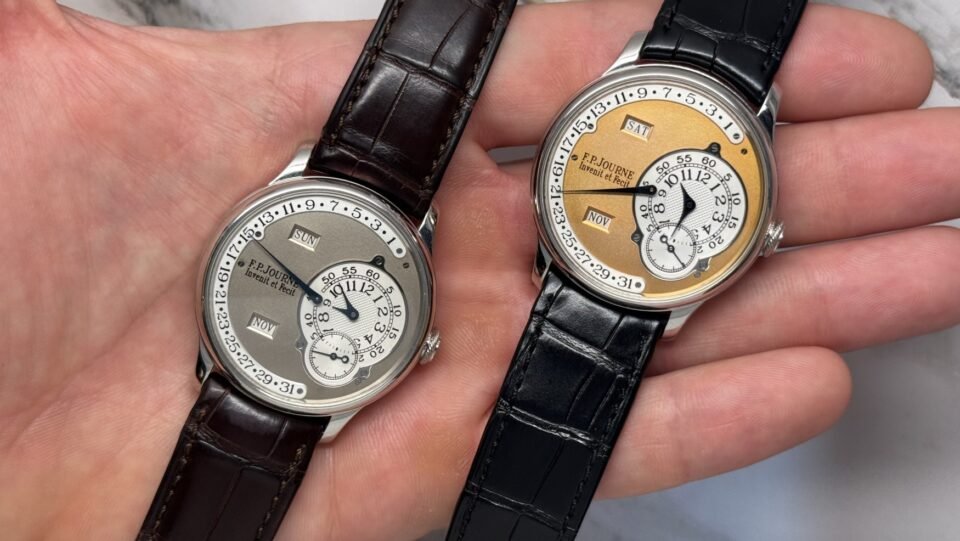
How can brass be worth more than gold? Surely the most common metals in the watchmaking industry could never sell for more on the secondary market than one of the most sought-after metals on the face of the Earth? When you compare these two Octa Calandreir pieces from F.P. Journe, it might be hard to believe that the one with a starting bid of CHF 400,000 has a brass movement, while the rose gold movement has a starting bid of CHF 200,000. So how can this be?
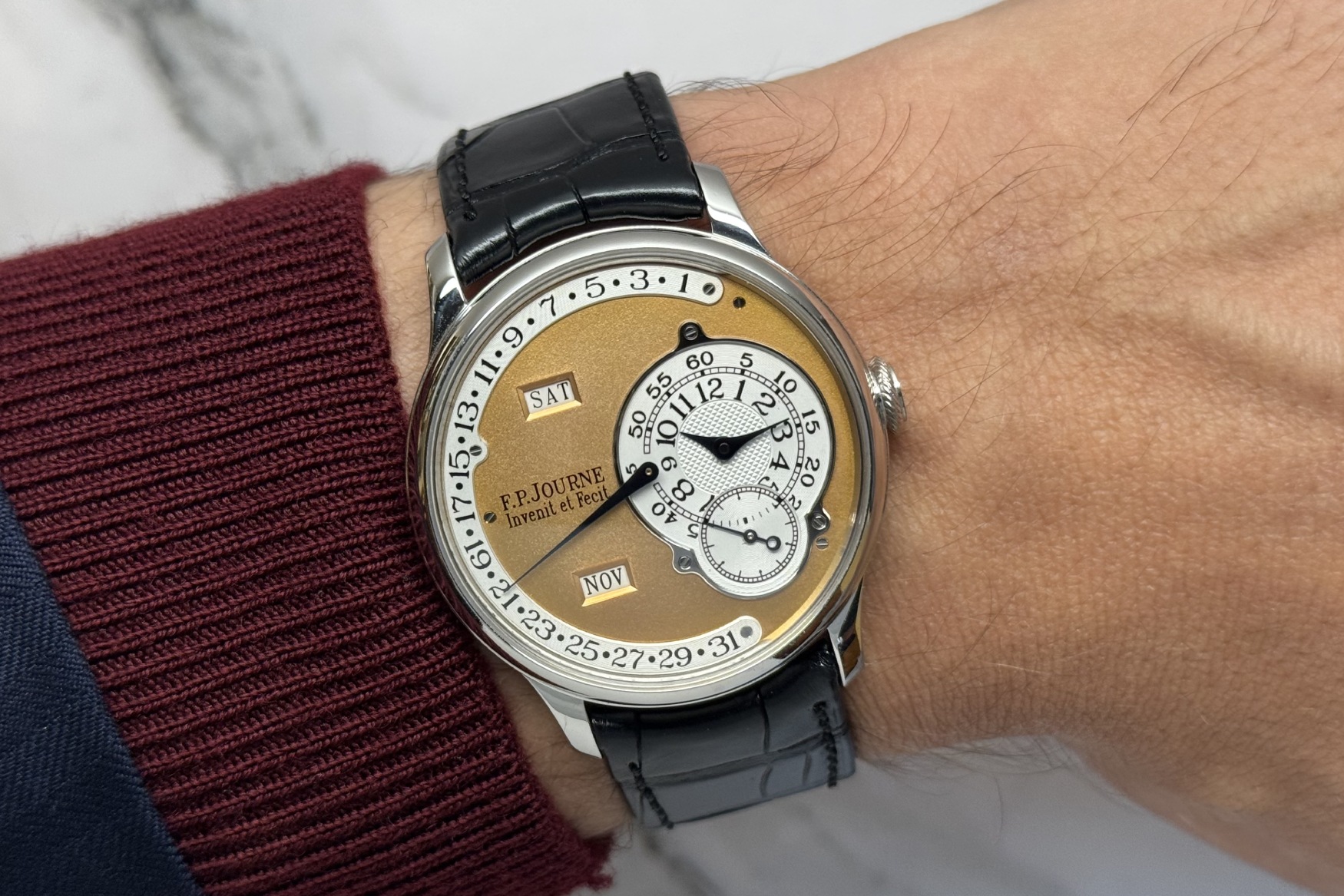
When F.P. Journe started his brand, he only used brass to produce his movements. The most common metal for making movement components, sourcing and working with it is relatively cheap, and you can apply all kinds of fine finishes to it that give it a lustrous appearance. So you never had a bad-looking movement, but its base metal was certainly a lot cheaper to source originally.
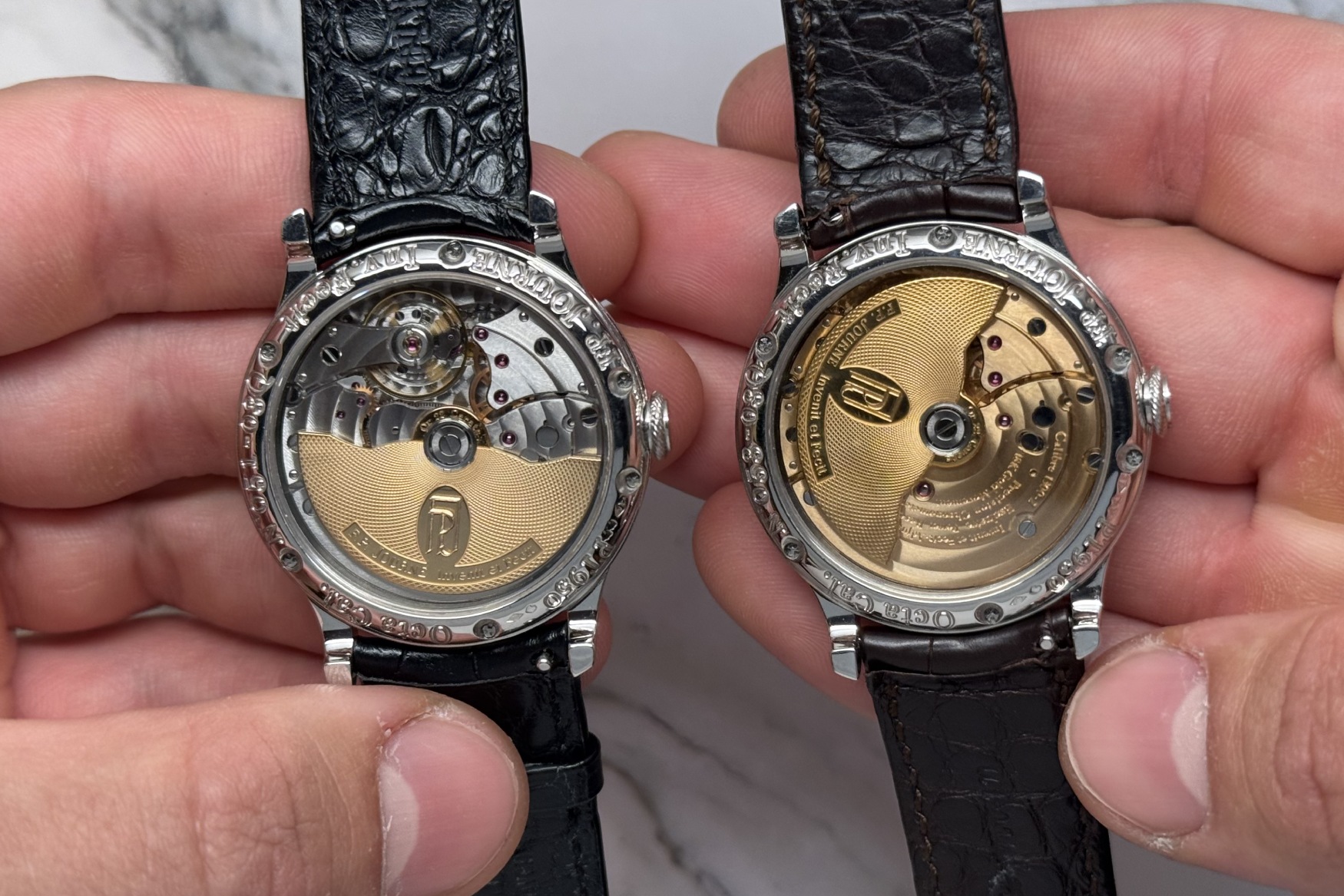
However, after a few years, between 2003 and 2004, Journe decided to move away from brass and begin creating all of his movements out of rose gold. This transitional period saw some pieces still being made in brass while others were already being made in full rose gold. However, if you ask most collectors today if they had a choice between a Journe with a brass movement or one with a rose gold movement, 99.9% of the time, they will go for a brass movement. Why is that?
Some of the biggest factors in dictating the collectability of a piece are rarity, condition, and proximity to original design. Not only are the brass movements now considered rarer than the rose gold ones, but the fact that they are closer to the first pieces that Journe produced makes collectors want them more.
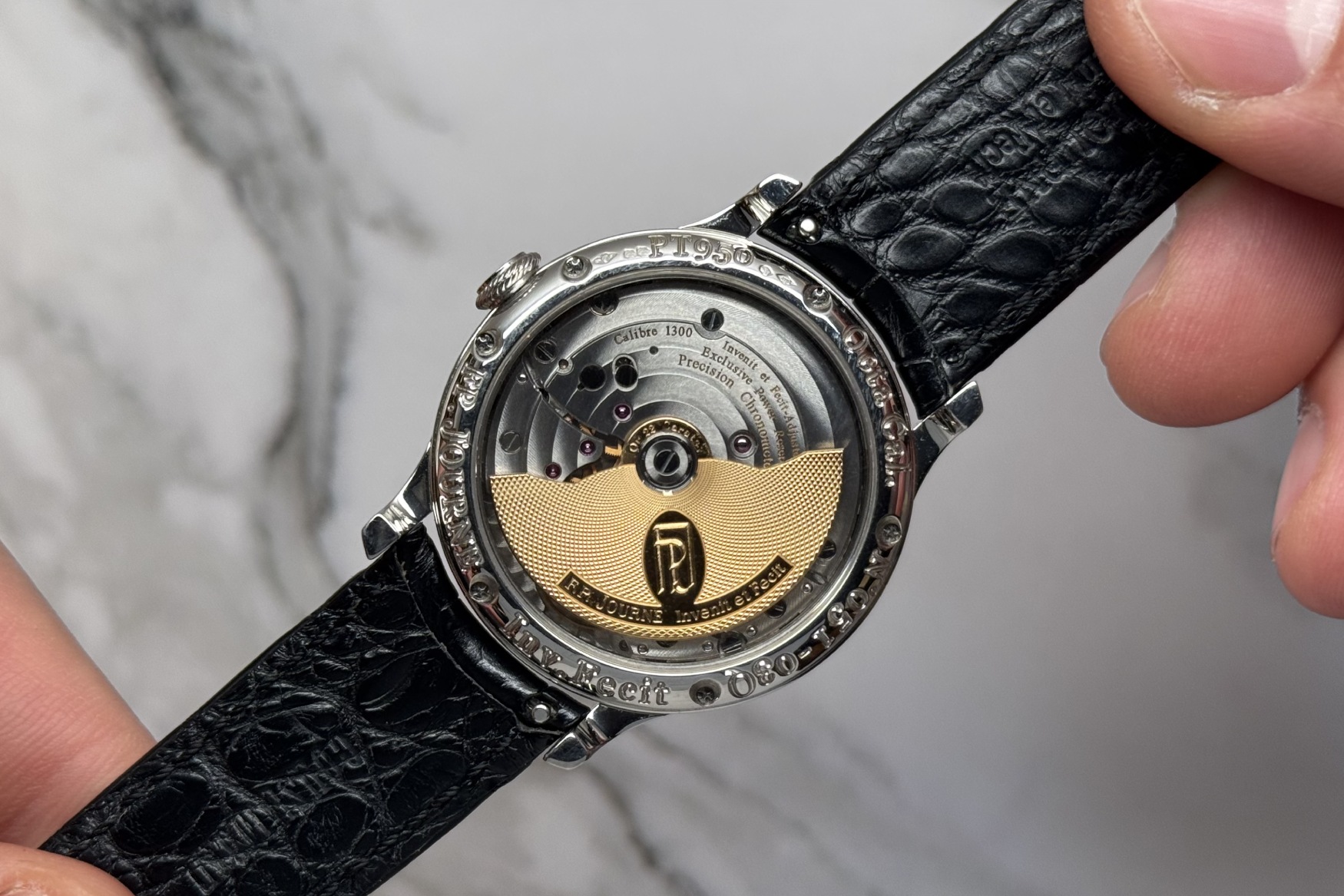
But if you were to ask François-Paul himself how he feels about these two, he would no doubt point to the improvements made in the rose gold movement pieces, like the production process smoothing out and coming in-house. Or the fact that the precious metal gives a far more desirable glow to the movement when you peer at it beneath the spinning rotor.
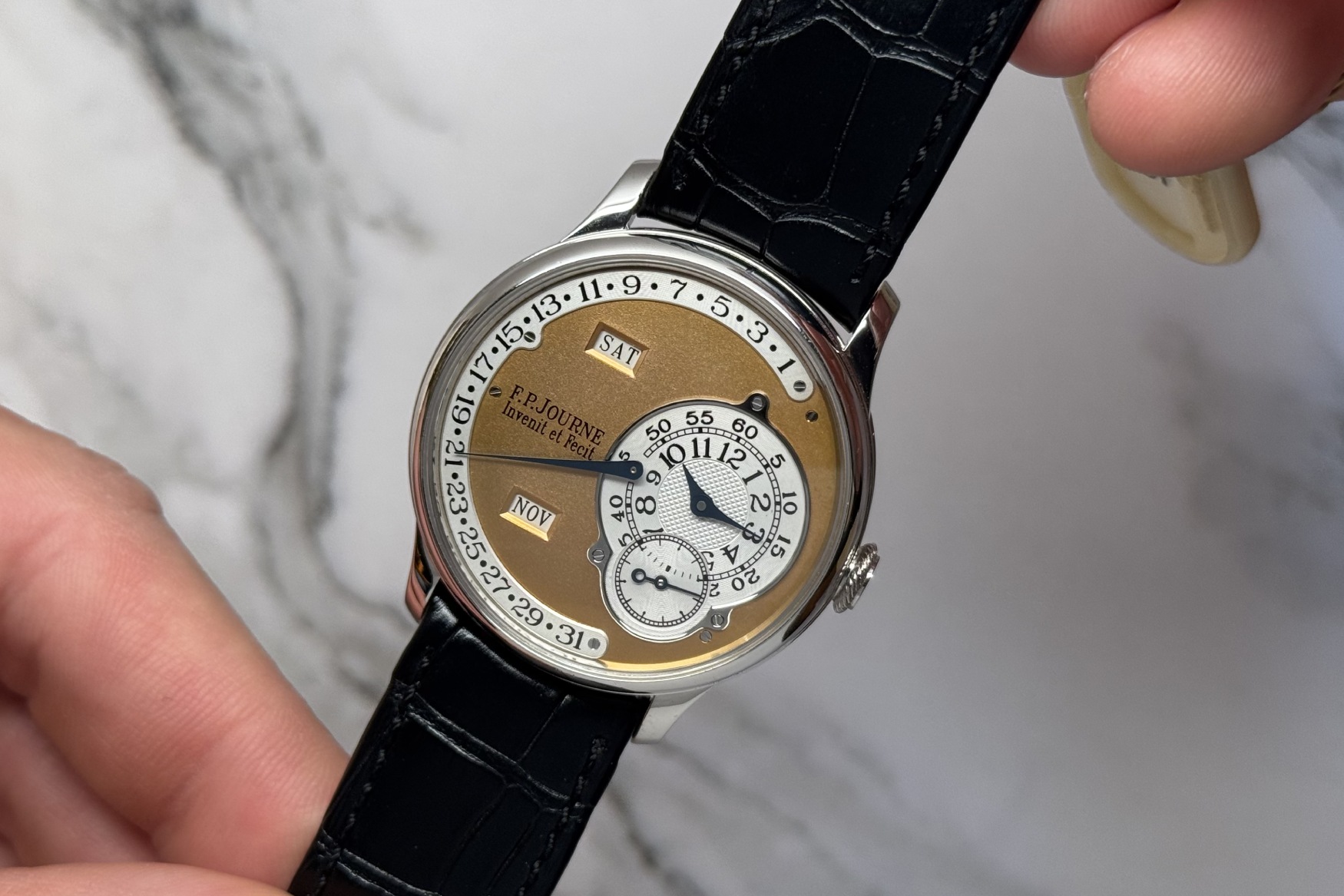
This only goes to show the divide between how a collector views watches and how watchmakers do. Collectors are always chasing the most desirable version, the one that no one else can get, but everyone else wants. A watchmaker such as F.P. Journe is trying to make the very best watch he can while simultaneously building the most efficient, self-sufficient company around those watches. Just as Journe was able to bring his movement production fully in-house towards the beginning of the century, he has now brought his case and dial manufacturing in-house too.
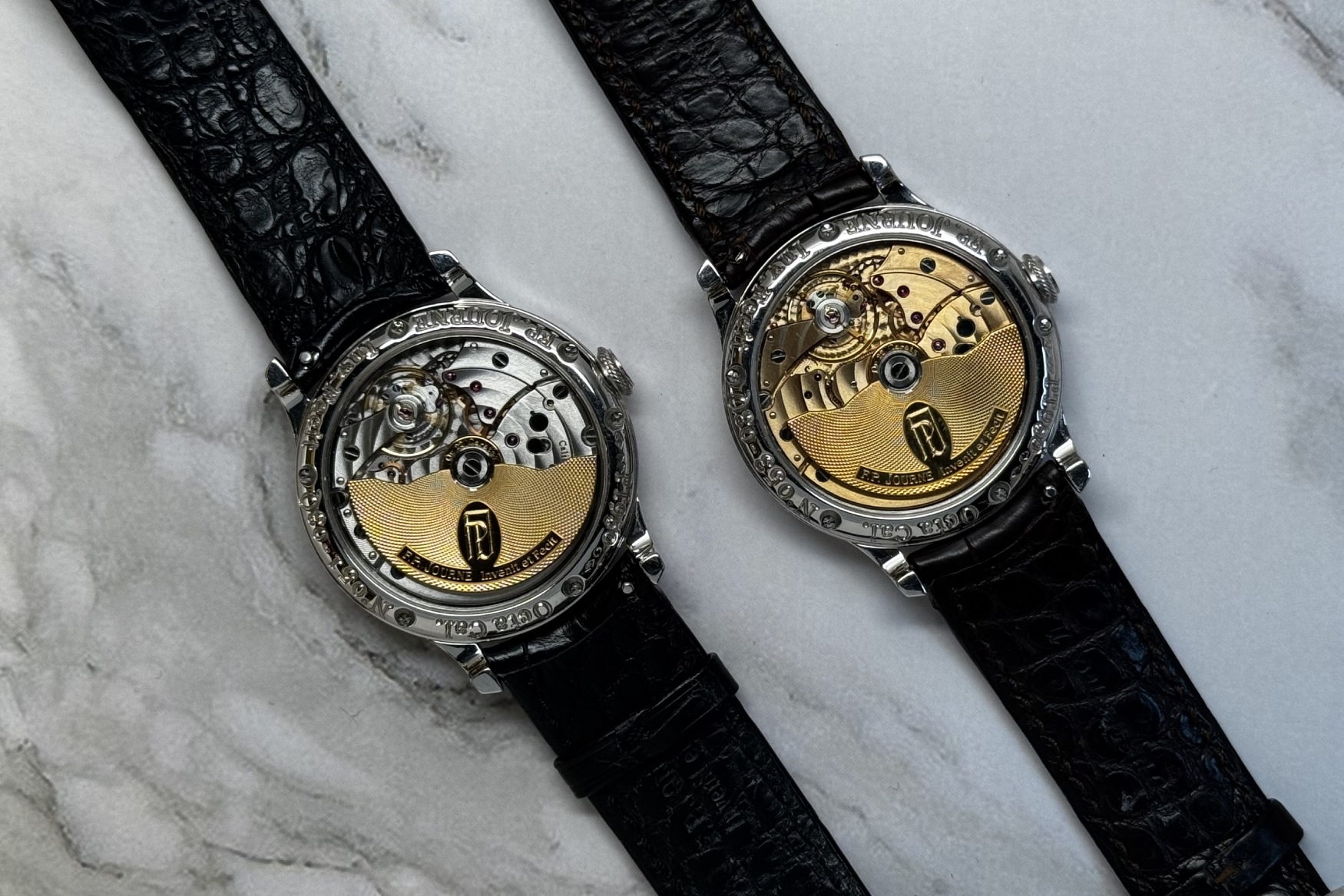
It is these structural changes that can lead to minor differences in the final watch that us watch nerds obsess over. Whether it is something as major as changing the metal of a movement, or a shift in how the caseback engraving is carried out, which is another Journe collecting quirk that we can maybe get into another day. For now, all you need to understand is that a brass movement can, in fact, be worth a lot more than a gold one; it just needs to be a Journe for that to be the case.