Jared Bilkre, global markets and data editor for Yahoo Finance, also reports chips are crashing like it’s 2008 as the Nasdaq 100 nears a bear market:
Wall Street is wrapping up a kind of week it has seen only five other times since World War II. Two of them came in 2008 and 2001.
The S&P 500 (^GSPC) is on track to fall every day this week, with at least four drops of 1% or more. That has happened only in 1962, 1974, 1978, the week after the 9/11 attacks in 2001, and October 2008, according to Bespoke Investment Group.
Friday is seeing the strongest leg down. The S&P 500 is falling about 2% and the Nasdaq Composite (^IXIC) about 3.5%, enough to wipe out the Nasdaq’s gain for 2026. The S&P 500 is shedding more than $1 trillion in market value on the day and is flirting with a correction, a close 10% below its Oct. 6 record. The Nasdaq 100 (^NDX) is closing in on a bear market, or a 20% drop from its record closing high.
Every big AI and chip stock is falling this week ·Yahoo Finance AlphaSpace
Nvidia has lost about $2.5 trillion in market value since its Oct. 6 top, which The Kobeissi Letter calls the biggest 45-day loss for any stock in history. Broadcom (AVGO), Micron (MU) and AMD (AMD) are each down about a tenth of their value Friday alone. A Yahoo Finance basket of 62 chip stocks is losing more than $1 trillion on the day, and the reasons keep piling up.Chips are reliving 2008
Chips are reliving 2008
The PHLX Semiconductor Index (^SOX) has lost nearly a third of its value since Sept. 30. That puts chips on track for their worst two months since late 2008, a pace topped only in the dot-com bust and the financial crisis. Chips hit their financial-crisis low 18 years ago to the day, on Nov. 20, 2008.
The Nasdaq 100 and the tech sector are on the same track. The S&P 500, Nasdaq and Dow are all headed for their worst November since 2008, and the S&P 500 has given up about $7 trillion since its record.
The rest of the market isn’t
That’s where the 2008 comparison breaks down. In October and November 2008, the typical S&P 500 stock lost about 28%. This time, the equal-weight S&P 500 (RSP) is slightly higher since Sept. 30.
Yahoo Finance
Walmart (WMT) and Costco (COST) are rising Friday. A Goldman Sachs version of the S&P 500 that leaves out AI stocks is only about 5% below its record, Jim Bianco noted.
“I hate that comparison,” Matt Orton, chief market strategist at Raymond James Investment Management, said on Yahoo Finance’s Market Hang, when asked whether this looks like 2000. “The fundamentals are so diametrically different from where we were in 2000,” adding, “The market today is healthy.”
History offers some comfort, with a catch
A year after those five losing weeks in prior years since World War II, the S&P 500 was higher four times. But the next month was rough in two of them, and after October 2008 the index fell about 25% more before bottoming in March 2009.
With half of S&P 500 stocks still above their 50-day moving averages — a short-term gauge of market trend — BTIG’s Jonathan Krinsky isn’t ready to call a bottom.
“It would be unprecedented to be putting in a final low here with half of the SPX still above the 50 DMA.”
And Rich Asplund of Barchart also reports stocks melt down as AI trade unravels:
The S&P 500 Index ($SPX) (SPY) closed down -3.70% on Friday, the Dow Jones Industrial Average ($DOWI) (DIA) closed down -1.93%, and the Nasdaq 100 Index ($IUXX) (QQQ) closed down -5.61%. December E-mini S&P futures (ESZ26) fell -3.34%, and December E-mini Nasdaq futures (NQZ26) fell -5.14%.
US stock indices plummeted on Friday, with the S&P 500 dropping to a 7-month low, and Dow Jones Industrials and Nasdaq 100 sinking to 7.25-month lows. Global stock markets sold off Friday on a massive liquidation of the artificial intelligence trade. Anthropic PBC closed down more than -8% on Friday, giving back some of Thursday’s +17% surge, which weighed on chipmakers and AI-infrastructure stocks.
Also, Nvidia sank more than -14% on a Reuters report that the Securities and Exchange Commission is probing the company for possible accounting issues. Questions remain over whether the vast spending on the AI buildout can be sustained as regulation looks set to tighten and borrowing costs are likely to rise further.
However, strength in defensive food-producing stocks on Friday was a positive for the market. Stocks also found support after the University of Michigan Nov consumer sentiment index was revised higher and the University of Michigan US Nov inflation expectations were revised lower.
The University of Michigan US Nov consumer sentiment index was revised up by +0.5 to 51.5, slightly weaker than expectations of 51.6.
The University of Michigan US Nov 1-year inflation expectations were revised lower to 3.7% from 4.3%, weaker than expectations of 4.2% and a 9-month low. The Nov 5-10 year inflation expectations were revised downward by -0.1 to 3.3%, weaker than expectations of no change at 3.4%.
Friday’s global stock slump boosted demand for government debt as a safe haven and knocked bond yields sharply lower. The 10-year T-note yield fell to a 1.5-week low on Friday, and the 10-year German Bund yield, the 10-year UK Gilt yield, and the 10-year Japan JGB bond yield all fell to 1-week lows.
Hawkish comments on Friday from Philadelphia Fed President Anna Paulson were bearish for stocks and bonds when she said interest rates clearly “need to go higher” and she’d be open to considering back-to-back interest rate hikes to help contain inflation.
Jan WTI crude oil prices (CLF27) rose more than +1% on Friday as supply threats to crude oil remain due to flare-ups in the Middle East, with continued attacks on commercial shipping and disruption to the region’s energy infrastructure. Over the past week, Iran has struck US military facilities in Bahrain and Kuwait several times and stepped up attacks on ships going through the Strait of Hormuz. Also, Saudi Arabia is facing daily drone and missile attacks from the Iran-backed Houthi rebels in Yemen. In addition, concerns that escalation of hostilities between Saudi Arabia and Yemen’s Houthi rebels could disrupt oil supplies from Saudi Arabia are boosting oil prices. The Saudi-led coalition’s Joint Forces Command told civilians on Friday to evacuate Yemen’s Hodeida port. The Houthis warned that they would target Saudi Arabia’s Jeddah Port and other Saudi ports on the Red Sea coast should the coalition attack Hodeida.
Crude prices initially fell to a new 2.75-month low on Friday as concerns over crude supplies leaving the Middle East receded after US Energy Secretary Wright said energy flows through the Strait of Hormuz have reached a record. Also, concerns over escalation of the US-Iran war eased when President Trump said he was “not rushing into any decision” on Iran.
Stocks are supported by the prospect of solid quarterly earnings. According to data compiled by Bloomberg Intelligence, Q3 S&P 500 earnings are expected to climb by +31% from a year earlier, up from a July estimate of 22%. As of Friday, 468 of the S&P 500 companies have reported results, with 84% beating estimates.
Overseas stock markets settled sharply lower Friday. The Euro Stoxx 50 dropped to a 6-month low and closed down -2.81%. China’s Shanghai Composite tumbled to a 16-month low and closed down -1.22%. Japan’s Nikkei-225 Stock Average fell to a7.25-month low and closed down -5.06%.
Interest Rates
December 10-year T-notes (ZNZ6) closed up +31 ticks on Friday. The 10-year T-note yield fell -13.6 bp to 4.910%. Dec T-notes rallied sharply to a 1.5-week high on Friday, and the 10-year T-note yield fell to a 1.5-week low of 4.904%. Friday’s sharp sell-off in global equity markets spurred safe-haven buying of T-notes. Also, lower inflation expectations were bullish for T-notes after the 10-year breakeven inflation rate fell to a 19-month low of 2.149% on Friday. T-notes added to their gains Friday after the University of Michigan US Nov inflation expectations were revised lower.
The markets are now pricing in a 91% chance of a +25 bp rate hike at the FOMC’s next meeting on December 8-9.
European government bond yields fell sharply on Friday. The 10-year German bund yield dropped to a 1-week low of 3.293% and finished down -9.8 bp to 3.304%. The 10-year UK gilt yield slid to a 1-week low of 5.223% and finished down -7.5 bp to 5.238%.
The Eurozone Nov consumer confidence index unexpectedly rose +1.0 to -16.9, stronger than expectations of a -0.1 point decline to -18.0.
German Oct PPI rose +1.4% m/m and +8.1% y/y, stronger than expectations of +1.0% m/m and +7.3% y/y, with the +8.1% y/y gain the largest year-on-year increase in 3.5 years.
UK Oct retail sales ex-auto fuel rose +0.9% m/m, stronger than expectations of +0.1% m/m.
ECB Governing Council member Alvaro Santos Pereira said, “Inflationary pressures remain significant in the Eurozone, particularly those stemming from natural gas, transport, and broader supply chains,” suggesting he backs a further tightening of ECB monetary policy.
ECB Governing Council member and Bundesbank President Joachim Nagel said inflation in the Eurozone remains “too high” and the ECB should lift interest rates next month to bring policy into “slightly restrictive territory.”
The markets are now pricing in a 91% chance of a +25 bp rate hike at the ECB’s next policy meeting on December 17.
US Stock Movers
Chipmakers and AI-infrastructure stocks retreated on Friday as investors liquidate the artificial intelligence trade. The iShares Semiconductor ETF (SOXX) fell to a 7.25 low and closed down more than -10%. Sandisk (SNDK) closed down more than -16% to lead losers in the S&P 500 and Nasdaq 100, and ARM Holdings Plc (ARM), Micron Technology (MU), and Advanced Micro Devices (AMD) closed down more than -13%. Also, Broadcom (AVGO), Seagate Technology Holdings Plc (STX), Marvell Technology (MRVL), and Western Digital (WDC) closed down more than -12%, and Applied Materials (AMAT), KLA Corp (KLAC), and Lam Research (LRCX) closed down more than -10%. In addition, Analog Devices (ADI) closed down more than -8%, and Intel (INTC), Qualcomm (QCOM), and Texas Instruments (TXN) closed down more than -7%.
The Magnificent Seven technology stocks tumbled on Friday. Nvidia (NVDA) closed down more than -14% to lead losers in the Dow Jones Industrials, and Tesla (TSLA) closed down more than -7%. Also, Meta Platforms (META) closed down more than -5%, and Amazon.com (AMZN) closed down more than -3%. In addition, Microsoft (MSFT) closed down more than -2%, and Alphabet (GOOGL) and Apple (AAPL) closed down more than -1%.
Cloud infrastructure stocks sold off on Friday amid the weakness in AI stocks. Applied Digital (APLD) closed down more than -17%, and Nebius Group NV (NBIS) closed down more than -15%. Also, Lumentum Holdings (LITE) closed down more than -13%, and CoreWeave (CRWV) closed down more than -11%. In addition, Arista Networks (ANET) closed down more than -10%, and Oracle (ORCL) closed down more than -7%.
Mining stocks sank Friday after gold, silver, and copper prices plunged. Coeur Mining (CDE) closed down more than 7%, and Freeport McMoRan (FCX) and Hecla Mining (HL) closed down more than -6%. Also, Barrick Mining (B), Southern Copper (SCCO), and Anglogold Ashanti (AU) closed down more than -5%, and Newmont Corp (NEM) closed down more than -4%.
Cybersecurity stocks fell Friday, giving back some of this week’s sharp gains. Cloudflare (NET) closed down more than -9%, and Okta (OKTA) closed down more than -7%. Also, Crowdstrike Holdings (CRWD) and Zscaler (ZS) closed down more than -5%, and Palo Alto Networks (PANW) and SentinelOne (S) closed down more than -4%.
Health insurance stocks rose Friday after TD Cowen upgraded Humana and UnitedHealth Group to buy from hold. Humana (HUM), HCA Holdings (HCA), and Universal Health Services (UHS) closed up more than +3%, and UnitedHealth Group (UNH) closed up more than +2% to lead gainers in the Dow Jones Industrials. Also, Elevance Health (ELV) and CVS Health (CVS) closed up more than +2%, Cardinal Health (CAH) closed up +0.85%, and the Cigna Group (CI) closed up +0.48%.
Defensive food producers rallied on Friday, amid the selloff in the broader market. General Mills (GIS) and McCormick & Co (MKC) closed up more than +3%, and J M Smucker (SJM), Kraft Heinz Co (KHC), Tyson Foods (TSN), and Hormel Foods (HRL) closed up more than +2%. Also, Hershey Foods Co (HSY) and Mondelez International (MDLZ) closed up more than +1%.
Intuit (INTU) closed down more than -12% after cutting its 2027 revenue forecast to $23.08 billion to $23.37 billion from a previous estimate of $23.28 billion to $23.51 billion, weaker than the consensus of $23.41 billion.
Anthropic PBC (ANT) closed down more than -8% as the AI trade unraveled and appetite for AI stocks waned.
Ross Stores (ROST) closed down more than -2% after cutting its Q4 EPS estimate to $2.16 to $2.25 from a previous estimate of $2.17 to $2.26.
GAP Inc. (GAP) closed up more than +11% after reporting better-than-expected revenue trends at both Old Navy and the core Gap brands in Q3.
Global Payments (GPN) closed up more than +9% to lead gainers in the S&P 500 and Nasdaq 100 on reports that GTCR is exploring a takeover of the company.
It was a very ugly day; all you have to do is look at the most active stocks today (this includes after-hours quotes; it was worse at the close; full list here):
Weakness was once again concentrated in AI stocks: chips and neoclouds in particular.
At this point, it feels silly going over what money management “gods” bought and sold last quarter (with a 45-day lag), given how the trend reversed at the end of Q3 (October 6th to be exact).
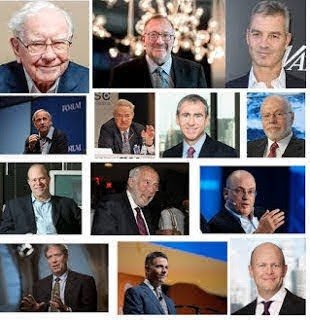
Importantly, what people want to know is what Soros, Duckenmiller, Griffin et al. are doing this week and today in particular.
Since 2000, the Nasdaq slipped under the 200-day line 20 times. Fast forward six months and 15 of those slips recovered. The median gain was 10.5%. Go back to 1978 and it’s the same story. Of all the slips, 75% were higher six months later.
In short, what felt like a cliff turned out to be a deep pothole.
The S&P is pretty similar. It’s calmer, though. Since 2000, the S&P lost the line 21 times, but 17 of those dives were higher six months later. Median gain was 10.3%. Five fell 10% or more, and the 2020 crash went past 20%. Since 1971, 75% of S&P breaks were higher six months later.
What does this mean? Well, if you bailed on every break, you would have missed a lot of rallies.
Also, there’s an old trading rule: whenever the Nasdaq is down 5% or more (like today), you hold your nose and buy no matter what.
Of course, context matters. We aren’t 2008, there is no credit crisis going on, and the macro background is more constructive now.
Looking at the chart of semis, I see this dip below the 100-week exponential moving average as a big buying opportunity, similar to the last dip below that level:
Are there things that bother me? Yes, I don’t like the fact that Nvidia’s share price slipped below its 200-week exponential moving average ($137) today, but remains above the simple 200-week moving average of $124 (for now):
What about the SEC and accounting probe? What about it? Just like that short seller report on AMD yesterday, I ignore this stuff unless pertinent facts come out.
This market is all about panic selling right now, and I’m pretty sure elite hedge funds are scooping up shares here, but I will only find out in mid-February.
To me, it feels like short sellers and trading outfits selling tech stocks short got really greedy today.
And while some people are convinced the Anthropic IPO spells the end of the AI bubble, I’m definitely not one of them and would caution investors not to get carried away here.
It’s very difficult to think clearly when you see market carnage like today, but trust me, making a hasty decision can cost you a lot if this market shifts gears and comes roaring back.
What about the Fed raising rates? I know it’s priced in, but I’m not convinced it will, especially if stocks keep selling off (negative wealth effect is deflationary).
I sure hope not. The Fed needs to be very careful here with rate hikes and its communication.
So, bearing all this in mind, have fun looking at the portfolios of the top funds I track.
The links below take you straight to the top holdings of top money managers, and then click to see where they increased and decreased
their holdings.
Top multi-strategy, event-driven hedge funds and large hedge fund managers
As the name implies, these hedge funds invest across a wide variety of
hedge fund strategies like L/S Equity, L/S credit, global macro,
convertible arbitrage, risk arbitrage, volatility arbitrage, merger
arbitrage, distressed debt and statistical pair trading. Below are links
to the holdings of some top multi-strategy hedge funds I track
closely:
These hedge funds gained notoriety because of George Soros, arguably the
best and most famous hedge fund manager. Global macros typically
invest across fixed income, currency, commodity and equity markets.
George Soros, Carl Icahn, Stanley Druckenmiller, Julian Robertson have
converted their hedge funds into family offices to manage their own
money.
These funds use sophisticated mathematical algorithms to make their
returns, typically using high-frequency models so they churn their
portfolios often. A few of them have outstanding long-term track records
and many believe quants are taking over the world.
They typically only hire PhDs in mathematics, physics and computer
science to develop their algorithms. Market neutral funds will
engage in pair trading to remove market beta. Some are large asset
managers that specialize in factor investing.
Top Deep Value, Activist, Growth at a Reasonable Price, Event Driven and Distressed Debt Funds
These are among the top long-only funds that everyone tracks. They
include funds run by legendary investors like Warren Buffet, Seth
Klarman, Ron Baron and Ken Fisher. Activist investors like to make
investments in companies where management lacks the proper incentives to
maximize shareholder value. They differ from traditional L/S hedge
funds by having a more concentrated portfolio. Distressed debt funds
typically invest in debt of a company but sometimes take equity
positions.
These hedge funds go long shares they think will rise in value and short
those they think will fall. Along with global macro funds, they
command the bulk of hedge fund assets. There are many L/S funds but
here is a small sample of some well-known funds.
I like tracking activity funds that specialize in real estate, biotech,
healthcare, retail and other sectors like mid, small and micro caps.
Here are some funds worth tracking closely.
Mutual funds and large asset managers are not hedge funds but their
sheer size makes them important players. Some asset managers have
excellent track records. Below, are a few funds investors track closely.
Pension Funds, Endowment Funds, Sovereign Wealth Funds and the Fed’s Swiss Surrogate
Last but not least, I the track activity of some pension funds,
endowment, sovereign wealth funds and the Swiss National Bank (aka the Fed’s Swiss surrogate). Below, a
sample of the funds I track closely:
Below, Cameron Dawson, NewEdge Wealth CIO, and Kevin Gordon, Schwab Center for Financial Research, join ‘Closing Bell’ with reaction the the day’s selloff.
Also, Ed Yardeni, Yardeni Research President, and David Lefkowitz, UBS Global Wealth Management head of equities Americas, joins ‘Power Lunch’ with reaction to the day’s selloff.
Lastly, legendary investor Stan Druckenmiller, CEO of Duquesne Family Office, sits down with Iliana Bouzali of Morgan Stanley on the Arena Stage at TomorrowX Summit in Austin.
Stan explains why, after 50 years of investing, he has rarely had less clarity, and what he is watching instead: AI use cases over infrastructure, why the leading labs could sell tasks instead of tokens, and how swarms of agents could defend us in cybersecurity. He shares the moment he realized AI was the biggest thing in the history of American business, his bold predictions for the next decade, from fusion and data centers in space to beating cancer within ten years, and the lessons that separate great investors from good ones.
Another fantastic interview. Let me quote Druck: “When I have clarity, I like to play big. When I don’t have clarity, I almost don’t play.” (Was he playing today?)