
Inflation surged in March, according to data released by the Bureau of Labor Statistics on Friday. This highly anticipated report is a first glimpse at how the U.S.-Israel war on Iran has impacted everyday costs for Americans here at home.
Over the last 12 months, consumer prices increased 3.3% before seasonal adjustment, up from 2.4% in February, as energy costs surged. The Consumer Price Index increased 0.9% on a seasonally adjusted basis in March. This is on par with the 3.4% annual increase and 0.9% monthly increase economists were anticipating.
Core CPI, which excludes energy and food categories, rose 2.6% over the past 12 months after seeing a 2.5% year-over-year increase in February. It increased 0.2% over the past month.
“Prices have been top of mind since the conflict in the Middle East began, and now, we have data to show the impact,” said Gbenga Ajilore, chief economist at the Center on Budget and Policy Priorities.
“With the closing of the Strait of Hormuz leading to higher energy and oil prices, inflation is rising because of all the things we use energy for,” Ajilore said. “Airlines are raising prices because of higher jet fuel, transportation costs are rising because of higher diesel prices, which filter into the goods we pay for with Amazon, UPS, FedEx, and the Post Office adding surcharges to package delivery, and gas prices are rising, leading to affordability concerns.”
Read more: Gas tops $4 and diesel is over $5: How an extended war with Iran could push prices higher.
Here’s what the latest CPI report means for your household.
Learn more: What is the Consumer Price Index (CPI)?
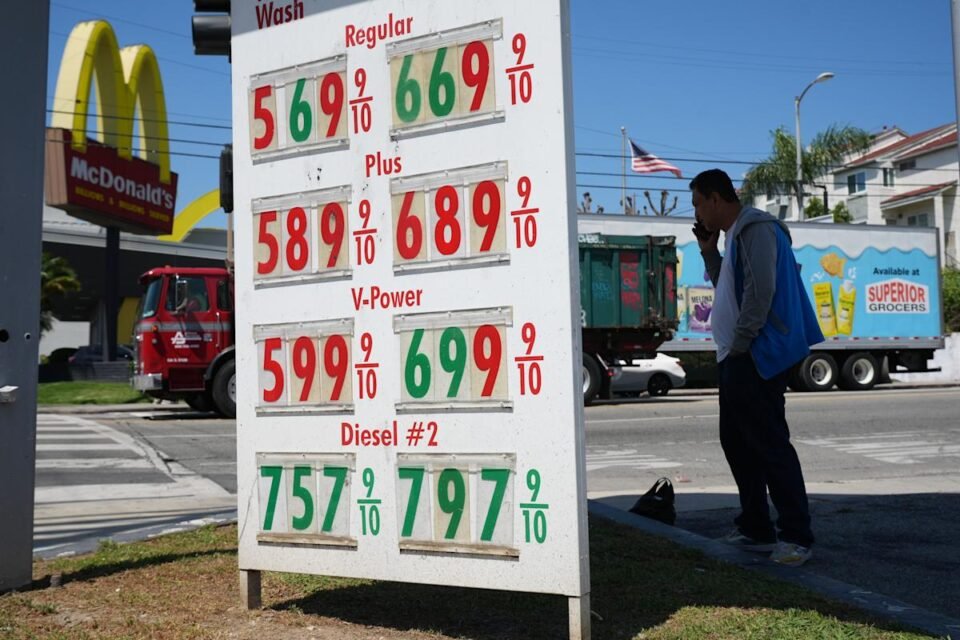
It’s a record year for gas and energy prices, with the gasoline index increasing 21.2% over the month, or 24.9% before seasonal adjustment, the largest monthly increase since the series was first published in 1967. This is a significant jump from last month’s 0.8% month-over-month increase.
This comes as ongoing tensions in Iran continue to push gas prices up. According to AAA, the national average price for a regular gallon of gasoline hit $4.153, and the average cost of diesel continues to creep up toward $6 per gallon.
A temporary two-week ceasefire in the war has had a small impact on the crude oil futures, which immediately dropped below $100 per barrel following the news; however, everyday Americans may be waiting a while before they get any relief at the pump.
The index for all items except food and energy rose 0.2%, with airline fares being one of the key drivers of this increase. The index for airline fares increased 2.7% over the month, after rising 1.4% in February. This comes as airlines face higher operating costs due to higher jet fuel prices.
According to the International Air Transport Association, aircraft fuel and oil are the biggest costs for airlines across the globe, making up nearly 30% of airlines’ expenses. In an attempt to curb rising costs, many major airline carriers have announced baggage fee increases for customers.
Other costs that increased in this category included apparel (up 1%), household furnishings and operations (up 0.2%), education (up 0.3%), and new vehicles (up 0.1%).
Read more: Your flight is about to get more expensive. These tips could save you.
The food at home index declined 0.2% over the month, and four of the six major grocery store food group indexes decreased. Meats, poultry, fish, and eggs decreased 0.6% over the month; eggs saw a 3.4% decrease, and dairy products also saw a 0.6% decrease.
But experts say it could be some time before Americans see the true impacts of this war on their grocery bills.
“This report shows just the initial impacts of the war, but more widespread impacts could be on the way in future reports,” said Angela Hanks, chief of policy programs at The Century Foundation and former Consumer Financial Protection Bureau official. “Potential shortages of petroleum, helium, and fertilizer threaten to drive higher prices on everything from dishwashers, to cars, to groceries.”