
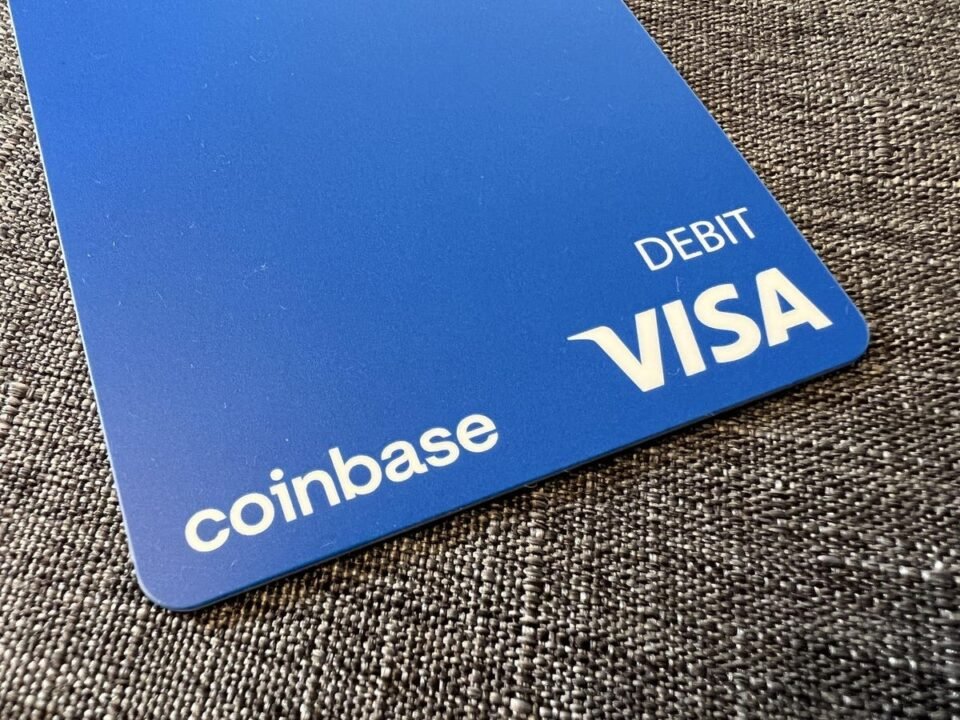

Close-up of Coinbase debit card from Visa, which allows the user to spend either fiat money or cryptocurrencies, Lafayette, California, June 4, 2022. (Photo by Smith Collection/Gado/Getty Images)
Gado via Getty Images
“We created a card that sometimes doesn’t charge you,” the crypto fintech Tuyo posted on X in May. The clip racked up millions of views. The pitch: pay with Tuyo’s stablecoin debit card and, at the company’s discretion, your purchase might cost nothing at all. Tuyo calls it “Buy Now, Pay Maybe.”
Not everyone was charmed. Ariel Givner, a fintech attorney, called it “worse” than a gambling card, in a post that drew even more likes than the launch clip itself. “It’s a debit card where Tuyo has SOLE DISCRETION over the purchases that are ‘pay maybe’ aka free for the user,” she wrote. “Zero odds. Zero stats. Slot machines are more predictable.”
The fuss is about more than one card. Crypto cards, the debit and prepaid cards funded by stablecoins, spent two years proving they could buy a coffee or a flight. That part works now. So the fight has moved to rewards. Stablecoin card spend is growing roughly 100% year over year, though it is still under 1% of global card volume. The novelty has worn off. To keep cardholders, the programs now compete on points, like everyone else.
Rain bets on loyalty
The bigger move this week came from the company that runs Tuyo’s card. Rain is a New York stablecoin payments firm. It issues cards for more than 100 programs and is a principal member of both Visa and Mastercard. On Monday it launched a rewards product built into its card-issuing stack. Any partner on Rain can now switch on branded loyalty, earn rates, and redemptions without bolting on a separate vendor.
“Rewards is a big part of how consumers in a lot of markets prioritize spending,” Farooq Malik, Rain’s co-founder and chief executive, said in an interview. “The first phase of adoption for stablecoins has been, hey, how do we demonstrate you can use stablecoins for everyday payments. The conversation is now shifting to how do our partners differentiate different solutions from each other, and how do you explore incentive mechanisms to get users to put you top of wallet.” He framed it as the same playbook traditional banks run: “If you look at Chase versus Citi or Bank of America, they’re all differentiating in their own way.”
The pitch rests on a number. In a year-long private beta, Malik said, cardholders enrolled in a rewards program spent about 25% more than those without one. “That lift is actually quite significant, just simply by having one.” Rain built the earnings engine that calculates and distributes points, negotiated travel and hotel redemption partners, and last year acquired Uptop, an onchain loyalty company with sports inventory, so points can be cashed in for merchandise from the Cleveland Cavaliers or tickets to a Detroit Pistons game.
Why a card is no longer enough
The competitive pressure behind all of this is real, and operators say it plainly. Neo, chief executive of the onchain neobank UR, said on the On The Margin podcast that issuing a card no longer makes a business distinctive: “You issue a card, suddenly you’re a neobank and you can spend, and it’s very cool. But structurally at its core, nothing’s really changing.” When a card alone differentiates no one, the engagement layer becomes the product.
It is also where the money is. Alvin Kan, chief operating officer of Bitget Wallet, said on the On The Margin podcast that cardholders behave differently from traders. “We find these users very sticky, more sticky than trading users, because when you have your card on your Apple Pay or Google Pay, you just continue to use it every day,” said Kan, whose company has issued some 70,000 to 80,000 cards. The fintech writer Simon Taylor has argued that stablecoins make that stickiness cheaper to buy, turning rewards from a balance-sheet cost into something a card program can fund from yield.
The line Rain won’t cross
All of which leads back to Tuyo. Its card, by Tuyo’s own disclosure, is “issued by” a licensed partner, and the company “partners with Signify Holdings, Inc. (‘Rain’)” for card issuance. So the pay-maybe card runs on Rain’s own rails. Malik still wants no part of the mechanic. Asked directly about probabilistic rewards, he said: “Those types of things, we are not looking at or doing. It’s certainly not something we would do without considering all of the legal and regulatory elements, because we service clients in a lot of different markets.” Traditional points, he noted, are “really well established regulatorily,” which is why Rain launched there first.
The split comes down to regulation. A promotion that combines a prize, chance, and a payment can start to look like a sweepstakes or lottery, which is why prize-linked products from UK Premium Bonds to the savings app Yotta publish odds and offer a free way to enter. Tuyo does neither, and pushed back on the comparison anyway. “Buy Now, Pay Maybe is not gambling. There’s no betting, entry, prize or loss,” it wrote on X the day after launch, reporting that it had already covered more than 1,700 purchases. Its defenders make a narrower point: this is a debit card, not credit, so a user wagers nothing and cannot lose money. The pay-maybe pot is funded the way cashback is, then paid out at random instead of at a flat rate.
Points that can move
Malik has seen variable rewards work before. He pointed to Robinhood’s free-stock sign-up bonus, a grab bag worth a dollar for some users and far more for others, as proof that “the ingenuity of builders is going to continue.” But he thinks the real crypto advantage is duller than a slot machine. It is the plumbing. Points can add up in real time instead of once a month, he said, so a reward earned on Monday can be spent on Wednesday. And because they are minted onchain, they can move between people. “Let’s say my friend is 10 points away from being able to redeem something. Maybe I can send the rewards points from my program to help them hit that gap,” Malik said. “Today, if I have Chase points and my friend has Citibank points, we’re both not able to help each other out.”
Nitya Subramanian, founder of the wallet startup Para, put it similarly on the On The Margin podcast, describing onchain yields and assets as “a really nice carrot to keep more of those balances” on a card. It is a duller pitch than a card that randomly eats your bill, and Rain is betting it lasts longer. For now the two live on the same rails. Tuyo’s own terms already bar users in the UK and parts of the US, while Rain is rolling its rewards out the slow way, starting with EVM programs and adding more chains in the fall.