
Bvlgari has long been an established brand that challenges conventional jewellery rules. Since its founding in Rome in 1884, the maison has treated materials not as fixed categories but as designs to be reimagined. Gold may carry centuries of meaning, but for the brand, it has also presented an opportunity to pair it with a contrasting material: steel, used to create an avant-garde design.
This approach first appeared in the 1970s, when Bvlgari introduced the pairing of yellow gold and stainless steel. At the time, fine jewellery was still closely tied to ideas of rarity and traditional value. Bringing steel, a material associated with industry and function, into that world challenged established norms. Placed alongside gold, it created a contrast that felt fresh and modern without losing its sense of refinement.

That decision was not a one-off experiment. It reflected a broader design philosophy that continues to guide the house. Bvlgari has repeatedly explored unexpected materials, including porcelain in the Chandra collection, ceramic in later versions of B.zero1, and aluminium in the Bvlgari Aluminium. The focus is never solely on the material itself, but on the idea behind its use and the precision with which it is executed.
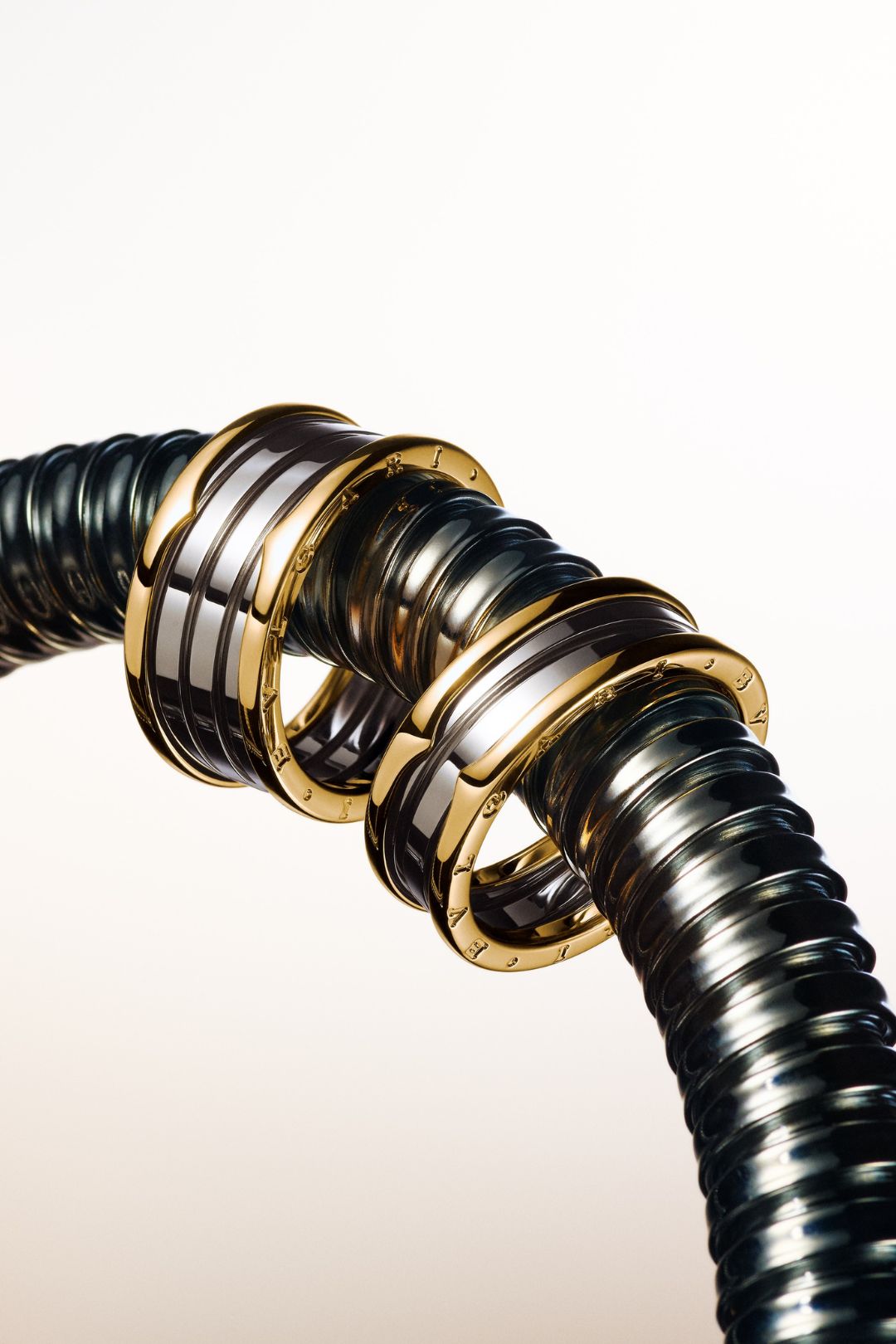
This year, the Italian brand returns to this original pairing with gold and steel, a new collection that revisits the meeting of these two materials. Launched during Watches and Wonders, it spans jewellery, high jewellery, and watches, demonstrating how this material combination continues to shape the maison’s design language.
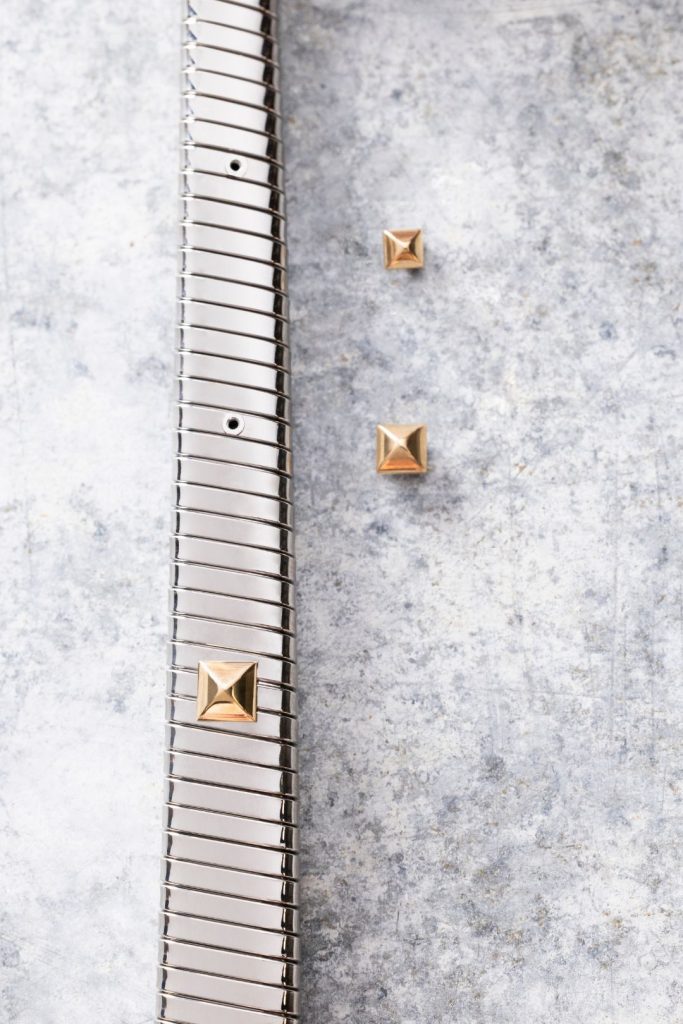
Steel plays a central role in this story. As a strong material that jewellers consider difficult to work with, it remains relatively uncommon in fine jewellery. It requires exceptional craftsmanship to shape and finish—particularly when paired with gold. Bvlgari treats both materials with equal care, refining steel until it takes on a polished appearance rather than an industrial character.
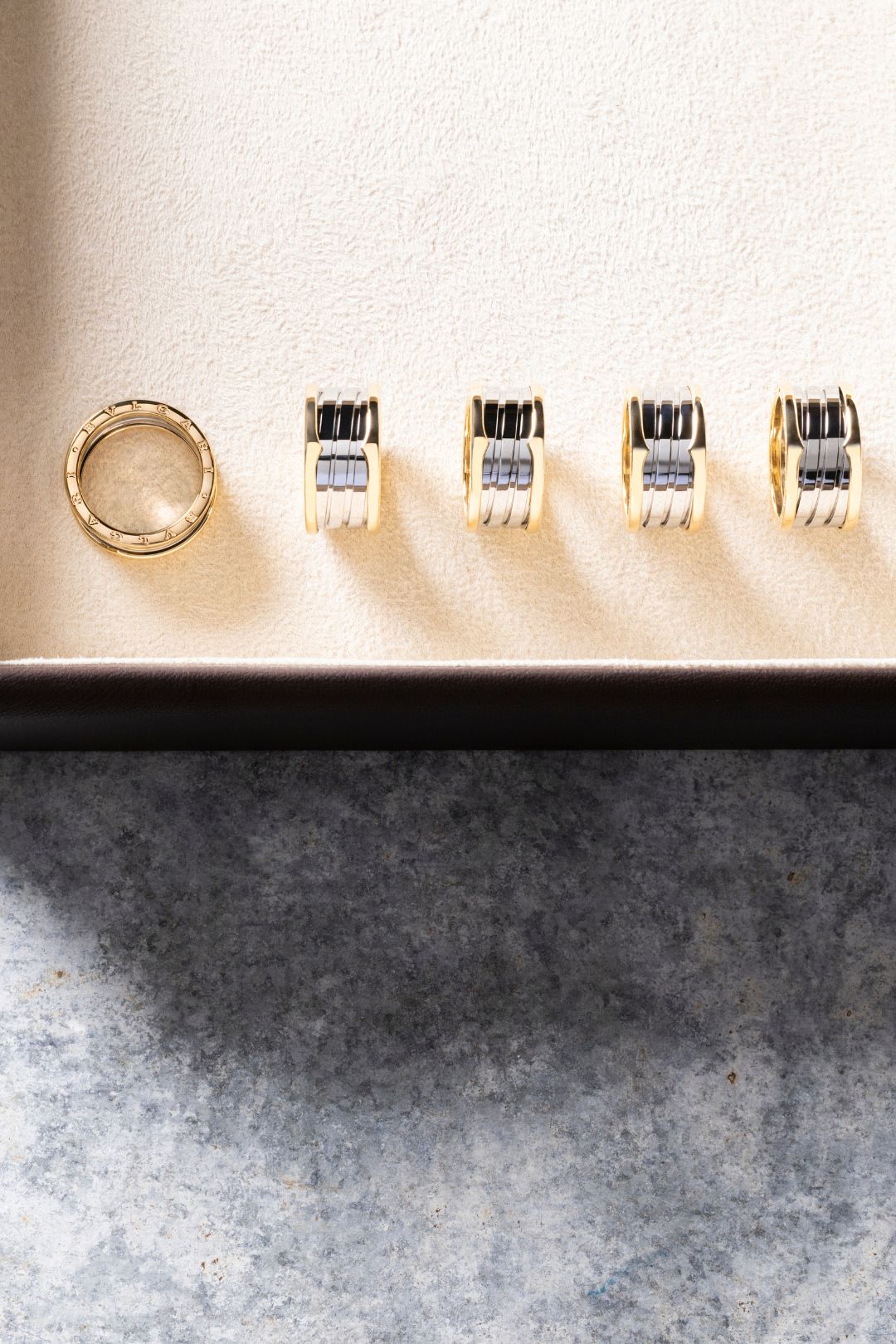
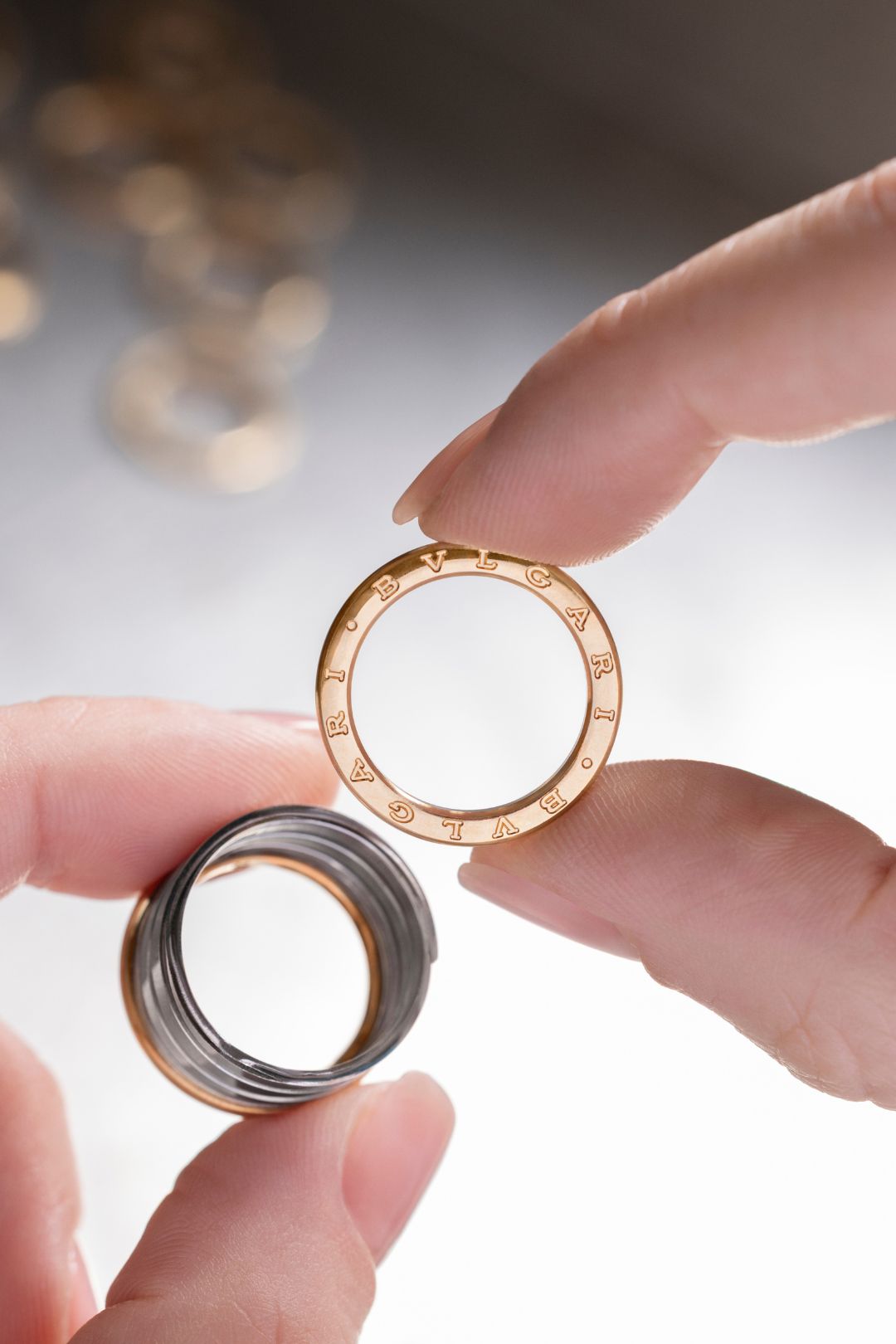
One of the clearest expressions of this approach appears in B.zero1, a collection inspired by the Colosseum and known for its spiral form. For gold and steel, Bvlgari introduces two new ring versions in two-band and four-band designs. Steel forms the central structure, while yellow gold frames the edges. The result is a bold architectural shape defined by the clean contrast between the two materials.
The design remains slim and wearable, intended for everyday use and easy stacking with existing B.zero1 pieces. Steel lends a sharper, more contemporary character, while gold adds warmth and definition.
The same idea continues in Bvlgari Tubogas, one of the house’s most recognisable designs. Literally translating as “gas pipe” in Italian, Tubogas is created from interlocking metal bands that form flexible, continuous coils without soldering. It first appeared in Bvlgari jewellery in the 1940s and has since become a signature style.
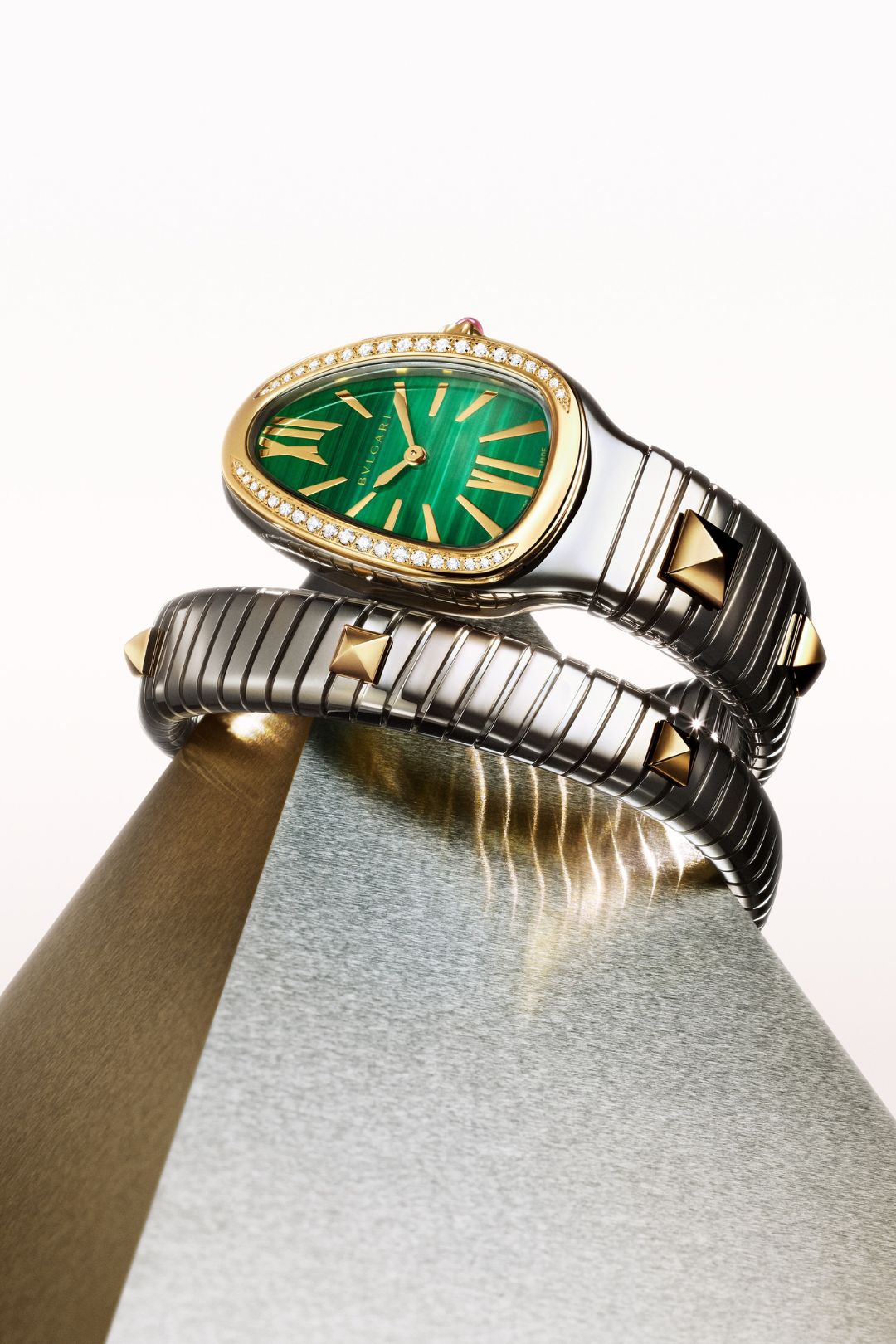
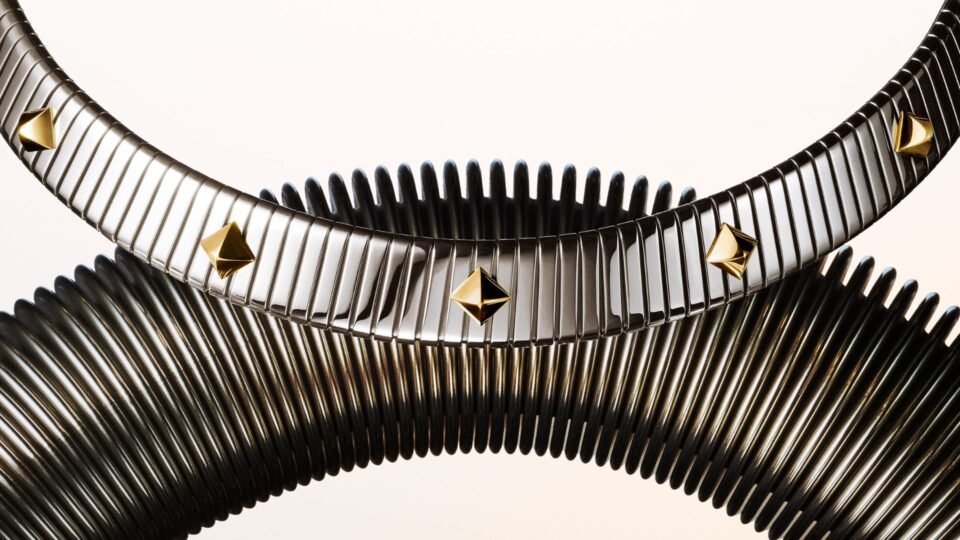
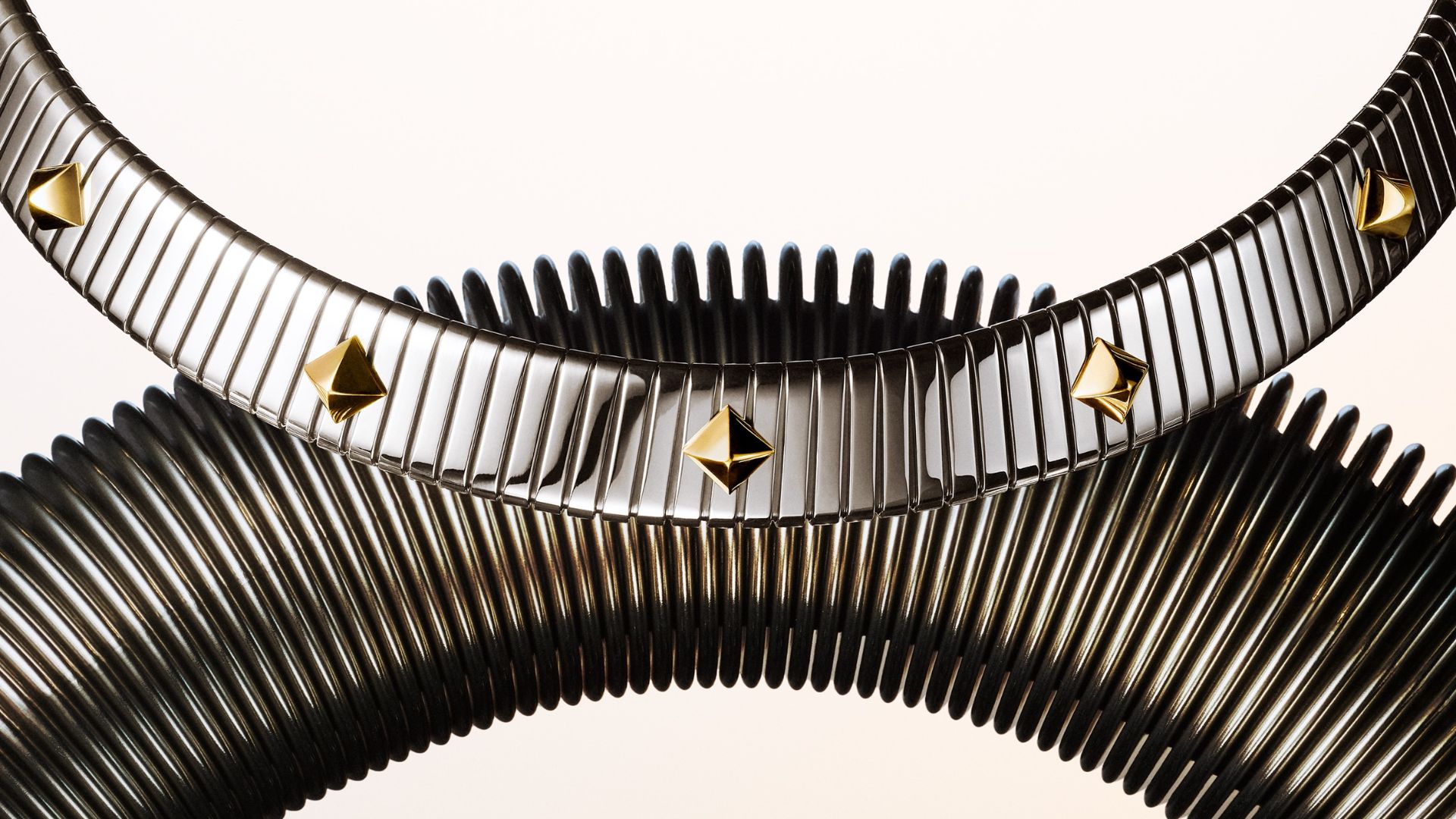
In the gold and steel collection, Tubogas appears as a necklace and bracelet that revisits a design from the 1970s. Steel coils wrap smoothly around the body, punctuated by yellow gold studs. The contrast between the two materials creates an edgy look, with cool steel and warm gold shifting across the surface. The pieces feel structured yet fluid in motion.
Bvlgari also expands the gold and steel collection into high jewellery with three one-of-a-kind necklaces. Here, steel is not treated as a secondary material but as a deliberate design choice executed with the highest level of craftsmanship. These pieces underscore the strength of the concept and its significance within the maison’s creative direction.


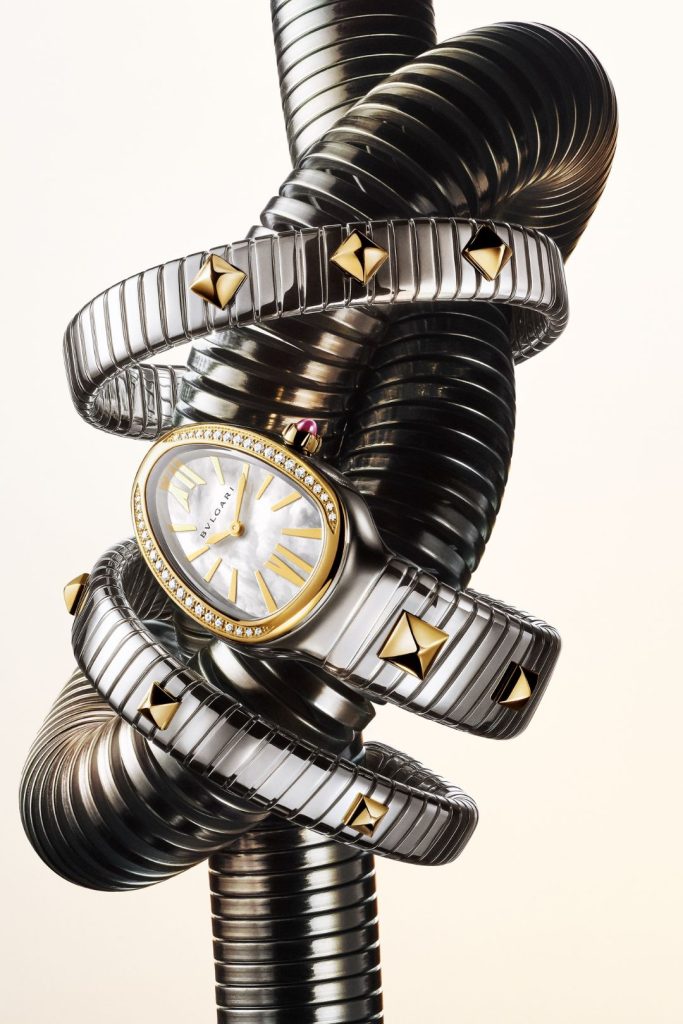
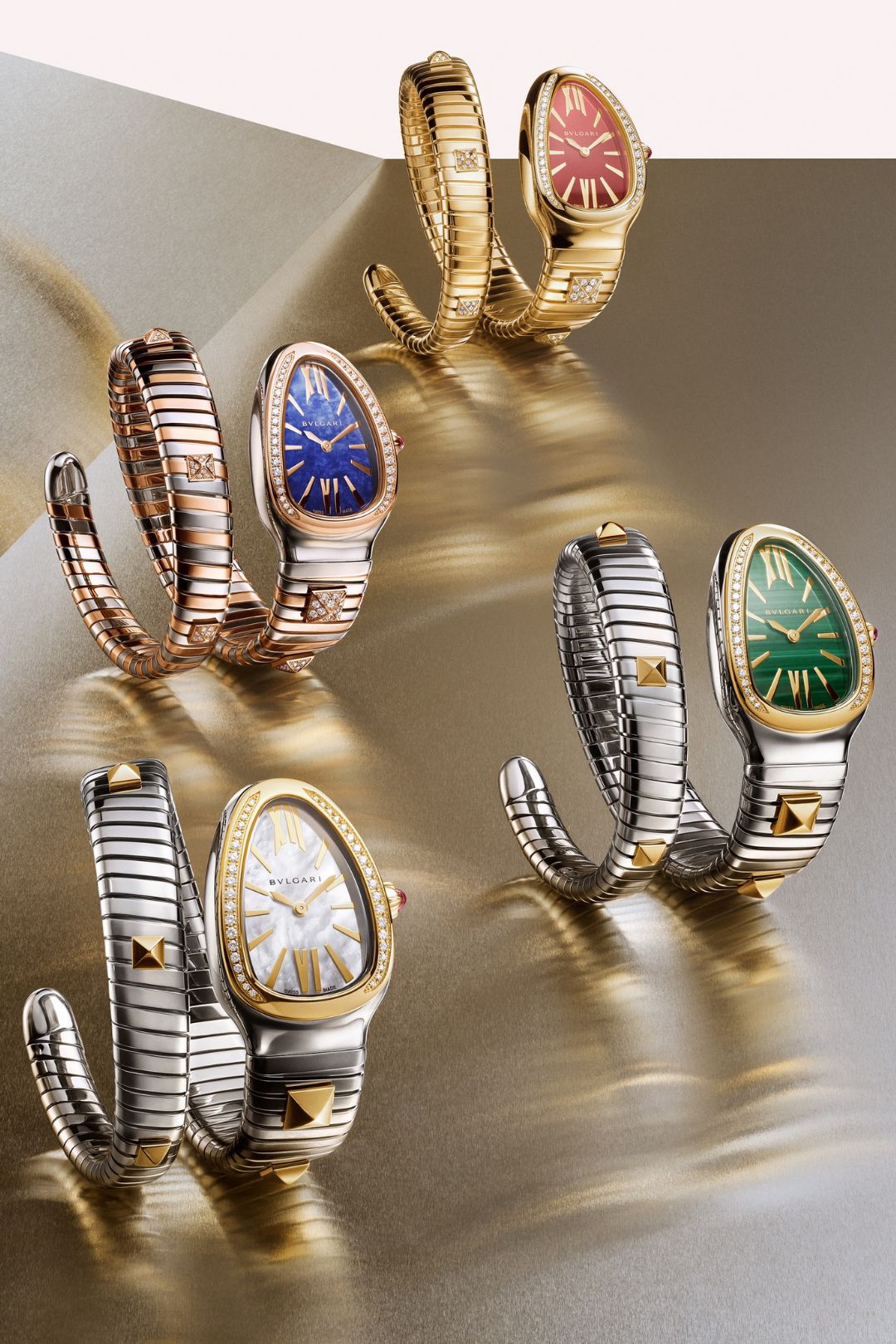
The collection extends further into watchmaking with the Serpenti Tubogas Studs capsule. Limited to four pieces, it combines the Serpenti silhouette with a Tubogas bracelet and the Stud motif. Diamond-set dials and mother-of-pearl add refinement, while the steel and gold construction keeps the focus on material contrast.
Across the collection, the idea remains consistent. Gold brings warmth, richness, and heritage. Steel contributes strength, clarity, and a distinctly modern edge, each material defining the other through contrast.
Gold and steel are presented not as a new direction but as a continuation of a long-standing design philosophy. It returns to an idea first explored in the 1970s and refines it through a contemporary lens. In doing so, Bvlgari demonstrates that innovation often comes from revisiting familiar materials and rethinking how they can work together in unexpected ways.
READ MORE