
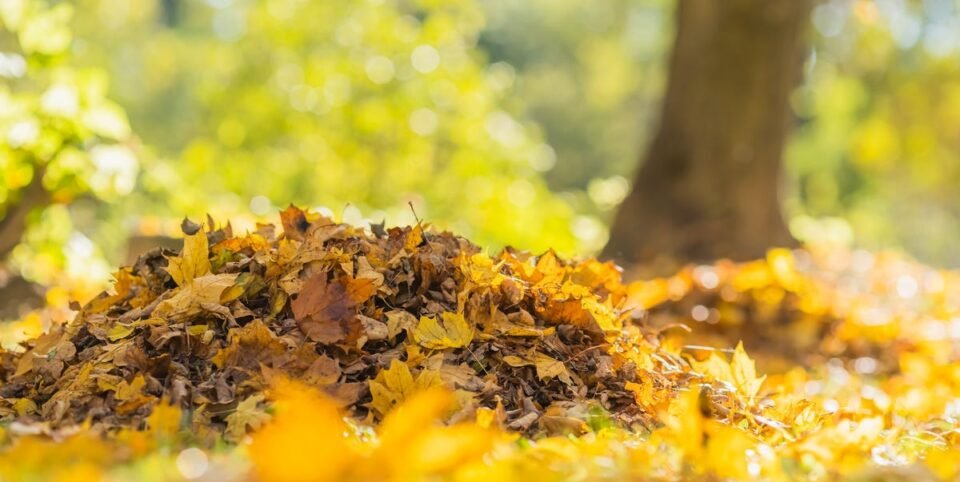
With their fiery hues and crunchy texture, autumn leaves are one of the season’s defining pleasures and, as it turns out, they also bring major benefits to your garden.
Your first instinct may be to rake up all the fallen leaves and swiftly dispose of them, but, as RHS Horticultural advisor Nick Turrel has warned, “our tidiness is robbing the soil of a valuable resource.”
In a video tutorial on the RHS’s official YouTube channel, he points out that the soil in woodlands, where fallen leaves simply stay where they’ve landed, is of the highest quality.
“It must be, because look how many huge plants it can support in a small space with no artificial fertilisers,” Nick says.
Fallen leaves, their warm hues of yellow earning them the charming nickname ‘garden gold’, can improve and protect the soil, benefit wildlife and even stop weeds in their tracks.
“They attract worms that drag them into the soil and turn them into a super-powered fertiliser,” Nick explains. “They also provide a blanket of protection for bare soil, which prevents it from degrading in extreme winter weather. And in your garden, all of these leaves will block out the light and prevent weed seeds from germinating.”


The only place in the garden where autumn leaves do more harm than good is on the lawn, depriving it of light and trapping moisture, leading to bare patches. But those surplus leaves don’t have to go to waste; instead, turn them into leafmould.
How to make leafmould
You can use fallen leaves in two ways: leave them on the ground, where they immediately improve the soil, or collect and turn them into dark, crumbly leafmould to be used as soil conditioner one or two years later. According to the RHS, the best-quality leafmould is made from the leaves of oak, beech or hornbeam, but all leaves can be beneficial for the soil.


“Rake them up, put them into a bag. Make sure they’re nice and damp when they go into the bag, put some holes in the bag and store them out of sight,” says Nick. “By the time you’re collecting leaves again this time next year, these ones in here will have formed a really nice leafmould, which you can use as mulch on your borders.”
Conifer needles also make for great soil improver, but they should be kept separately because they take longer to decompose and benefit a different set of plants. “Pine needles can be left to break down into acidic leafmould, useful for mulching plants such as blueberries, camellias and rhododendrons,” says Miroslav Radov, founder of Rainbow Rubbish Removals.
“They take longer than many ordinary leaves to rot, potentially two to three years, so keep them in a separate pile.” While fallen leaves from deciduous trees can benefit the soil on their own, conifer needles need to break down first. “Simply scattering fresh needles will not reliably turn garden soil acidic; the useful product here is the leafmould,” Miroslav adds.
Where to use fallen leaves and leafmould in your garden
Fresh fallen leaves and leafmould can both be used as mulch to cover soil, help it retain moisture and suppress weeds.


1. Bare soil
Fallen leaves make for a natural layer of protection on bare soil, preventing it from drying out and taking damage in extreme weather. You can also scatter leafmould to lock in moisture and suppress weeds.
2. Pots and containers
Leafmould that has broken down for 1 to 2 years becomes a crumbly, fine texture. For established plants, mix well-rotted leafmould with garden soil, garden compost and sharp sand or horticultural grit. Leafmould that has decomposed for around two years can also be used in a seed-sowing mix. Sieve it first if you want a finer texture.
3. Beds and borders
Rake your fallen leaves straight from your lawn into your beds and borders, where they help improve the soil. Keep them from covering low-growing plants or piling up against stems, as this can smother growth and encourage rot. You can also spread leafmould around plants as mulch to lock in moisture.
Wanda Sachs is the Multiplatform Writer for Country Living and House Beautiful, exploring the latest in gardening, wildlife and sustainable living alongside interiors and property. She is particularly interested in human-interest stories, the intersection of design and pop culture, and the evolving relationship between urban and rural life. Previously, she served as Associate Editor at The Berliner in Berlin, where she reported on culture and fashion. Wanda studied English and German at the Goethe University Frankfurt and Exeter University.