
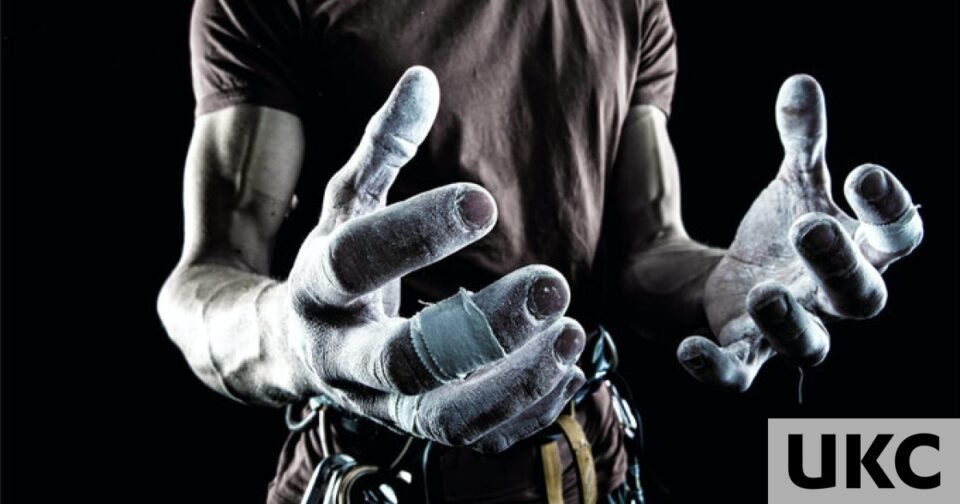

In the autumn of 1954, John Gill did several things that were considered a little eccentric.
For one thing, he was bouldering for the sake of it. Not training for ‘proper’ climbing on long faces or showing off at the campground, but for the beauty of movement and the exploration of his body’s potential. Widely regarded as the ‘godfather’ of bouldering, Gill left his mark on the sport both metaphorically and literally, because the other eccentric thing he did was use chalk—convinced as he was by its sweat-absorbing and friction-enhancing properties.
“I had begun rock climbing about a year before becoming a freshman at Georgia Tech in 1954, and had very little knowledge of the history and ethics of the sport,” Gill says. “I began reading about European climbing and learned of the I-VI rating system used in the Alps. It was clear that climbing was seen as a logical extension of hiking.”
But Gill had also taken up gymnastics. It quickly became apparent to him that climbing, especially short challenges, could just as easily be thought of as an extension of gymnastics, and so he approached it as such.

Gill’s arrival at climbing from left field meant that environmental or ethical considerations about using chalk simply weren’t on his horizon. If he would chalk up to climb a rope – his specialist gymnastic event – then why not do the same to climb a rock? He began taking a small block with him on climbing jaunts, and wasn’t concerned about what others might think. “I was just a kid having fun,” he says. In time, climbers would see the telltale dabs on the rock as a sign that The Master had visited.
It’s hard to imagine a time when chalk use was so uncommon that a dab could be pinpointed to a single hand. But chalk’s acceptance as a tool in climbing wasn’t straightforward, and for many years no-one else was using it. Only the French Bleausards, with their penchant for ‘pof’, or the sticky resin that eventually spoils climbs with a glassy residue, had experimented with improving friction.
What Gill brought wasn’t just a new weapon to the arsenal, it was a shift in emphasis towards movement and dynamism; concepts which were rare in climbing at the time, with the limited safety equipment on offer. Three points of contact and steady movement were the dogma, while lead falls and what Gill called ‘controlled dynamics’ formed the new wave.
To some, this new direction for the sport threatened the core of what climbing was about for them. Climbing represented adventure and exploration, discovery, the unknown and danger—at this time Everest had only recently been summited, and big wall climbing was in its infancy. Big, bold and obvious new routes were the prized objectives for those loyal to the more adventurous side of climbing.
Chalk represented the Climber As Athlete, driven instead by physical goals, numbers and training. To the objectors, bouldering was a soulless new sub-sport and chalk was the handprint that caught the burglar white-handed.
The Clean Hand Gang
Chalk use spread very slowly following Gill’s first experiments. It wasn’t until the early 1970s before other climbers seriously started to regard it as a means of advancing standards. Ken Wilson, then editor of Mountain magazine, saw them coming and he didn’t like it: “It would seem that this one-time stronghold of climbing purism and sensitive aesthetic awareness has veered alarmingly off course,” he wrote in an editorial in the ’70s.
Wilson was famously a motormouth, full of opinions and bluster, not always likeable, but generally respected as having his heart in the right place. He also knew how to sell magazines. Mountain was published in the UK, but it was a worldwide success, with iconic front covers, brilliant design and engaging commissions. Wilson was no stranger to a bit of controversy – people want to read about it after all – but his noise about chalk wasn’t all hot air. In the UK, opposition to chalk use was becoming particularly common in Bristol and the South-West, with climbers such as Pat Littlejohn, Ben and Marion Wintringham, Dave Viggers, Arnis Strapcans and Steve Findlay being prominent opponents of its use.

“Ken believed passionately in adventurous climbing (and mountaineering) and the ‘clean climbing’ ethic of trying to leave no trace,” Pat Littlejohn says. “He was one of the great climbing photographers and the aesthetics of rock meant a lot to him. So no, it most definitely wasn’t controversy for the sake of it. It was a philosophy of ‘reverence for the rock’ which many climbers share and which characterised Mountain magazine throughout his editorship.”
Wilson’s attacks on chalk use may have been rooted in serious concerns, but there was still a tongue in cheek element to some of them. He dubbed chalk users the ‘Powder Puff Kids’ and wrote about them in several other editorials. John Allen’s 1975 first free ascent of Great Wall, at Clogwyn Du’r Arddu, was famously reported with the caveat “but uses chalk.” The ascent was praised, but the sentiment was clear: “Chalk may well be necessary on the few crucial moves, but there would be no excuse for powdering a white stripe up the middle of the best wall in Wales.”
That white stripe is now a common sight in the summer months. In 2013, a spate of ascents meant that the line of Indian Face E9 6c was clearly visible from across the lake, too. Perhaps the moves on that route would be hard enough to satisfy Wilson et al.

The Clean Hand ‘Gang’ was really nothing of the sort, but a moniker can lend credibility to an idea, and it caught on. Steve Berry and Arnis Strapcans even designed T-shirts to promote the cause. “You either used chalk or if you didn’t, you were Clean Hand Gang,” Steve says. All the same, the strength of feeling among ‘gang’ members was strong. “We ridiculed anyone using chalk, shouted abuse at them if we saw it being used, that sort of thing. No fisticuffs, but heated debate I would say.”
“I wasn’t that comfortable with being part of a ‘gang’,” Littlejohn continues. “It wasn’t what climbing was about for me. I was more into trying to set an example for others to follow, but of course this ultimately failed. Climbers, like anybody else, find it very hard to resist anything that makes life easier!”
Despite being part of a new generation pushing climbing standards in the 1970s and ’80s, Littlejohn resisted using chalk for a variety of reasons. “It was ‘aid’ in that it improved every handhold of the climb and just as importantly marked the holds,” he explains, “so that the most cerebral part of the sport – working out technically difficult moves – was in danger of being lost on any chalked-up climbs.”
The Clean Hand Gang felt they were fighting a change that would remove an essential romance from the adventure of climbing. “It seemed to some of us that climbing was in danger of being changed from an adventurous ‘outdoor pursuit’ into something more like a ‘normal’ sport—a change which many didn’t want to see happen,” Littlejohn says.

© David Lambert
This resistance coincided with another major change, at least for the UK: the construction of the M5 motorway. It opened up Cornwall as a weekend destination for many more climbers, somewhere that had previously been a two-day drive from many of the climbing hubs in the UK. An influx of new visitors bringing different tactics and priorities to the area was a threat to the adventurous nature of climbing on the coasts of Devon and Cornwall, as far as many local activists were concerned.
Pat Littlejohn reported on some of the more significant ascents in the Climber’s Club Journal in 1976, which included a couple of those northern raiders:
“The cliffs of North Cornwall remained in a state of equilibrium apart from flurrys [sic] of activity at Pentire centred around Darkinbad the Brightdayler. Pete Livesey climbed the route using one aid point, plus chalk. Ron Fawcett bettered this by using chalk alone. Having made an ascent in the past utilising all the aid points, Ed Hart, not a habitual chalk user, found a chalk bag at the top of the crag and proceeded to put it to use. Finding it made a “phenomenal difference”, he was able to reduce his aid quota to three points. Since chalk is not an accepted form of ‘assistance’ among the South-West based climbers (not being used on any of the climbs so far mentioned in this item) the validity of these as free ascents is open to question.”
As usual in British climbing circles, there was an element of regional rivalry at play. “At the start there was a lot of talk about Pete Livesey and many of the Sheffield and Leeds crowd using [chalk],” Steve Berry says. “Hence, one of our T-shirts showed a picture of Pete looking sheepish and being given a talking to by an old-school climber straight out of the days of the Raj.”
Changing Times
Wilson’s rhetoric did at least include one caveat. He wrote that chalk users “must be barracked remorselessly when they attempt to use chalk on ordinary routes.”
There’s a certain irony, then, to chalk’s route into the UK. The success of Mountain meant that British climbing came on the radar for American climbers and vice versa—and Mountain made climbing look extraordinary.
Rab Carrington – founder of the Rab clothing brand – made a visit to Yosemite in 1972. He wrote sardonically about the changing culture in the valley for the Scottish Mountaineering Club Journal the following year, which Berry’s T-shirt would echo years later:
“The old-timers come back to Camp 4 on occasion and sadly shake their heads at the Olympians working out on the boulders or the rings, walking the slack chain or just doing a spot of Yoga … muttering about how glad they are not to be caught up in the turmoil of the Valley, how glad they are not to have had any form of rivalry, how glad not to have prostituted the sport with working-out and chalk, how glad to have found true happiness among the new ranges.”
Despite his high-altitude ambitions, Carrington brought the chalk habit back to the UK with him. He also climbed with loudmouth American Henry Barber, no ordinary climber, who was inspired by Mountain to make two headline-grabbing visits to the UK in the early 1970s. He dusted up many classic UK lines and partnered up with some of the most influential climbers of the day. Chalk was beginning to creep into UK climbing culture, stuffed into pockets and used surreptitiously. John Gill had demonstrated its use to British climbers as early as the 1950s, so it was a very slow creep towards mainstream use.

In the 1970s, free-climbing standards were increasing and equipment had moved on, too. Hawser-laid ropes were on their way out, with nylon kernmantle ropes, the type used today, making their first appearances. Hardware had also improved, with the first curved nuts, and 1978 would see the introduction of the active camming devices – Wild Country Friends – which revolutionised climbing protection and opened the door to more routes going free. The early 1980s would see the first sticky rubber boots and harnesses becoming more common.
Among these advances were other cultural factors. As Pat Littlejohn says: “In the late ’60s and early ’70s there was a huge drive to reduce piton use and free-climbing previously aided routes. There was some pride in the fact that not only were young climbers improving on the performances of previous generations, but that they were also ‘cleaning up’ the sport by reducing/eliminating piton use in favour of removable protection, thus leaving the rock in its natural state. Chalk use seemed to fly in the face of this.”
Clean climbing meant a lot more than avoiding chalk, although one of its main advocates, Yvon Chouinard, certainly felt chalk was cheating. He had climbed frequently with John Gill over the years, including trips to the Tetons. He had made his feelings about chalk clear to Gill, but he was polite about it and the pair were good friends.
Chouinard Equipment had started out life in 1957 making chrome-moly pitons, which had opened up the possibilities on Yosemite’s big walls. Their hard-wearing design meant they could be placed and removed multiple times, and the damage was becoming evident in the form of scarred cracks and flakes.
Routes were changing over time and the impact of climbing in this way was becoming apparent – something that was addressed in the Chouinard Equipment catalogue in 1972. “Mountains are finite, and despite their massive appearance they are fragile,” Chouinard wrote. The catalogue also contained an essay from Doug Robinson explaining the new tactics and equipment, including Chouinard’s recently released Stoppers, and encouraged climbers to think of those who follow them.
These advances in protection had many effects besides clean climbing; it was quicker and easier to find protection on routes. With dynamic ropes and reliable protection, falling off became more and more acceptable. Ironically, the piton scars often opened up cracks as free-climbing possibilities, and the clean climbing ethics that encouraged the new protection meant that climbers could push the boat out further. All of this helped to nudge climbing towards a world where Gill’s ‘controlled dynamics’ became much more than just a campground party trick—it became a mainstream free-climbing reality.
The new targets for climbers were the aid points and as standards rose, these were eliminated. The modern game of climbing as we know it today was in evolution and in hot summers on smooth Yosemite granite in particular, chalk was becoming a key tool for the new breed of free-climbers.
Means and Aims
Unusually, Chouinard’s 1972 catalogue also quoted Einstein. “A perfection of means and a confusion of aims seems to be our main problem,” Einstein had written, meaning that solutions in search of a problem were futile.
Perhaps this is how Gill’s bouldering activities could be viewed. The frame of reference for other climbers was so different that his problems were a solution to nothing. Chouinard wrote about some of Gill’s ascents and how the American Alpine Club simply wasn’t interested. It felt a little closer to home since Chouinard had also made an ascent of Satisfaction Buttress, the hardest line in the Tetons at the time, which was also considered irrelevant. ‘If it didn’t have a summit, you didn’t really do a climb,’ Chouinard wrote. ‘Gill was getting even more ridiculous and was doing things for the sake of pure climbing, going nowhere. These were absurd climbs, as far as the American Alpine Club was concerned.’
There were several arguments being contested at once: the relevance of short climbs, the visual impact, the removal of discovery for the following climbers and the conviction that chalk constituted aid. Chalk was tangled up in all of these ideas about movement and athleticism.
The Influencer
Some early chalk users were gymnasts like Gill. Some were influenced by him and some started using it independently. Pat Ament, who wrote a biography on Gill, started using it before they had met. He claimed, as late as 1967, that he never saw any other climbers using it.
The pace of development, news and ideas across the climbing world was very different at the time. Big Wall routes were still being routinely nailed, bolts were little more than hand-drilled stumps, more often than not placed on lead. Ideas about training were in their infancy and undeveloped rock was available everywhere.
Those ethical arguments which might now appear on an online forum or social media post often create a lot of noise, and then disappear. When the only avenues for those debates were the crags, campgrounds, pubs and magazines, debate moved more slowly and wasn’t accessible to everyone.

As a prodigious talent in the sport, Gill’s influence here can’t be understated. He might not have set out with the specific aim, but he did become an influencer of sorts. Those telltale dabs of chalk on hard problems around the country (Gill moved States and travelled frequently and had soloed 5.12 as early as 1961 and climbed V9 in 1959) meant that a growing mythology around hard moves, dynamism and strength began to emerge, and the common denominator was that white powder.
For most climbers of the time, bouldering was little more than a diversion, so they could dismiss Gill’s efforts. He met some resistance, but also climbed with many of the leading lights of the day: Royal Robbins, Walter Unsoeld and more. They might not have shared his passion for movement and minutiae, but he earned their respect for an activity that was a long way from being considered a legitimate sport. Gill was a talented athlete, but even he describes some of his antics as “juvenile”. Although they surely pointed the way to others, perhaps presenting an ego at times hurt his cause:
“I … recall an incident in the games being played at the time: The Direct Jenson Ridge on Symmetry Spire in the Tetons was considered the most challenging route in the park, having a crux pitch established by Barry Corbett. I went up and climbed the crux pitch four different ways.”

Over time, Gill moved between different universities as a mathematics professor. While at The University of Chicago, he trained with their gymnastics team and described it as a learning experience. He also started to experience a level of mastery in his gymnastics that helped him to experience flow states, which transferred to his experience on the rock. He could to perform tricks such as one-arm front levers and single finger pull-ups. He also started to experience a more spiritual connection to his climbing; after reading Carlos Castañeda’s books, he had begun to practise ‘The Art of Dreaming’ and incorporated it into his approach to the sport.
“We would drive to Devil’s Lake on weekends when the weather was suitable. One member of our group was Mihaly Robert Csikszentmihalyi, who became world renowned as an expert on the psychology of flow. I like to think our times at the Lake influenced him. I experienced this flow on wired boulder problems and the lengthier excursions on bigger rocks. One time, climbing a nearby granite pillar, I felt I was weaving in and out of the rock.”
Climbing, for Gill, was an experiment in aesthetics and movement. Chalk was simply a tool that helped him to experience these things, and his ability on the rock had become renowned.
Chalk and Change
Resistance to cultural change is common, but the acceptance of it can be equally all-encompassing. Climbers often struggle to separate personal ideas of what climbing means from what are considered to be meaningful goals within the social framework. Sometimes the changes are obvious: bolts, chalk, pitons, headpointing. At other times those changes are more insidious: the creeping change of tactics in free climbing, new techniques and equipment, or what constitutes a hard move or route. A climber’s ideas and ideals can be deeply internalised, but that’s not to say that pushbacks are a purely emotional affair. Gill may have been obsessed with his own ideas of aesthetics, but others were concerned about a different kind. They were often chasing the same thing at a deeper level.
Chalk also started to be woven into climbing literature, creating an additional mythology that aided its acceptance. “Tuolumne is a spiritual place,” wrote Alan Nelson in his 1984 essay, ‘The Path of the Master’, for the American Alpine Journal. “The blue skies, pine-scented air, and mountain splendor create a temple for all who visit. Many are the climbers who’ve been inspired on the golden granite domes that dot the region. Their prayers are recorded in white puffs of chalk, glinting bolts adrift in a sea of knobs, and the unique traditions of those who make their annual pilgrimage.”
Chalk was here to stay. Almost all of the top climbers of the day began to use it. Littlejohn left the UK for America and on his return found that most of the Clean Hand Gang had succumbed too. He realised that he might be holding himself back. In 1984, shortly after a chalk-free first ascent of Terminal Twilight at Huntsman’s Leap in Pembrokeshire, he made this position public, calling his next new route White Hotel and using chalk on the often greasy limestone.
The battle over chalk, such as it was, was lost long ago. By the 1980s its use was completely normalised. David Roberts would write in his 1986 book Moments of Doubt that ‘Chalk has become so vital to the sport that entrepreneurs peddle it like marijuana at campgrounds.’ These days it may well be the first climbing-related purchase you make as a beginner. Its use is no longer controversial, in fact it’s quite the opposite. Any well-used crag will be covered. Tick marks adorn the footholds and donkey lines mark some hard-to-see handholds, and often the easy-to-see ones too.
How many climbers view chalk as an eyesore, unnecessary aid or as spoiling the onsight game these days is anyone’s guess. But climbers aren’t alone in the world, and as the sport’s popularity increases, its impact couldn’t be any more obvious than those shining white marks on the crags. It’s come to a head in some areas already—notably, it’s one of the reasons cited in the recent banning of climbing in the Grampians in Australia. Other areas shun its use, such as the Elbe Valley in Germany. There are mounting concerns that chalk’s negative impact stretches beyond the visual to the ecological, in both its extractive production process and pH disruption for rock-based vegetation.
While the battle over chalk use may be won in climbers’ own minds – and for new climbers it’s probably surprising that there even was a battle – it’s worth remembering that climbing takes place in some beautiful places, and the solipsistic existence of those who practise it occasionally causes them to justify things which, to an outside observer, are not really in anyone’s best interests: bolting that face, chalking that hold, pulling off that loose flake or cleaning that crack.
Climbing culture has moved far beyond the boundaries of the sport in 1954. John Gill was pushing them in his own direction, with a little resistance and certainly some onlookers wondering what the hell was going on. Perhaps he was lucky he had talent; a prolific punter spreading ideas about movement and leaving chalky handprints around the place might have been remembered differently in history.
Gill may have brought a different way of thinking, and he may have converted a few others to that, but one man’s influence can only extend so far and nothing happens in a vacuum. Others had to take up the baton; they had to recognise that he was right and they had embodied those ideas of movement and training and marginal gains.
Chalk is a symbol, a delible mark of progress. A sign of what was to come, as well as who had come before. Chalk is the climber as athlete, but it was also the climber as dreamer, as romantic and full of the contradiction of being an individualist within a culture.
As Gill told Lynn Hill, “beware of the strong pull of the mainstream – go out and try something novel, something that will forcibly broaden the perspective of the climbing community. Be an individual.”