
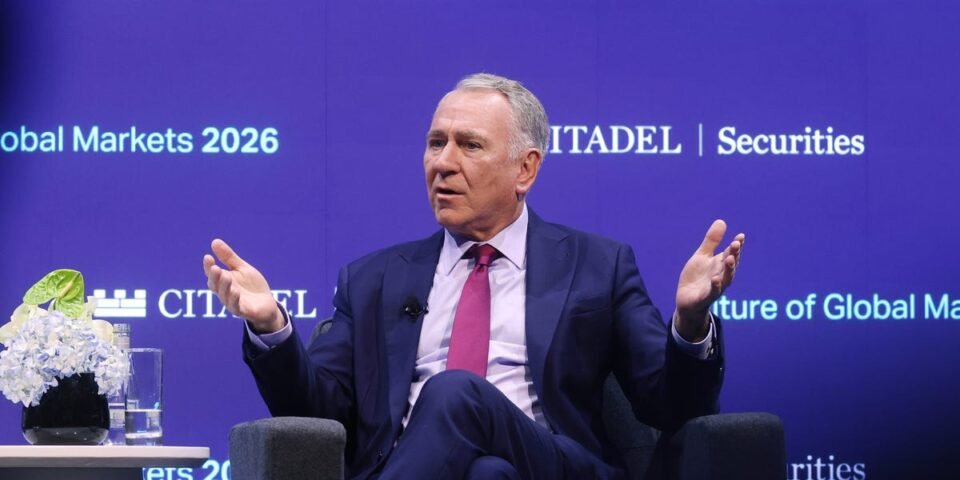
Some Citadel investing teams have built AI agent clones of themselves that can do independent research. Bridgewater’s cutting-edge AIA Labs is “imbuing” the rest of the organization with research and processes it’s perfected. Man Group’s trying to let its people “do more of the fun stuff” and less of the grunt work.
Executives from the three investing giants spent plenty of time on Tuesday at a New York conference hosted by Bloomberg discussing about how their firms have developed top-notch AI processes and found time-saving use cases.
But none were ready to turn over their organizations completely to the machines and don’t expect to anytime soon, if ever.
For one, there are concerns about letting agents run wild outside a firm’s four walls.
It’s an “unsolved problem” that agents can’t be trusted not to put “Bridgewater at risk,” said Aaron Linksy, a partner at the Connecticut-based hedge fund who was part of the founding AIA team. Citadel also spends a lot of time making sure the “sandbox” for agents doesn’t allow them to leave, Andrew Janian, who rejoined this year as the organization’s interim chief technology officer.
Beyond security and regulatory risks posed by a rogue agent, the speakers also made it clear that AI alone is not an edge in investing.
Janian said fundamental investing teams, which have AI sidekicks, should use the technology to help prep for meetings or to challenge their ideas, not to write their investment theses. Man Group chief investment officer Greg Bond lamented the “cognitive surrender” of people who turn their entire work over to the technology and go on autopilot.
He spoke about how he wishes PowerPoint presentations would go by the wayside and meetings would be more about “getting everyone in a room and talking.”
“Let’s go back to human interaction,” said Bond, who was once the head of one of Man Group’s quant units.
“Humans are designing these systems, and, at the end of the day, markets are human-driven,” he said.