
(Bloomberg) — Bond traders who’ve grown more optimistic about an end to the Iran conflict see their next catalyst coming from Capitol Hill, where Kevin Warsh will face questions as President Donald Trump’s pick to lead the Federal Reserve.
Most Read from Bloomberg
A brief reopening of the Strait of Hormuz and the promise of renewed US-Iran peace talks sparked a rally in Treasuries to end last week, with traders boosting their expectations for a Fed interest-rate cut by year-end. The US two-year yield, which had been trading above the central bank’s current ceiling of 3.75% amid the war-related surge in oil, once again dipped backed below it as crude receded.
The big move Friday was “justified because the rates market was still pricing in higher energy prices amid an above target inflation backdrop which would constrain the Fed,” said Priya Misra, portfolio manager at JPMorgan Asset Management, which has been adding inflation-sensitive longer-dated securities to portfolios. “If oil prices continue to fall, the market can start pricing in gradual Fed rate cuts.”
Even as developments in the Middle East continue to set the tone for Treasuries — including new uncertainties around the status of Hormuz that arose over the weekend — Tuesday’s Senate confirmation hearing for Warsh has market-moving potential.
Just before the US-Israeli attack on Iran in late February, Treasuries had been rallying in part on the prospect that Warsh — who voiced support for lower interest rates before gaining Trump’s nomination at the end of January — would push for easing monetary policy later this year.
Any sense that he’d be inclined to stick to that view and look through the war-driven energy shock may further juice wagers on cuts, and boost rate-sensitive short-dated Treasuries. Caution on inflation, though, might spark a reversal.
“A key question for markets is how heavily Warsh will advocate rate cuts,” said a Morgan Stanley team including Michael Gapen and Lingdi Xu.
Calming Down
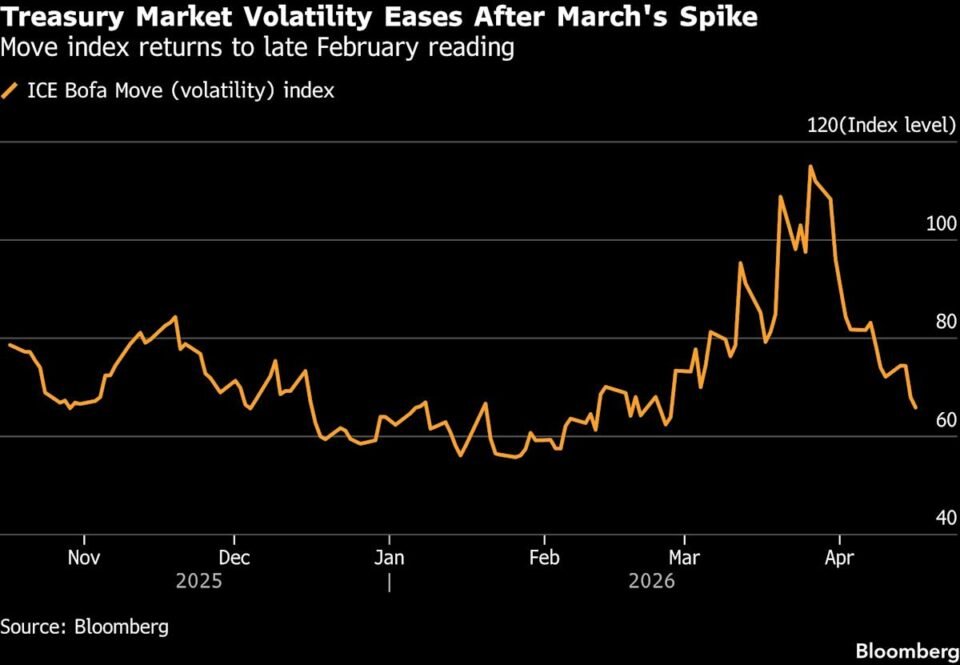
Yields on US Treasuries had settled into a range in recent weeks after shooting higher in the first weeks of the Iran war amid the spike in oil prices. A ceasefire and rising hopes for a peace deal have tempered those early losses, sending US 10-year yields drifting just under 4.25%.