
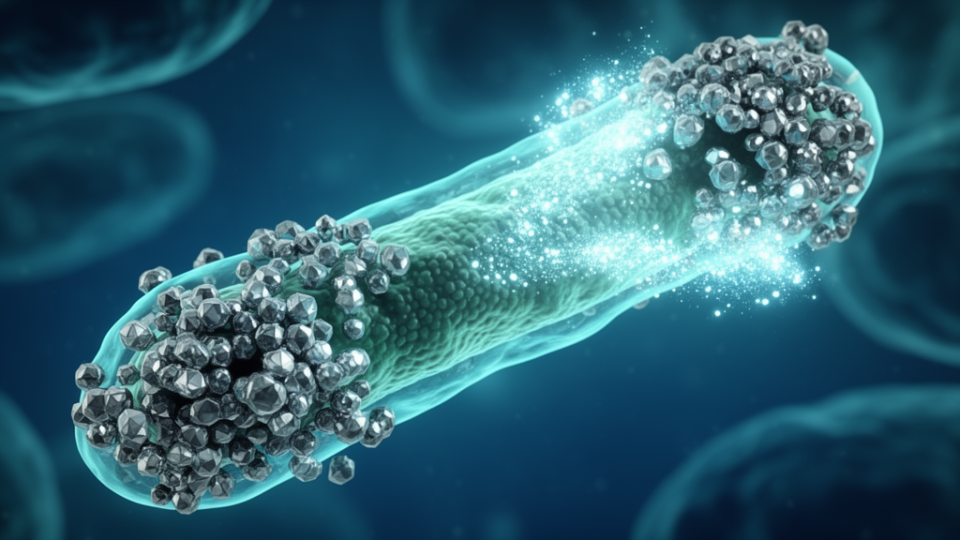
A research team led by Priyanka Rajwani, Shilpa Maddheshiya, and Seema Nara has synthesized an engineered cerium oxide and palladium nanozyme capable of accelerating reactive oxygen species generation to eliminate both Gram-positive and Gram-negative bacterial strains at biologically safe hydrogen peroxide concentrations. Nanomaterials endowed with intrinsic enzyme-like catalytic activity, commonly referred to as nanozymes, have emerged as prominent technological alternatives to traditional antibiotics, whose widespread overuse has spurred the emergence of multidrug-resistant pathogens equipped with enzymatic degradation systems, target modifications, and active efflux pumps. Cerium oxide nanostructures naturally possess multi-enzymatic mimicry, including peroxidase and oxidase behaviors, driven by their reversible cerium redox transitions and the presence of surface oxygen vacancies. However, conventional cerium formulations often require non-physiological concentrations of hydrogen peroxide ranging from 1 to 100 millimolar to achieve significant bactericidal efficiency, creating cytotoxic conditions that threaten mammalian tissues while suffering from limited targeting and rapid radical decay within an effective radius of action under 200 nanometers. To overcome these catalytic and operational bottlenecks, the investigators incorporated palladium onto cerium oxide frameworks via a surfactant-free hydrothermal and chemical reduction approach, intentionally creating a defect-rich composite that amplifies catalytic activity and enhances bacterial surface association.
The synthesis protocol developed by the researchers relied on a two-step hydrothermal route utilizing cerium nitrate hexahydrate and sodium hydroxide to generate cerium hydroxide precursor nanostructures inside Teflon-lined stainless-steel autoclaves at 120 degrees Celsius over a 15-hour duration. For the composite material, palladium ions from palladium chloride salt were introduced across varying precursor concentrations of 1, 3, 5, and 7 percent, adsorbing onto the cerium hydroxide framework through electrostatic interactions before being reduced to metallic palladium nanoparticles using 75 millimolar sodium borohydride. Subsequent calcination at 300 degrees Celsius for two hours converted the mixture into crystalline cerium oxide loaded with palladium. Preliminary colorimetric screening in sodium acetate buffer at an acidic pH of 3.6 demonstrated that the composite prepared with a 7 percent palladium chloride precursor yielded the highest peroxidase-mimicking performance, making it the focal batch for comprehensive structural, kinetic, and microbiological investigation. The bare cerium oxide nanoparticles, dried overnight and calcined at 120 degrees Celsius, served as the baseline comparison across all subsequent analytical assays.
Extensive structural characterization elucidated the crystallographic, morphological, and chemical alterations induced by the addition of palladium. Powder X-ray diffraction patterns matched the characteristic cubic fluorite crystal planes of cerium oxide without significant peak displacement, confirming that palladium deposition preserved the overarching host crystal lattice. Scherrer calculations revealed that the crystallite size contracted from 7.89 nanometers in pristine cerium oxide to 5.19 nanometers in the palladium-loaded counterpart, indicating smaller particle development without distinct palladium or palladium oxide diffraction peaks due to high dispersion. High-resolution transmission electron microscopy uncovered morphological contrasts: pristine cerium oxide consisted of distinct nanorods measuring approximately 135.5 nanometers in length and 6.5 nanometers in width, whereas the composite exhibited well-defined cerium oxide nanorods of 155.47 nanometers by 11.25 nanometers decorated with spherical metallic palladium nanoparticles embedded both along the surface and inside the rod matrix. Selected area electron diffraction confirmed well-resolved lattice reflections matching the fluorite geometry, while energy-dispersive X-ray spectroscopy verified an elemental composition of 46.60 percent cerium, 22.10 percent oxygen, and 31.30 percent palladium in the composite without foreign chemical contaminants.
Surface defect concentrations and electronic states were probed through complementary spectroscopic techniques to understand the nanozyme’s catalytic enhancement. Raman spectroscopy identified the classic first-order F2g stretching vibration of the cerium-oxygen bond at approximately 458 reciprocal centimeters and a defect-induced D-band that shifted from 597 reciprocal centimeters in pristine cerium oxide to 609 reciprocal centimeters in the palladium composite. Evaluating the relative intensity ratio of the defect band to the primary lattice band yielded values of 0.78 for pristine cerium oxide and 0.94 for the palladium-loaded sample, evidencing an increased density of surface oxygen defects. X-ray photoelectron spectroscopy calibrated to adventitious carbon demonstrated mixed oxidation states, with cerium 3d peak integration showing that trivalent cerium concentrations rose from 56 percent in pure cerium oxide to 72.92 percent in the composite. Concurrently, oxygen 1s deconvolution indicated that surface oxygen vacancies expanded from 46.1 percent to 59.84 percent upon palladium incorporation, alongside distinctive palladium 3d doublet peaks verifying metallic palladium, divalent palladium, and interfacial palladium-oxygen-cerium bonding. Low-temperature electron paramagnetic resonance spectroscopy further confirmed distinct paramagnetic profiles, showing the selective elimination of isolated bulk vacancy signals and the emergence of prominent surface-active cerium defect complexes at g values near 2.21, 1.99, and 1.37.
Evaluation of the catalytic mechanisms confirmed that the engineered composite functions as a robust peroxidase and oxidase mimic, with reactions demonstrating strong dependence on buffer acidity. In acidic sodium acetate buffer at pH 3.6, the composite catalyzed the oxidation of 3,3 prime,5,5 prime-tetramethylbenzidine far more effectively than bare cerium oxide both in the presence of 100 micromolar hydrogen peroxide and in its absence under ambient dissolved oxygen. Conversely, catalytic activity diminished considerably when tested in neutral sodium citrate buffer at pH 6.0, reflecting proton-assisted reaction kinetics suited for acidic microenvironments typical of localized bacterial infections. Specialized fluorescence assays using terephthalic acid confirmed pronounced generation of hydroxyl radicals through elevated emission at 420 nanometers, while 9,10-anthracenediyl-bis(methylene) dimalonic acid fluorescence quenching validated the simultaneous catalytic production of singlet oxygen species driven by cooperative redox transitions between the cerium and palladium centers.
Steady-state kinetic assessments under Michaelis-Menten frameworks revealed a substantial catalytic advantage imparted by palladium loading. Utilizing direct, untransformed non-linear regression curves based on the path-length-corrected extinction coefficient of oxidized tetramethylbenzidine across varying hydrogen peroxide concentrations, the researchers determined that pristine cerium oxide exhibited a maximum catalytic velocity of 0.4258 micromolar per minute and an apparent Michaelis constant of 452.1 micromolar. In contrast, the engineered cerium oxide palladium nanozyme attained a maximum catalytic velocity of 5.355 micromolar per minute alongside a markedly reduced Michaelis constant of 16.02 micromolar. This more than twelve-fold acceleration in reaction velocity coupled with a twenty-eight-fold decrease in the Michaelis constant indicates an exceptionally high binding affinity for hydrogen peroxide, confirming that the elevated density of surface oxygen vacancies allows rapid and sustained catalytic turnover even when operating at biologically trace peroxide levels.
Quantitative spread-plate antimicrobial assays demonstrated potent, concentration-dependent bactericidal action against both Gram-positive Staphylococcus aureus and Gram-negative Escherichia coli. When bacterial cultures were treated with 100 micrograms of the composite nanozyme alone, growth inhibition reached approximately 76 percent for Staphylococcus aureus and 67 percent for Escherichia coli, compared to 29 percent and 26 percent inhibition induced by unloaded cerium oxide. When co-administered with 100 micromolar hydrogen peroxide, bacterial eradication by the composite increased to approximately 87 percent in Staphylococcus aureus, while killing in Escherichia coli was measured at 54.4 percent. Even at a reduced dose of 40 micrograms, the palladium-doped nanozyme maintained colony-count suppression comparable to higher dosages. The differential response observed between the bacterial strains highlights differences in physiological architecture: Gram-negative Escherichia coli possess a complex outer membrane bilayer enriched in lipopolysaccharides and express periplasmic peroxide-scavenging enzymes, including alkyl hydroperoxide reductase, which mitigate hydrogen-peroxide-driven oxidative stress, allowing oxidase-mimicking pathways to exert relatively greater influence compared to peroxidase-mediated pathways.
The physical mechanisms governing bacterial cell death were confirmed through intracellular radical tracking, dye exclusion, and morphological microscopy. Intracellular reactive oxygen species detection utilizing 2 prime,7 prime-dichlorodihydrofluorescein diacetate showed substantial surges in green fluorescent intensity inside nanozyme-treated bacteria, confirming elevated oxidative strain. Live-dead viability staining using SYTO 9 and propidium iodide verified widespread bacterial membrane compromise: in Staphylococcus aureus, propidium iodide uptake rose to 67 percent with the nanozyme alone and 74 percent when paired with hydrogen peroxide, compared to 15 percent in untreated controls. In Escherichia coli, membrane-compromised dead populations reached 62 percent and 57 percent across respective treatment groups, compared to 11 percent in controls. Field-emission scanning electron microscopy captured intimate physical adhesion between the defect-rich nanozymes and the bacterial envelopes, revealing pronounced structural collapse, cellular deformation, and membrane shrinkage. This direct contact significantly shortens the diffusion path required for short-lived radical species to reach the lipid bilayer, maximizing localized membrane peroxidation and cell lysis.
Beyond eradicating suspended planktonic bacteria, the cerium oxide palladium nanozyme exhibited marked antibiofilm efficacy in 48-hour crystal violet microplate assays. Dense bacterial biofilms represent formidable clinical hurdles due to their self-secreted extracellular polymeric matrix, which impedes the penetration of conventional antimicrobials and shields resident cells from host immune defenses. Quantitative spectrophotometric absorbance measurements at 595 nanometers, adjusted for cell-free nanoparticle background baselines, revealed significant reductions in established biofilm biomass for both test organisms, with biofilm suppression proving particularly pronounced in Staphylococcus aureus cultures. The observed inhibition stems from the ability of localized reactive oxygen species to disrupt early bacterial adhesion dynamics, degrade surface attachments, and compromise the structural stability of the biofilm network.
In vitro cytotoxicity evaluations established that the bactericidal potency of the composite does not compromise mammalian cellular health. Rat skeletal muscle L6 myoblasts cultured in serum-free Dulbecco modified Eagle medium were challenged with nanozyme concentrations of 40 and 100 micrograms per milliliter in the presence and absence of hydrogen peroxide for 24 hours. Formazan-based MTT metabolic assays demonstrated that while 100 micromolar and 50 millimolar hydrogen peroxide alone depleted cell viability to approximately 51 percent and 24 percent respectively, co-treatment or sole administration of the nanozyme maintained or marginally increased viability relative to control cells. Parallel neutral red lysosomal incorporation assays confirmed the preservation of intact lysosomal compartments, reversing peroxide-induced viability drops. Qualitative dual fluorescence staining with 4 prime,6-diamidino-2-phenylindole and propidium iodide corroborated these findings, as cells exposed to the nanozyme and 100 micromolar hydrogen peroxide exhibited 95 percent viability with minimal nuclear dye permeation. By reconciling high catalytic reactivity at non-toxic substrate concentrations with selective bacterial toxicity and mammalian cytoprotection, this defect-engineered bimetallic platform provides a versatile foundation for advancing catalytic nanomaterials designed to address antibiotic-resistant infections.
Subject of Research: Catalytic defect-rich cerium oxide palladium nanozymes for reactive oxygen species mediated antibacterial and antibiofilm activity
Article Title: Engineering defect-rich CeO₂-Pd nanozyme and investigating their ROS mediated antibacterial action
Article References: Rajwani, P., Maddheshiya, S., & Nara, S. (2026). Engineering defect-rich CeO₂-Pd nanozyme and investigating their ROS mediated antibacterial action. Discover Nano, 21(1), Article 625. https://doi.org/10.1186/s11671-026-05139-8
Image Credits: AI Generated
DOI: 10.1186/s11671-026-05139-8
Keywords: nanozymes, cerium oxide, palladium nanoparticles, reactive oxygen species, antibacterial activity, biofilm inhibition, Escherichia coli, Staphylococcus aureus, peroxidase mimic, oxidase mimic, oxygen vacancies, L6 myoblasts, nanotechnology, bacterial resistance, steady-state kinetics, electron paramagnetic resonance