
“South Africa supplies over 80% of the world’s rhodium, making it the undisputed leader in global rhodium mining.”
“Rhodium demand for catalytic converters is projected to rise by 12% by 2026, driven by stricter emission standards worldwide.”
Where to Find Rhodium: Geological Contexts & Key Ore Bodies
Where to find rhodium is an essential question for industries relying on minerals and strategic metals. Rhodium (Rh), a precious, hard, silvery-white metal, is primarily sourced as a byproduct of platinum group metal (PGM) mining. It is crucial for various industrial, catalytic, and defense applications, and by understanding where can you find rhodium, stakeholders in agriculture, mining, forestry, infrastructure, and defense can manage supply and enhance material supply chain security.
Rhodium is almost exclusively mined as part of PGM deposits. The geological contexts where rhodium occurs include sulfide-rich ore bodies formed deep underground, then exposed by tectonic and erosional processes. The primary concentrations are found in the following regions:
- South Africa: The Bushveld Complex—a vast, layered intrusion—hosts the world’s largest PGM reserves rich in rhodium.
- Russia: The Norilsk region and its neighboring sulfide deposits provide substantial rhodium as a byproduct of nickel and copper mining.
- Canada, Zimbabwe, Finland, Latvia: These countries have smaller but important PGM-bearing ore bodies contributing to the global market.
The association with platinum and nickel ores means that rhodium does not occur freely in nature in large, mineable amounts. Instead, its presence is measured in parts per million, making efficient mining and refining technologies essential for its recovery.

7 Rhodium Mining Hubs for 2026: Where Do You Find Rhodium?
As we assess where to find rhodium in the coming years, these seven powerful mining hubs will command global attention:
- Bushveld Complex, South Africa
- Great Dyke, Zimbabwe
- Norilsk-Talnakh, Russia
- Sudbury Basin, Canada
- Kola Peninsula, Russia
- Stillwater Complex, USA
- Satin Nickel District, Finland/Latvia
Let’s explore their distinctive geological contexts, mining operations, and sectoral applications.
Rhodium Mining Hubs Overview Table
| Mining Hub (Country/Region) | Estimated Rhodium Output (oz/yr, 2026) | Main Extraction Method | Key Applications | Major Operators | Market Share (% est.) |
|---|---|---|---|---|---|
| Bushveld Complex, South Africa | 610,000 | Layered PGM intrusion (UG2/Merensky Reef, mechanized/underground & open-pit) | Catalytic converters, industrial, defense | Anglo American, Impala Platinum, Sibanye-Stillwater | ~82% |
| Great Dyke, Zimbabwe | 54,000 | PGM-bearing mafic-ultramafic layered intrusion (underground/open-pit) | Catalysts, industrial, jewelry tools | Zimbabwe Platinum Mines (Zimplats), Mimosa Mining | ~7% |
| Norilsk-Talnakh, Russia | 39,000 | Nickel-Copper sulfide ores (underground/large-scale open-pit) | Catalytic, chemicals, defense | Norilsk Nickel | ~5% |
| Sudbury Basin, Canada | 14,000 | Nickel-copper PGM deposits (underground block caving) | Industrial, automotive, electronics | Vale, Glencore | ~2% |
| Kola Peninsula, Russia | 8,000 | PGM-Nickel sulfide ores | Chemical, defense | Nornickel | ~1% |
| Stillwater Complex, USA | 7,500 | Layered PGM intrusion (underground) | Automotive, industrial | Sibanye-Stillwater | ~1% |
| Satin Nickel District, Finland/Latvia | 2,500 | PGM-Nickel magmatic sulfides | Industrial, specialty tools | Boliden, Terrafame | 0.2% |
✔ Rhodium Mining Hotspots: Quick Visual Guide
- 🌍 Bushveld Complex (South Africa): Largest global supplier
- 💎 Great Dyke (Zimbabwe): Significant for Southern Africa
- 🌏 Norilsk Region (Russia): Nickel-copper PGM source
- 🌲 Sudbury (Canada): Smaller but high-purity deposits
- ❄ Kola Peninsula (Russia): Nickel/PGM-rich district
- 🗻 Stillwater (USA): North America’s premier PGM mine
- 🌬 Satin Nickel District (Finland/Latvia): Technology-focused mining
Mining & Production Pathway: How Rhodium is Extracted
Rhodium mining is tightly linked to PGMs, with rhodium almost exclusively found as a byproduct within platinum and nickel ores. The typical pathway for rhodium production includes several stages:
- 🔎 Exploration: Identifying PGM-rich ore bodies and mineralized zones, now increasingly aided by satellite-based mineral detection.
- ⛏ Mining: Open-pit or underground operations, depending on depth, ore concentration, and deposit type.
- ⚙ Comminution: Ore is crushed and milled to liberate valuable minerals.
- 🧊 Flotation: Ore is treated to produce concentrate enriched in PGMs including rhodium.
- 🔥 Smelting: The concentrate undergoes high-temperature separation to remove gangue and recover PGMs.
- 🏭 Refining: Chemical and electrolytic processes separate and purify rhodium from platinum group metals, copper, nickel, and other byproducts.
Rhodium is present in trace amounts—often 0.1–0.4 parts per million—so advanced refining techniques and efficient separation are vital for recovery and supply. Its production pathway ensures only a minuscule fraction of mined ore becomes high-purity rhodium.

📊 Rhodium Recovery Workflow: Stepwise Breakdown
- Prospect identification: Satellite, geochemical, and structural mapping
- Mineral extraction: Mining the ore (open-pit or underground)
- Milling & flotation: Producing the initial PGM concentrate
- Smelting & initial separation: Removing impurities, recovering base metals
- Advanced refining: Isolating rhodium and other PGMs
Industrial, Catalytic, and Defense Applications: Why Rhodium Matters
Beyond simply asking where do you find rhodium, it’s crucial to understand why rhodium’s role across industries is so strategic. In 2026 and beyond, rhodium will remain indispensable to multiple critical sectors:
- 🚜 Emissions reduction in agriculture and transportation: Rhodium is designed into catalytic converters for agricultural, forestry, and automotive fleets, helping cut NOx emissions and meet stricter standards.
- 🏭 Industrial catalysts & chemical processing: Used in hydroformylation, hydrogenation, and high-purity chemical synthesis for fertilizer production and advanced materials.
- 🛡 Defense & infrastructure: Enables precision catalytic processes in defense-related manufacturing, propellant chemistry, and specialty infrastructure materials.
- 💍 Gemstones & industrial tools: Provides reflective, corrosion-resistant coatings for jewelry and specialized mining equipment and tools.

Key Insight: Rhodium is valued for its highly resistant catalytic properties, durability, and essential role in controlling emissions, making it a cornerstone of industry, defense, and clean technology transitions.
Industrial & Strategic Uses of Rhodium — Highlights
- ⚙ Automotive: Almost all gasoline vehicles worldwide use rhodium in their exhaust aftertreatment systems by 2026.
- 🌱 Agriculture & Forestry: Rhodium-based catalysts reduce emissions in large diesel-powered equipment fleets, supporting sustainable land management.
- 🔬 Chemical Processing: Used in precision catalytic manufacturing processes (e.g., production of key agrochemicals, polymers, and fertilizers).
- 🛡 Defense Applications: Ensures specialty coatings and propellant chemistry for defense infrastructure remain reliable under demanding conditions.
- 🔧 Gemstone Processing & Tools: Rhodium-plated equipment and corrosion-resistant labware see wider adoption in mining and mineral analytics.
Satellite-driven 3D Mineral Prospectivity Mapping
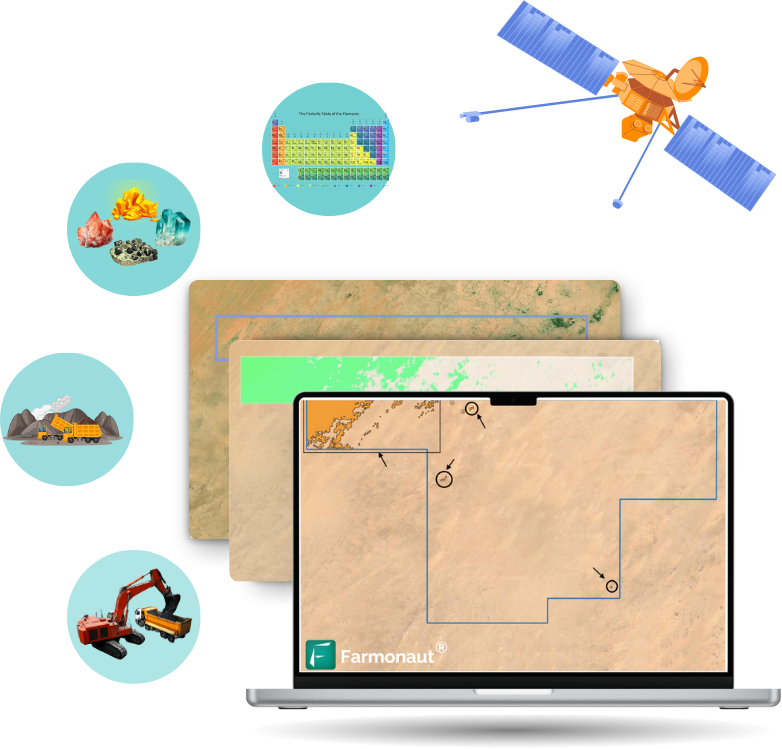
is transforming how mining companies identify high-prospect zones for strategic materials like rhodium, platinum, and nickel—offering rapid, precise, and cost-effective site targeting before drilling ever begins.
Investor Note:
With tightening regulatory standards and a 12% projected increase in rhodium demand for catalytic converters by 2026, early-stage investment in rhodium mining or recycling chains can be a strategic move for risk-diversified portfolios.
Rhodium Supply Chain: Strategic Considerations for Global Industry
The rhodium supply chain is defined by its status as an extremely rare byproduct of PGM mining. As only a small minor share of the ore becomes refined rhodium, the risk of supply disruptions requires active monitoring and diversified sourcing. Agricultural, forestry, mining, infrastructure, and defense sectors all depend upon its secure availability.
- ⚠ Critical constraint: More than 80% of global rhodium comes from a single country—South Africa—making the market highly vulnerable to local disruptions.
- 📊 Volatile Market: Rhodium prices can spike dramatically during regional supply crises, mine shutdowns, or labor strikes.
- 🔁 Recycling: Increasing rates of autocatalyst and industrial catalyst recycling play an essential role in stabilizing supply chains.
- 🚪 Diversified Sourcing: Markets are exploring alternative and minor sources in Canada, Zimbabwe, Finland, and the USA to hedge geopolitical risk.
Map Your Mining Site Here:
mining.farmonaut.com — Instantly visualize mineral prospectivity and receive rapid geospatial insights for your targeted region with Farmonaut’s user-friendly platform.

Farmonaut’s Satellite-Enabled Rhodium & PGM Exploration Advantage
Globally, as rhodium mining becomes more strategic and competitive, companies are leveraging Earth observation and AI-driven satellite analysis to gain a decision edge. We at Farmonaut provide satellite-based mineral detection and intelligence solutions, streamlining the earliest, riskiest stage of exploration for rhodium, PGMs, and other critical minerals.
- 🌍 Global Scalability: Screen vast terrains for rhodium-containing deposits before committing to field campaigns, in major mining regions including Africa, North America, and Eurasia.
- ⚡ Faster Targeting: Reduce discovery timelines from months or years to days with automated satellite-driven prospectivity heatmaps and actionable reports.
- 🌱 Sustainability: Enable non-invasive assessment, minimizing environmental disturbance and improving ESG alignment for new mining ventures.
- 💸 Cost Savings: Avoid unnecessary drilling, save up to 80–85% in early exploration costs, and focus resources where returns are most probable.
- 🔐 Advanced Intelligence: Receive comprehensive, layered reporting—including 3D prospectivity modeling, mineralized zone validation, and optimal drilling recommendations.

For organizations seeking a next-generation approach in locating new rhodium sources—or de-risking existing exploration—our satellite-based mineral detection service and rapid, easy-to-use online platform (mining.farmonaut.com) ensure a decisive edge over conventional methods.
Pro Tip:
Integrating satellite data intelligence at the start of your mining exploration dramatically increases prospecting accuracy and shortens decision cycles—ideal when targeting rhodium within complex PGM ore bodies.
- ✨ Hyper-targeted zone detection maximizes exploration ROI
- 🌐 Multi-mineral capability—includes gold, nickel, lithium, copper, and rare earths alongside rhodium
- 📅 Industry-leading turnaround: 5–20 business days for delivery
- 📄 Professional PDF reports with high-res maps and geospacial data
- 👩💼 Streamlined workflow ideal for commercial as well as technical teams
Common Mistake:
Relying solely on historical or regional geological surveys without modern remote sensing can result in missed or misvalued rhodium targets—especially in underexplored or rapidly changing mining jurisdictions.

Geopolitical and Market Dynamics: Rhodium’s Volatility & Risk Management
As stakeholders in agriculture, infrastructure, defense, and mining know, rhodium market and supply chains face unique geopolitical considerations:
- 💼 Highly concentrated supply: A large majority sourced from a single region (South Africa), amplifying geopolitical and operational exposure.
- ⏳ Production bottlenecks: Environmental, labor, and power challenges disrupt mining output, quickly impacting global supply and price.
- 🔄 Secondary/recycled supply: Automotive scrap and industrial catalyst recycling are increasingly vital to offset supply risk.
- 📈 Price volatility: Rhodium is the most price-volatile precious metal, subject to abrupt surges during disruptions or rapid-demand periods.
- 🌎 Global demand outpaces supply: Growing automotive and industrial applications outstrip new mine output, driving strategic stockpiling and diversified global sourcing in 2026 and beyond.
Data Insight:
Over 90% of newly mined rhodium is consumed by the automotive and chemical sectors. As vehicles become cleaner and chemical manufacturing more advanced, demand for secure, ethically sourced rhodium is expected to intensify.

- 🛡 Maintain long-term contracts with established suppliers in South Africa and Russia
- ⚡ Monitor real-time disruptions for mining operations in key rhodium hubs
- 🏦 Invest in recycling capacity for used industrial and automotive catalysts to reclaim rhodium
- 🚀 Leverage satellite and remote sensing tools to scout new deposits and validate reserves cost-effectively
- 🌐 Diversify sourcing through new exploration in Canada, USA, Zimbabwe, Finland, and Latvia

FAQ: Rhodium Mining, Supply Chain & Applications
Rhodium is almost exclusively found as a byproduct within PGM ore bodies—particularly in the Bushveld Complex (South Africa), Great Dyke (Zimbabwe), Norilsk-Talnakh (Russia), and to a lesser extent in Canada, USA, Finland, and Latvia. These major hubs are responsible for over 95% of global rhodium output in 2026.
Q2: Which sectors are the biggest users of rhodium?
The automotive industry is the largest consumer, as rhodium is critical in catalytic converters for emissions reduction. Other significant users include chemical processing (precision catalysts), defense manufacturing (specialty materials and propellants), infrastructure, and industrial tooling.
Q3: How does volatility in rhodium supply affect industry?
Due to its highly concentrated supply chain and extreme rarity, rhodium’s price is subject to rapid increases during supply shocks, mine closures, or labor issues. This poses risks for manufacturers, automotive suppliers, and all users dependent on stable and affordable strategic materials.
Q4: What new technologies are used to find rhodium?
Advanced exploration now relies on Earth observation: Satellite-based mineral detection tools (like those offered by Farmonaut) use multispectral and hyperspectral data, combined with AI, to rapidly identify likely PGM zones and refine exploration targeting. This approach cuts exploration timelines and cost, and reduces environmental impact.
Q5: Is recycled rhodium a significant part of the market for 2026?
Yes. Recycled rhodium—primarily recovered from used automotive and industrial catalytic converters—is an increasingly important supply source to offset new mining constraints. Recycling contributes to supply chain stability and environmental sustainability.
Key Callouts & Highlights: Rhodium Market Essentials for 2026
Highlight:
Rhodium is by far the rarest major precious metal actively traded, with global annual mine supply often less than one-tenth that of platinum.
Key Insight:
High-grade ore bodies with stable mining operations are crucial for sustaining global rhodium supply—making integrated, proactive risk management and exploration essential.
Use satellite-based mineral detection for early-stage targeting and increased ROI in PGM and rhodium exploration, especially in underdeveloped or logistically challenging regions.
Investor Note:
Stakeholders with exposure to rhodium supply chains should consider long-term contracts, diversified region sourcing, and technology-driven exploration to offset supply disruptions.
Common Mistake:
Underestimating the time, cost, and risk of relying on a single-source rhodium supply chain. Disruptions can render entire production lines idle and cause major cost escalations.
- ✨ South Africa’s Bushveld is the world’s epicenter for newly mined rhodium
- 🔎 Satellite-based exploration (as developed by Farmonaut) enables faster, higher-confidence discovery of rhodium-rich zones
- ⚠ Supply chain risks are high: diversify regionally, invest in recycling, and leverage real-time market intelligence
- 🔧 Essential applications span automotive, industrial, defense, and advanced agriculture/forestry operations
- 🛡 Strategic metals like rhodium underpin critical national and global infrastructure—understanding where to find rhodium is an advantage in a volatile future
If you’re seeking advanced intelligence to map, analyze, or invest in the future of rhodium and PGM mining, contact us or map your mining site here to get started.