
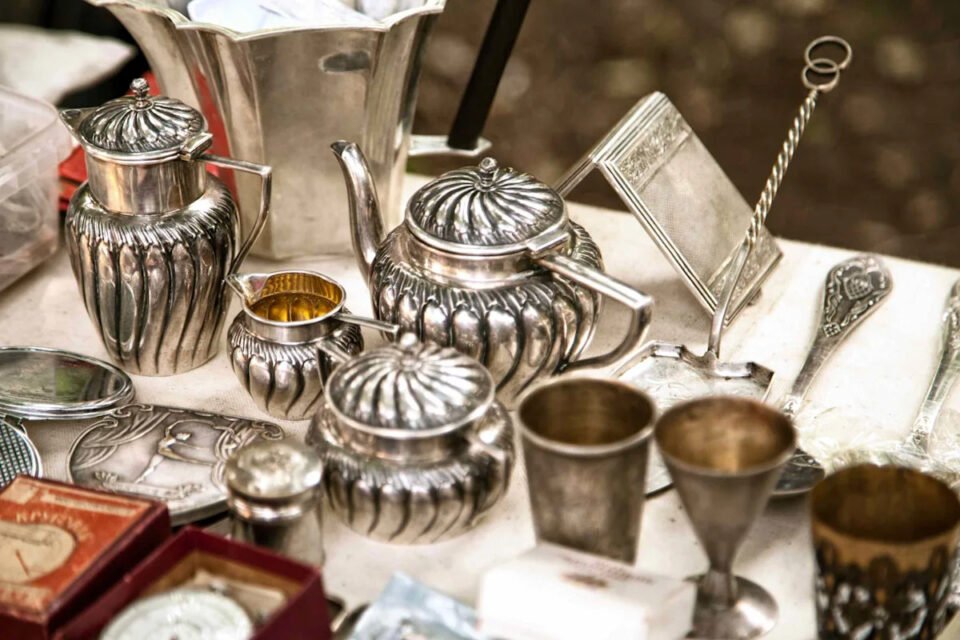
There are certain trinkets you almost always bet on finding at a flea market, and silver-plated platters, vases, and pitchers are a great example. But every once in a while, there’s a sterling silver beauty just waiting to be discovered by someone who knows how to identify real silver.
On the surface, silver-plated and sterling silver items often look identical (and they are both prone to tarnishing). But their inner compositions have major giveaways. We talked to two designers specializing in antiques to learn how they spot authentic silver treasures in the wild.
Meet the Experts
-
Will Hunt Lewis has spent more than 25 years working in the home furnishings industry. His newest venture is Hunt & Bloom, a home store in Houston.
-
Leah Bolger is a Chicago-based designer specializing in luxury interiors. She is also a tenured college instructor of interior architecture and graduate studies.
1. Look for a Sterling Silver Marking
According to Will Hunt Lewis, owner of Hunt and Bloom, the first step of learning how to identify real silver is to understand what you’re actually looking for: sterling silver.
“The easiest way to identify sterling silver, which is considered ‘real silver,’ is by looking for markings,” he says. “The clearest identifier is either the word ‘sterling’ embossed on the piece or the numbers 925 or 92.5. What is the significance of those numbers? Sterling silver is not really pure silver; it’s 92.5% silver mixed with 7.5% of other metals. Other markings, like the lion passant, also signify that a piece is sterling silver.”
Designer Leah Bolger also adds that common non-sterling markings to look out for include EP/EPNS, A1/AA, or “community plate.” Sometimes these markings are small, worn, and hard to read, so she suggests carrying a small magnifying glass.
Keep in mind that sterling pieces do exist without markings, and that’s where the tips below come into play.
2. The Sound Test
You might be familiar with how to identify real crystal using sound; it turns out a similar rule applies to sterling silver.
“Sterling can be evaluated by tapping the object with another metal item, like a coin,” Bolger says. “Sterling produces a high-pitched and long-lasting sound or ‘ping.’ Non-sterling objects produce a dull thud.”
3. Try the Magnet Test
Next time you head out the door to thrift, take a strong magnet along. Both Bolger and Hunt Lewis swear by the magnet test for identifying real silver.
“If you’re out thrifting and find a piece with no specific markings that you suspect might be sterling, grab a magnet and see if it sticks,” Hunt Lewis says. “Sterling silver is not magnetic. So make sure to grab one from the fridge before you head out for a day of thrifting.”
4. The Ice Cube Test
Here’s a fun little science trick you can try out on any silver pieces you have at home. If you have an item you know is sterling silver and a piece you’re questioning, place an ice cube on each and compare their melting rates.
“Sterling silver has high thermal conductivity,” Bolger says. “If an ice cube is placed on an item, it should begin to melt rapidly.”
Related: How to Clean Silverware to Protect Against Stains and Tarnish
5. Feel the Weight
If you’re out thrifting and you didn’t pack a magnifying glass, a coin, a magnet, or an ice cube, never fear. Simply pick up the item and feel its weight. A silver-plated item will seem pretty lightweight, while a sterling silver item will definitely feel heavier and denser.
Read the original article on Better Homes & Gardens