
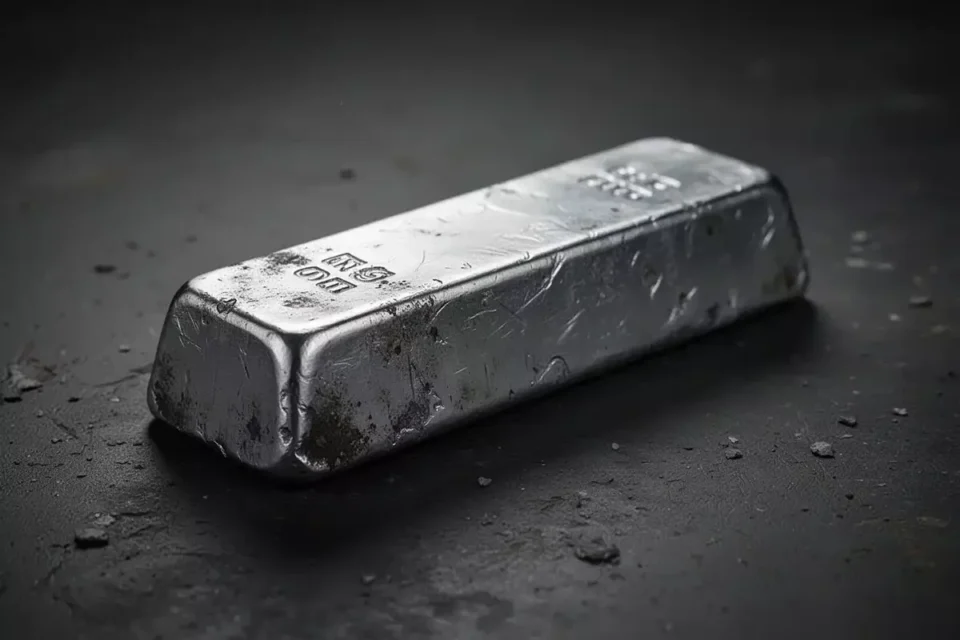
Silver has slid to around $64.09 an ounce, a decline of roughly 47% from its January peak of $121.78, and is now hovering dangerously close to a technical support band between $60 and $61. Should that floor give way, the next downside marker comes into view at the October low of $45.51. For now, the relative strength index sits at 35.6, a reading that signals oversold conditions but has yet to generate a clear buy signal. The metal is trading roughly 14.75% below its 50-day moving average of $75.18, with overhead resistance stacked at $71.80 and $83.75.
The primary culprit behind the persistent weakness is Federal Reserve policy. On June 17, Fed Chairman Kevin Warsh held interest rates steady for the fourth consecutive meeting but delivered a decidedly hawkish message, noting that inflation at 4.2% — the highest since early 2023 — remains uncomfortably elevated. Nine of the 19 voting members now anticipate at least one rate hike before the end of the year, and markets are pricing in a roughly 70% probability of a move by September. The dollar has responded by climbing to a fresh yearly high, amplifying the pressure on non-yielding assets like silver. Rising rates push up the opportunity cost of holding the metal, while a stronger dollar makes dollar-denominated commodities more expensive for overseas buyers.
The broadening of the gold-silver ratio to about 64 underscores the dynamic. The compression to 55 seen in May has been fully unwound, leaving the ratio close to its long-term average of 65 to 75. Historically, readings above 80 have flagged silver as significantly undervalued relative to gold, but the market is far from that threshold today.
Should investors sell immediately? Or is it worth buying Silber Preis?
Geopolitical developments have added an unexpected twist. The recent US-Iran peace agreement ended a conflict that had been causing major supply disruptions, and as oil prices retreat on the diplomatic thaw, inflation fears have eased. For silver, that is a double-edged sword: lower inflation reduces the appeal of precious metals as a hedge, stripping away a layer of geopolitical premium that had been supporting prices.
Yet beneath the short-term turmoil, the physical market tells a markedly different story. The Silver Institute expects silver to post its sixth consecutive year of supply deficit in 2026, though the precise figure varies between reports. One estimate puts the deficit at 46.3 million ounces, up from 40.3 million in 2025, while another forecasts a shortfall of roughly 67 million ounces. Regardless of the exact number, the structural scarcity is deep and persistent. Because 70% to 80% of silver is produced as a byproduct of copper, lead, and zinc mining — and base-metal producers are already throttling output — supply cannot ramp up quickly in response to higher prices.
Demand-side trends are diverging. Solar manufacturers, long one of the biggest consumers of silver, have been actively reducing the metal content per cell to offset rising costs. Silver consumption in photovoltaics fell to 186.6 million ounces in 2025, a 6% drop, and is expected to decline a further 19% to about 151 million ounces in 2026. However, an emerging demand driver is rapidly filling the gap: data centers powering artificial-intelligence workloads. Silver’s superior electrical conductivity makes it essential in dense server environments, and this segment is already consuming an incremental 20 to 30 million ounces annually, growing at 15% to 25% per year. Under aggressive expansion assumptions, data-center demand could reach 40 to 80 million ounces annually by 2030. The broader industrial backdrop remains pointed lower for now, as solar’s contraction outweighs the gains from AI infrastructure and electric-vehicle charging networks. Yet the base is broadening: global IT power capacity has exploded from just 0.93 GW in 2000 to nearly 50 GW in 2025 — a 53-fold increase that underscores the structural shift.
Despite the current price rout, major banks still see significant upside. A Reuters consensus survey places silver at an average of $79.50 in 2026, while Citigroup has set a target of $110 for the second half of the year, citing physical tightness and rising industrial demand. Whether the metal can stage a recovery from here hinges largely on the Fed’s next move — and on whether the $60 to $61 support zone holds the line in the meantime.
Ad
Silber Preis Stock: New Analysis – 22 June
Fresh Silber Preis information released. What’s the impact for investors? Our latest independent report examines recent figures and market trends.