
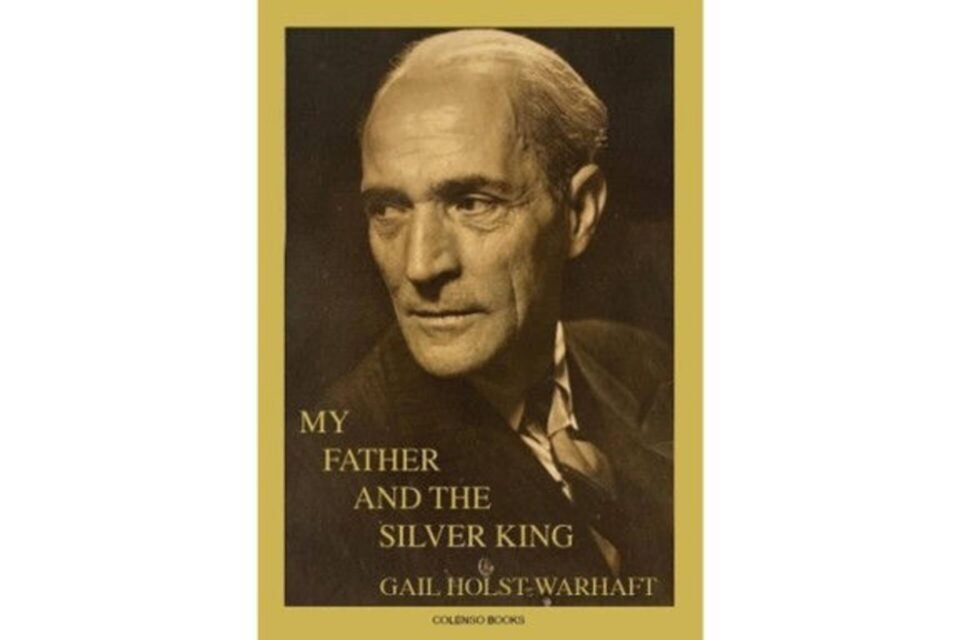
I have known Gail Holst (née Erswell) since 1969, when she joined the Committee for the Restoration of Democracy in Greece, of which I was the Chair. She had travelled to Greece in 1966, where she became infatuated with Greece and its people. Then, on 21 April 1967, the Colonels’ Junta seized power.
She experienced and observed actions of the Junta, the first being the banning of the music of Mikis Theodorakis. This, and other acts of oppression, led her to become an activist in the cause of restoring democracy for Greece and its people.
In 1969, she returned to Melbourne, riding as a pillion passenger on a motorbike driven by her then partner, Ted Holst, across the Nullarbor Plain.
When the Junta fell, sparked by the student uprising at the Athens Polytechnic in 1973, the Junta responded by sending a tank to smash down the front gate of the college. The revolt caused deaths and injuries, the number of which has been suppressed.
Gail has an impressive array of authorship, poetry and prose, such as “Penelope’s Confession” and, in non-fiction, her classic treatise “Road to Rebetika: Music of a Greek Subculture” and “Theodorakis: Myth and Politics”, and also many Greek translations.
Her latest book is “My Father and the Silver King”, published by Colenso Books in March 2026 and printed in Australia by Lightning Sources Pty Ltd, Scoresby, Victoria.
She unravels the history of her father, who was born in England in 1886 (16 years after Charles Dickens’s death), describing the poverty and squalid living conditions endured by much of the English population.
‘He was subjected to numerous beatings by his father, which caused him, at the age of seven, to run away and live on the streets of London’s East End, earning a living as a pickpocket.
Gail researched the living conditions of London by referring to the four volumes of Henry Mayhew’s study of the culture of poverty in nineteenth-century London, “London Labour and the London Poor”. She also referred to other publications, including Charlie Chaplin’s biography.
The last chapter reflects on Gail’s parents visiting her in Athens in 1966 and how she was looking forward to introducing them to her new friends in Athens.
In addition, she took her parents to a taverna which had the best view of the Acropolis, and which also had music and dancing.
In the course of two men dancing, Ambrose got up and joined the dancers with ease, at the end of which they said to Gail, “What a levendis your father is” – a brave, valiant and often handsome man; young handsome man with a noble spirit and a strong sense of honour.
Gail completes her book by reflecting on her research into rebetiko music and its rise in the 1920 s and 1930 s in the port of Piraeus. She ends it with a photograph of a group of Greek male cane cutters having a drink.
Her description of Melbourne from 1965 through to her moving to Athens would bring back memories for the many people who need this back.