
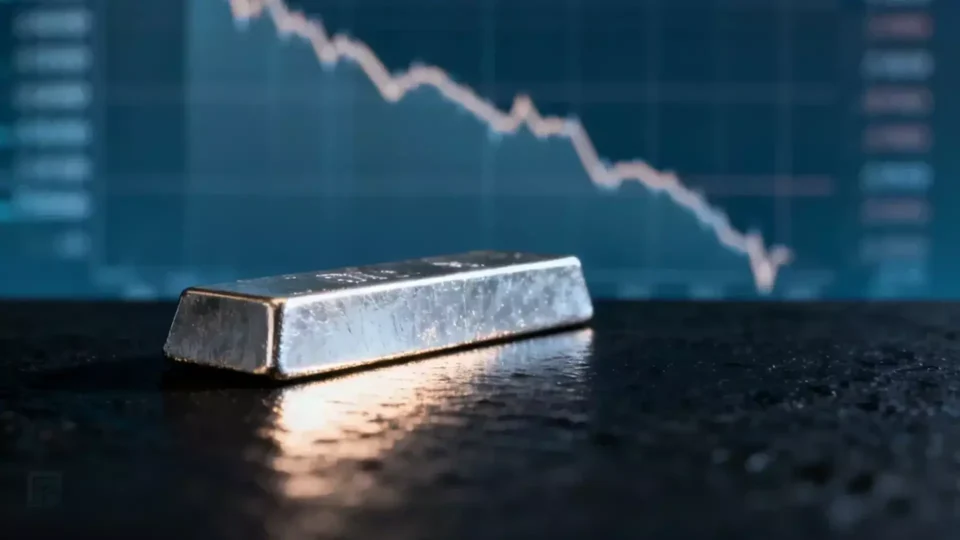
Silver ended last week at $58.49 per ounce, eking out a 0.99% daily gain and a 4.04% weekly advance — a modest recovery that belies the turbulence that rattled the market. The metal swung wildly between an early-July peak above $62, triggered by weak US jobs data that dampened rate-hike expectations, and a midweek rout sparked by an oil-price surge past $100 a barrel amid escalating Iran tensions and a strengthening dollar. By Friday, buyers had wrestled back control, but the price remains a staggering 51.97% below the January 29 record high of $121.78.
A Supply Gap That Won’t Quit
Strip away the weekly noise, and the fundamental picture is stark. The Silver Institute has confirmed a sixth consecutive annual supply deficit for 2026, pegged at 46.3 million ounces. Since 2021, cumulative stockpile drawdowns have reached 762 million ounces, a relentless erosion of physical inventories that Metals Focus expects to continue at a pace of 50 to 80 million ounces per year through at least 2030.
The industrial engine behind this shortfall is the solar industry. Global module production of 706 gigawatts in 2025 consumed roughly 7,244 tonnes of silver — more than a fifth of total global supply, according to the ITRPV market report. The industry’s shift to more efficient TOPCon cells has so far failed to cut per-module silver usage enough to close the gap. Electric vehicles add another layer of structural demand, with each battery-electric vehicle requiring 25 to 50 grams of the metal.
Should investors sell immediately? Or is it worth buying Silber Preis?
Wall Street’s Wide Divide
The bull case is loud but far from unanimous. Bank of America sets a base-case target of $135 per ounce by end-2026, with an optimistic scenario reaching $309. J.P. Morgan is far more cautious, penciling in an average price of just $81 for this year. The broader analyst consensus for 2030 clusters between $100 and $150, reflecting deep disagreement over how much weight to assign to structural scarcity versus macroeconomic headwinds like rising bond yields and a firm dollar.
Commodity strategist Greg Weldon, who liquidated his own silver positions between $96 and $98, views the recent weakness as a correction within a long-term uptrend. He sees a potential rally to around $326 over five to seven years, driven in part by an expected pivot from the Federal Reserve toward looser monetary policy. Private investors surveyed by BullionVault in mid-2026 were similarly optimistic, forecasting an average price of $69.60 by year-end 2027 — a 16.7% gain from that point — with monetary policy, geopolitical risks, and sovereign debt levels cited as the top price drivers.
Real-World Demand Hits Corporate Ledgers
The physical demand isn’t just theoretical. Hindustan Zinc, the Indian mining giant, reported a surge in silver revenue to 3,839 crore rupees in the first quarter of fiscal 2026/27, up from 1,426 crore a year earlier. Group profit soared 145% to 5,469 crore rupees, offering a tangible glimpse of how the supply deficit is translating into corporate earnings.
Charting the Near-Term Battle
Technically, silver remains disconnected from its bullish fundamentals. The metal is trading 20.92% below its 200-day moving average, a gap that underscores the tension between structural scarcity and short-term selling pressure. The 21-day moving average sits just above current levels, acting as resistance, while analyst Christopher Lewis flags $60 as a key hurdle and $55 as the next support floor. With the Federal Reserve’s next rate decision due July 29, the market is pricing in a pause but has lately seen the odds of a hike creep higher. For now, silver is caught between a hawkish central bank and an industrial appetite that shows no signs of easing — a volatile equilibrium that could break in either direction.
Ad
Silber Preis Stock: New Analysis – 25 July
Fresh Silber Preis information released. What’s the impact for investors? Our latest independent report examines recent figures and market trends.
Disclaimer regarding our articles: No investment advice, no buy or sell recommendation. Information on prices, companies, and markets is provided without guarantee; changes are possible at any time. Stock market transactions can lead to substantial losses. Our articles are created and reviewed in whole or in part automatically with the support of AI.