
When I turned 40, I started to think more about the passage of time.
Or, more accurately — and classically — the passage of time hit me like a freight train.
I think back to my high school days — surely, just 10 years ago and recollect my college days — surely, just five years ago. I recall the years I bounced in mental health purgatory, trying, yet failing, to cope with life on life’s terms. And I reminisce about the days my girls held fat crayons in their chubby toddler hands to draw pictures and scrawl their names.
Cher said it best. If I could turn back time, indeed.
High school was more than 20 years ago. College? 15-plus. And my girls, now 12 and 9, write their names in curly cursive with sleek, mechanical pencils.
Nowhere have I felt the passage of time more than in my relationship with my parents. I live here in California. They live in Eastern Washington. You can call me agnostic about where I grew up, but I can’t say my parents love California. As a result, we don’t see each other nearly enough — and admittedly, I should call more often than I do.
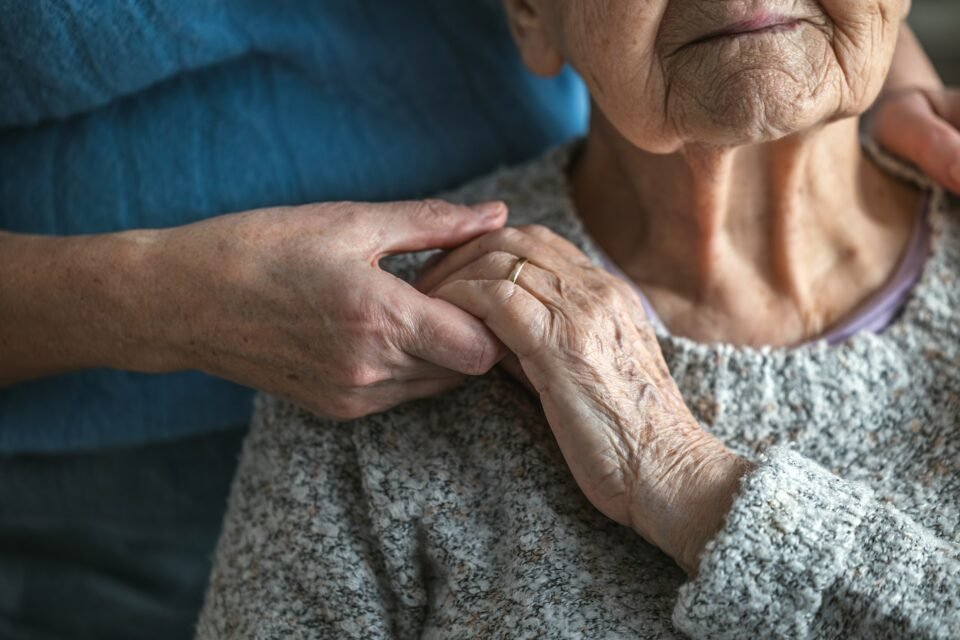
This year has been particularly tough. Over the last year, my mom — who just last year boasted the best health I had seen in a long time — has experienced one issue after another. These consecutive maladies have made her weaker and smaller, robbing her of both her physical strength and mental acuity.
The last 10 months came to a head last week. While traveling with my dad, she tripped in a foyer and concussed herself. While she is OK, we learned she had three brain bleeds as a result of the trauma. Even though I’m not the child who goes home often, I booked a flight home to provide support for both my dad (who still works full-time) and my mom, who would require round-the-clock support.
And just like that — leaving my girls behind for five days — I entered my sandwich generation era.
The sandwich generation includes adults who are caught in the “middle” — sandwiched between the responsibilities of raising their own kids and providing physical, emotional or financial care for aging or sick parents. Roughly 25% of Americans are caught in this generation, including 54% of adults in their 40s and 45% of adults in their 50s, according to data from the Pew Research Center.
In Sonoma County, where 28% of the county population is 60 and over, senior care providers are expecting a so-called “silver tsunami.” By 2030, 35% of the population will be over 60, meaning more than one in three individuals will be an older adult. That means a lot of adults are also lining up to join the sandwich generation.
Joni Huntsperger, coordinator for Sonoma County’s Master Plan for Aging Implementation, said caregivers in the county fall into two groups: paid and unpaid. Unpaid caregivers make up — more or less — roughly two-thirds of all the support.
In other words, that means family members and friends — usually family members — are providing often round-the-clock support to loved ones who are aging or sick.
In my conversation with Huntsperger, we talked about how quickly the responsibility of caregiving can fall onto a person’s lap.
“So many people we hear from say it’s suddenly thrust upon them,” she said. “For so many people it’s all of a sudden happening today. They don’t know the resources and they don’t know where to start.”
Sonoma County has the resources.
Caregivers, whether or not they feel lost, can call the county’s Aging & Disability Information Hub at 707-565-INFO, Monday through Friday, 8 a.m. to 5 p.m. A social worker can point a caregiver to any type of resource they might need, as well as those they don’t even realize they need.
There are resources for Alzheimer’s programs, adult day respite services, food services like Meals on Wheels, home access modifications, legal services, conservatorships and more.
The hub is part of a group of 17 nonprofit partners that work together in a closed-loop system, meaning once you’re in the system, you’re in. Some of the services offered are free and for those that aren’t, a social worker will help find the lowest-cost options, especially for what Huntsperger calls the “missing middle” — families that often make too much money to qualify for low-cost options but are one disaster away from financial ruin.
For many, entering the sandwich generation qualifies as that disaster. A family’s combined cost of care for two children and a full-time, non-medical caregiver for an aging relative, ($25,758 for daycare for the children and $80,080 in-home care for their aging relative) would be equivalent to 79.6% of their household income — or 46.7% if the caregiver aide works part-time, at 20 hours a week, according to the Bipartisan Policy Center and US Census Bureau.
That cost is too much for most of us to handle (definitely my family!), so we pay for it with our time, instead. Caregivers caught in the Sandwich Generation average roughly 24 to 27 hours weekly on direct tasks, with some estimates running higher depending on the medical needs of aging parents, according to Pew Research. That’s often on top of 40 hours of work and 20+ hours spent with one’s own children. It’s no wonder that research shows dual caregivers experience significantly higher levels of personal and caregiving burnout than people caring for children alone.
Huntsperger said that caregivers who reach out often say the same thing: “I wish I would have reached out sooner.”
I get it. Watching your parent go through such changes is scary. And humbling. And a little paralyzing. There’s no time to process what’s happening when you’re thrust into taking care of someone who spent at least 18 years taking care of you.
At every moment, you’re focused on ensuring their safety and well-being while they’re trying to make sure you’re OK. You’re checking for signs and symptoms. You’re scolding them for doing too much, too quickly. You’re a mother to your mother. The role reversal is exhausting, painful and humbling for both parties. What did Cher also say? Pride’s like a knife, it can cut deep inside. Humility and grace are both requiring a lot of practice.
Chocolate helps.
But so does actual human support.
As our county population continues to age, it’s important to remember that nobody is alone. At times — and I know, it’s only been a few days, I have felt really lonely and scared. I have felt small and powerless. I have felt really overwhelmed.
Did I break down crying when the airplane from Santa Rosa to Spokane took off last Sunday — when I was forced to do nothing but think about my new place in life and the passage of time? Maybe. I don’t know — it could have been my allergies acting up.
Either way, when I reached out and talked to my colleagues, friends and husband, I was able to process these emotions; I put on my own oxygen mask for a change (the figurative one, not the one from the airplane) … which Huntsperger says is notoriously difficult for caregivers to do.
If you’re a caregiver out there I recommend you do the same — you don’t have to wait until the boat is sinking or until the airplane is crashing, if we’re trying to stay with the same metaphor. Call 707-565-INFO today to see what assistance is available. Unlike Cher, we can find a way.
Amie Windsor is the opinion editor for The Press Democrat and a new member of the sandwich generation. She can be reached at amie.windsor@pressdemocrat.com.