Inside the quiet sit-down
This week, several major hedge funds that trade merger outcomes met behind closed doors with multiple officials in President Donald Trump’s administration to discuss the outlook for the Union Pacific and Norfolk Southern deal, according to people who asked not to be identified. The group, focused on merger arbitrage – trying to profit from the gap between an announced deal price and the market price – was able to ask officials questions during the private meeting.
Invitations came through private-sector organizers who marketed the event to arbitrage traders, some of the people said. People who were aware of the meeting said administration officials shared no non-public information, and the Trump administration did not disclose that it occurred.
A White House official said that a former junior staffer took part in a lunch held away from the White House complex and that the White House had not authorized his participation. The Surface Transportation Board, which reviews rail mergers, declined to comment.
Why this deal looms large
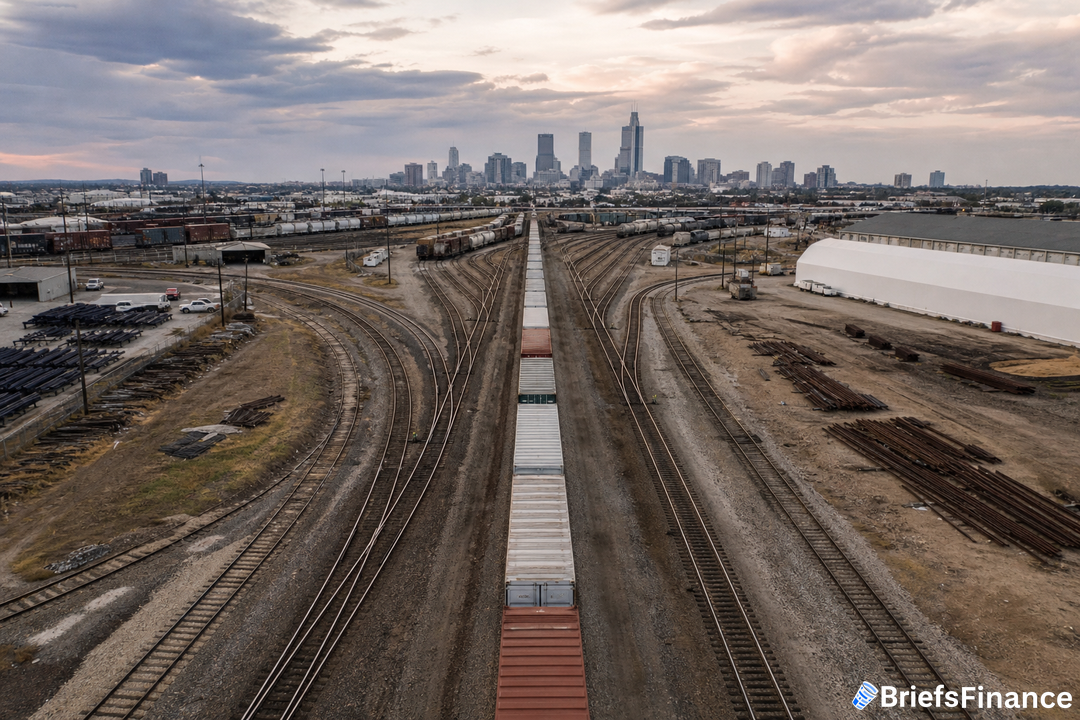
At $72 billion, the companies say the merger would form the nation’s first genuinely coast-to-coast railroad. The STB – an independent regulator – alone determines whether a railroad merger serves the public interest, and a final decision is not expected until next year. Its rules require more than avoiding harm to competition; the board must conclude that the transaction would improve competition.
The Justice Department‘s antitrust division is due to provide initial comments on the deal’s competitive impact by Dec. 3, which is likely to signal the administration’s position. The White House has asserted a bigger role in antitrust reviews during the second Trump administration. If the STB signs off on the deal, the DOJ and state attorneys general would be barred from bringing a later challenge.
Hedge funds have crowded into the trade since the deal was announced last year. As of the end of September, they collectively owned roughly $10 billion of Norfolk Southern stock, about 15% of shares outstanding, based on Bloomberg’s review of securities filings.
When big decisions could affect markets, it helps to get clear daily context, so subscribe to the free Market Briefs newsletter
Politics, lobbying, and a regulator’s rebuke
The campaign around the deal has gone political. In the Oval Office last year, Union Pacific Chief Executive Officer Jim Vena met with Trump, and by summer a coalition representing shippers and labor unions appealed to Susie Wiles, Trump’s former chief of staff, pressing the administration to come out against the deal. Tensions escalated after the regulator required Union Pacific to release a video of Vena’s March remarks threatening to raise rates on shippers who opposed the tie-up.
Vena apologized at an industry conference this week, saying the comments were meant as a joke. Union Pacific said the line was offhand, not a threat. Even so, the STB ordered the company to make the remarks publicly available and warned that shippers might be less willing to speak candidly. In a Nov. 4 decision, the board wrote, “Retaliation, whether perceived or actual, can seriously undermine the integrity” of the review.
Opposition has mounted in Washington. On Wednesday, a cross-party group of senators, with New York Democrat Chuck Schumer among them, came out against the deal. The agriculture and chemical industries argue the merger would raise shipping costs across the US. Union Pacific said, “We’re pleased to see so much participation in the process and value our customers’ perspectives.”
Market odds and what to watch
The market is more doubtful. The spread – meaning the difference between Union Pacific’s bid and Norfolk Southern’s share price – set a record earlier this week by rising above $65 a share, up from roughly $50 a month ago. Based on current prices, traders are effectively assigning less than even odds that the deal will close.
Merger arbs hunt for every clue. They track public appearances by key officials, hire law firms and consultants for reads on close calls, and even watch for small timing tells. During the Biden administration, some focused on then FTC Chair Lina Khan’s due date to gauge the timing of the Microsoft and Activision Blizzard review. For years, the DOJ and FTC have advised senior officials to avoid private discussions with arbitrageurs, and insider trading laws prohibit officials from passing material, non-public information for trading.
The bottom line: a high bar at the STB, a Dec. 3 DOJ marker on competitive effects, intensifying political pushback, and a widening spread that bakes in meaningful failure risk.
For readers wanting concise, calm updates on economy and markets, sign up for free Market Briefs to stay informed