
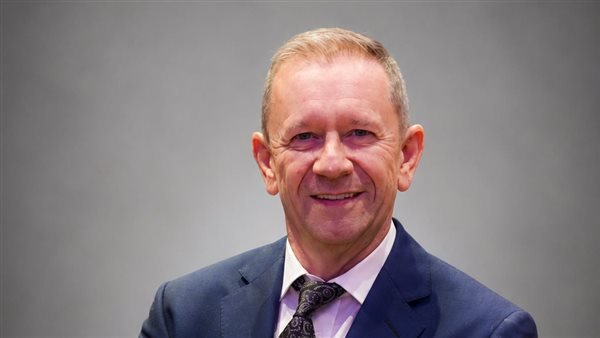
Nick Spencer-Skeen, Senior Executive Officer, Lunaro Markets Limited
Alternative investing in the UAE is entering a different phase. Gold and commodities remain firmly on investors’ radar, while private credit, infrastructure, private equity and tokenised assets are reaching a broader audience.
These investments are often grouped under the single “alternatives” label, although they address very different portfolio needs. old tends to serve as a liquid, defensive allocation during periods of uncertainty.
Private credit is generally seen as a source of additional income in exchange for tying up capital for longer.
Infrastructure is generally tied to long-term economic activity, while tokenisation changes how an asset is accessed rather than its quality of the asset itself.
As more UAE investors look beyond listed equities, each alternative asset should be assessed according to the role it is expected to perform within a portfolio.
Gold’s relevance goes beyond tradition
Gold holds a distinctive position in the UAE. Its appeal is rooted partly in culture, supported by an established trading and retail ecosystem, but its investment role is also strategic.
During periods of geopolitical tension, currency uncertainty, or concern about financial markets, investors often turn to gold as a store of value.
This does not mean that it protects a portfolio in every market environment.
Its performance is driven by a different mix of factors from company earnings or conventional fixed-income returns.
Gold’s visibility in the UAE also makes it an accessible first step beyond equities for newer investors.
Experienced investors may use it more deliberately, adjusting exposure according to real interest rates, currency movements, central bank demand, and geopolitical risk.
Commodities are becoming a portfolio question
Energy, industrial metals and agricultural commodities are influenced by supply chains, weather, infrastructure spending and geopolitical events. These drivers can differ considerably from those affecting equity markets.
Their behaviour is rarely uniform. Oil can respond sharply to production decisions and disruptions to supply routes.
Copper is closely linked to industrial activity and electrification, while silver draws demand from investors and industries such as solar energy and electronics.
Commodities may help address particular inflation or supply risks, but describing the entire category as a hedge can be misleading. The investment vehicle matters too.
Physical ownership, exchange-traded products, futures-based instruments and shares in commodity producers can generate very different outcomes.
Private markets are moving closer to the UAE capital
A separate development is taking place within private markets.
The growth of the UAE’s asset-management ecosystem is giving regional investors greater access to private-market strategies.
Several global asset managers have recently expanded their physical presence in the region, adding Abu Dhabi offices to existing Dubai operations established in prior years.¹
The wider numbers point to a deeper local investment ecosystem.
ADGM reported a 57% annual increase in assets under management in the first quarter of 2026. The number of asset and fund managers based there reached 179, with 263 funds managed from the financial centre.2
This physical presence changes the relationship between regional capital and international managers. Having investment teams closer to institutions and family offices can enable more detailed conversations about strategy, valuations, fees, reporting, and exits. It can also give investors greater visibility into how managers operate during difficult market conditions.
The hidden concentration risk
Wider access to alternatives brings a less-discussed risk a mismatch between the number of assets in a portfolio and the underlying risks they represent.
A portfolio can hold equities, private credit, private equity and property yet remain exposed to the same economic cycle. Different asset labels do not guarantee genuine diversification.
This is especially relevant where an investor’s wider financial position already includes a privately owned business, local property and income linked to the regional economy.
Adding exposure to similar sectors can deepen concentration.
Investors should examine geography, currency, sector, interest-rate sensitivity and liquidity across their entire financial position.
Liquidity also deserves closer attention. Private assets may often may carry fewer exit options, less frequent valuations and longer holding periods.
Long-term allocations must leave room for business, succession and personal requirements.
Wider access brings greater responsibility
The UAE’s growing family-office community is contributing to demand for alternatives.
Family capital may be well suited to longer-term investments and direct deals, particularly where families can contribute sector knowledge, operating experience or commercial relationships.
These allocations still require strong governance, consolidated reporting and clear concentration limits.
Technology is also opening assets to a wider investor base. Dubai Land Department’s Real Estate Tokenisation Project demonstrates how fractional ownership may widen participation in real estate.3
Tokenisation can lower entry thresholds and reduce administrative friction.
The underlying property, its valuation and its ability to generate income remain the foundations of the investment.
A smaller minimum investment does not make an asset simpler, safer or more liquid.
The next stage will be defined by portfolio purpose
Alternative assets can introduce distinct sources of return and address risks that listed equities may not fully capture.
Their value depends on assigning a clear purpose to each allocation, identifying overlapping exposures and maintaining sufficient liquidity.
As the UAE’s investment ecosystem expands, the quality of investor decision-making will matter as much as the range of assets available.
Lunaro Markets Limited is authorised and regulated by the Financial Services Regulatory Authority (FSRA) of the Abu Dhabi Global Market (ADGM), FSP No. 200034.
This article is for general information purposes only and does not constitute investment advice or a personal recommendation to any reader.
The value of investments can go down as well as up, and alternative assets in particular may carry additional risks including illiquidity, valuation uncertainty and loss of capital. Please see our full Disclaimer for important information
Sources:
1. ADGM Strengthens Position as MEASA’s Leading IFC With 57% Growth in AUM, over 13,000 Active Licences in Q1 2026
2. Barings Opens Office in Abu Dhabi to Strengthen Middle East Presenc
Department’s Real Estate 3. Tokenisation Project