
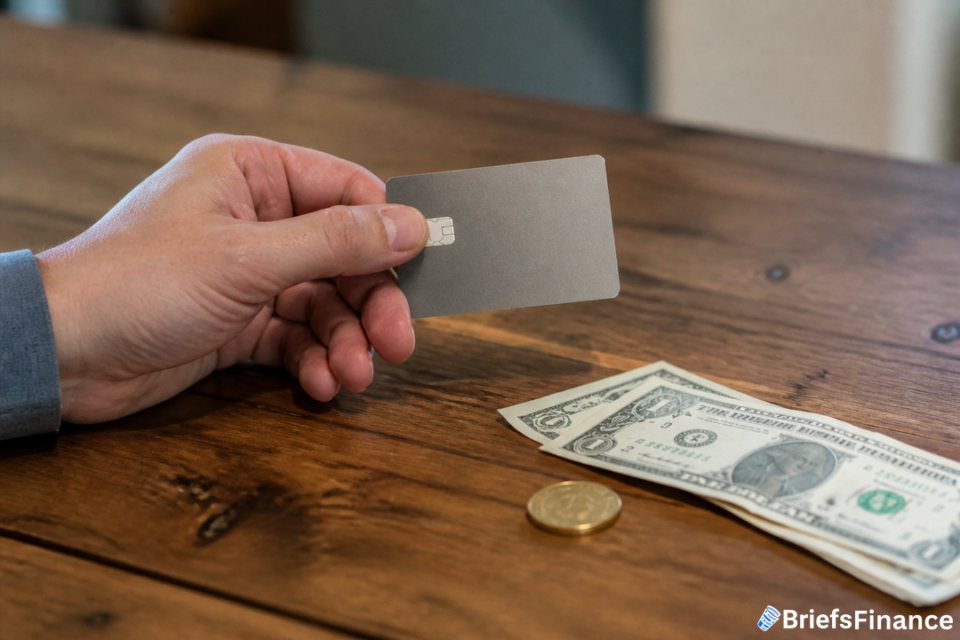
The New Card, Explained
Rewards cards have always had a catch. The best ones usually ask you to borrow money, carry a balance, or pay fees to make the points worth your time.
Krak wants to flip that deal.
Rewards are paid as actual money, not points.
The card debuted Aug 18, 2026.
You can also pick which assets get spent first and split a single purchase across several balances.
A New Kind of Rivalry
Kraken has been around since 2011 and is one of the biggest crypto exchanges in the world. Its usual clientele has been large financial institutions, seasoned traders, and those who use leverage, not casual shoppers.
It has also been rebuilding its app with new automated trading features to reach a wider audience.
The card takes that push much further. It puts Krak directly against Block’s CashApp, PayPal’s Venmo, SoFi, Robinhood, and Chime in the race to become the place where people keep and spend their everyday money.
Crypto is becoming more embedded in mainstream finance. Coinbase has claimed the role of gateway to crypto, while Robinhood has claimed the gateway to broader investing.
Kraken is leaning into its crypto-native identity. Arjun Sethi, co-CEO of Kraken’s parent company Payward, frames the whole launch around trust.
“People have lost trust in how the financial system treats them, in the rates they’re paid, the fees they’re charged, and how rewards actually work. They’re right to,” he said.
The Catch Behind the Rewards
There is a reason most rich rewards sit on credit cards instead of debit cards. U.S. rules cap the interchange fees banks can collect on debit transactions, and those fees are what typically fund rewards.
A 2% reward is hard to finance from card spending alone, so the card runs through a partner bank and the real payoff comes from something else.
Kraken’s bigger goal is to capture more of each customer’s financial life. A debit card that pays well encourages people to hold assets on the platform, spend from those balances, and keep their money in one place.
Kraken’s business already spans trading, derivatives, institutional custody, and tokenized equities. The card is another way to keep more of that activity inside its ecosystem.
Kraken also holds a banking charter from Wyoming, and this year it became the first crypto firm to receive a Federal Reserve master account, giving its banking arm direct access to core U.S. payment systems.
What It Means for Your Money
A Krak-commissioned national survey covering more than 2,000 U.S. adults found that 63% feel financially behind, and 60% said they would switch to a debit card with meaningful rewards that does not require taking on debt.
“The old deal was simple: if you wanted rewards, you had to take on debt to get them. That deal is over,” Sethi said.
“The Krak Card turns whatever people choose to hold into money they can spend anywhere, and pays the value back as cash, not points,” he said.
For people who already hold crypto, a card like this gives those balances a way to do the unglamorous work of paying for everyday life. For everyone else, it is another sign that the fight over your wallet now includes the assets you already own.
Kraken is positioning the card as a way to combine crypto and everyday finance. The company already has the licenses, infrastructure, and customer base to support that ambition.
