
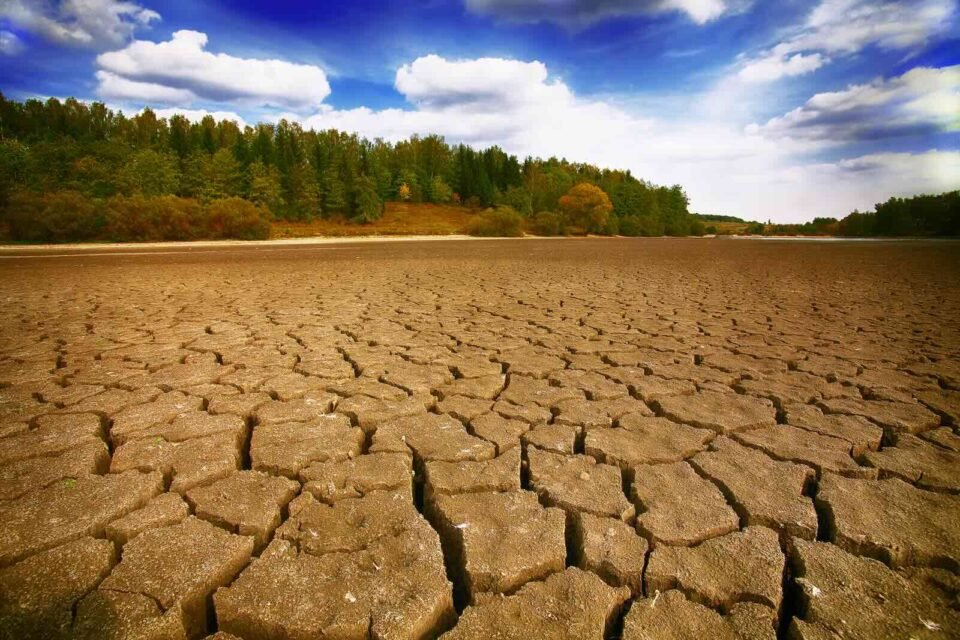
Weather and climate extremes caused an estimated €822 billion in EU economic losses between 1980 and 2024, with a quarter of that damage concentrated in the final four years. As much of the bill remains uninsured, disasters are becoming a structural problem for national budgets and EU financial policy.
Europe’s climate losses are accelerating faster than the systems designed to pay for them.
Weather and climate extremes caused an estimated €822 billion in economic losses across the European Union between 1980 and 2024, measured in 2024 prices, according to the European Environment Agency.
About €208 billion—one quarter of the total—was recorded in 2021–2024 alone. The agency also estimates that less than 20 per cent of total losses over the full period were privately insured.
Other European assessments put insurance coverage for natural-catastrophe losses at around one quarter, reflecting differences in periods and definitions. Both measures lead to the same public-finance conclusion: most damage is not transferred to private insurers.
The uninsured bill does not disappear
When floods, wildfires, storms or droughts destroy homes and infrastructure, governments face pressure to provide emergency relief, compensate households and businesses, rebuild transport links and restore public services.
The fiscal cost is wider than the reconstruction invoice. Disasters can reduce local tax revenue, interrupt production, increase welfare spending and require investment in stronger infrastructure before the next event. Municipalities and regions often bear the first burden even when national governments or EU programmes later contribute.
Insurance gaps are especially damaging where premiums have become unaffordable or insurers restrict cover in high-risk areas. Households may expect the state to intervene after a catastrophe even when no explicit guarantee exists. That creates a contingent public liability which is difficult to record in an annual budget but very real when disaster strikes.
The exposure is uneven. Wealthier member states generally have greater fiscal capacity and deeper insurance markets, while countries already carrying high debt can face larger financing pressure after a major event. Climate damage can therefore widen economic differences inside the Union.
Brussels is considering a shared backstop
European institutions have started to treat the protection gap as a financial-stability issue rather than solely an environmental one.
The European Insurance and Occupational Pensions Authority and the European Central Bank proposed a two-pillar approach in 2024: an EU-wide public-private reinsurance arrangement to pool large risks, combined with a European fund to support public reconstruction after exceptional disasters. Their joint paper is a policy proposal, not an adopted EU scheme.
In April 2026, staff from EIOPA and the European Stability Mechanism added a proposed mechanism for outsized catastrophes, intended to improve access to rapid financing while protecting debt sustainability.
Pooling risk across Europe could reduce the danger that one extreme event overwhelms a national system. It could also improve the predictability of support, replacing improvised political negotiations after each disaster.
Solidarity must reward prevention
A European backstop would raise difficult questions about who pays and what conditions apply. Member states with lower exposure may resist regular contributions, while high-risk countries will argue that a common market and shared climate policy require solidarity.
Any scheme would also need to avoid weakening incentives to adapt. If European funding automatically covers preventable losses, governments may postpone flood defences, land-use reform, forest management or stronger building standards.
Support could therefore be linked to risk mapping, adaptation plans and minimum levels of national insurance or disaster financing. Better data would allow insurers to price risk more accurately, but public policy would still be needed where actuarially realistic premiums are beyond household means.
Climate policy is often discussed as the cost of cutting emissions. The €822 billion estimate highlights the other side of the ledger: Europe is already paying for physical damage, and recent years account for a disproportionate share.
The question facing Brussels is no longer whether governments will be involved. They already are. It is whether Europe finances climate disasters through a planned combination of insurance, prevention and shared backstops—or continues to place an unpredictable bill on public budgets after every catastrophe.
Post Views: 959